Samsung: "No One Should Be Forced to Join Industrial Action"
- Input
- 2026-05-16 10:30:55
- Updated
- 2026-05-16 10:30:55
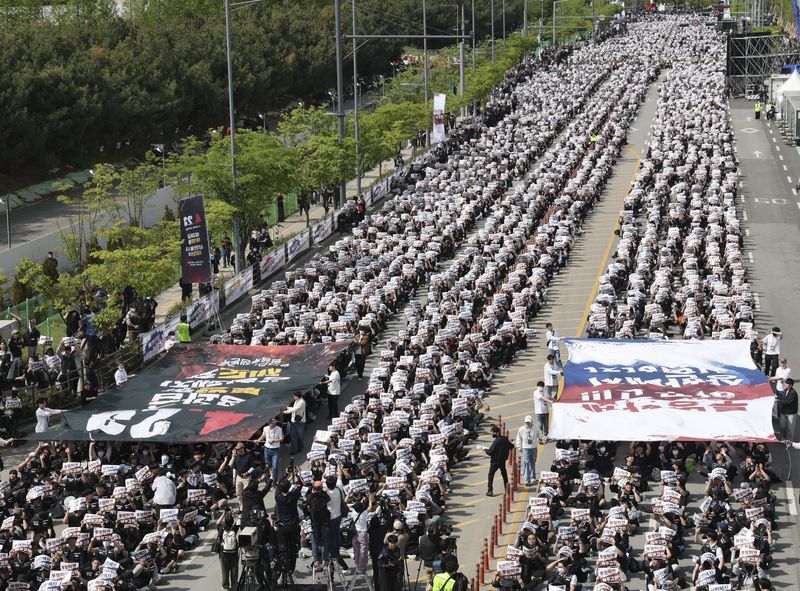
Meanwhile, Yang Hyang-ja, a former Samsung Electronics executive and People Power Party candidate for governor of Gyeonggi Province, criticized the general strike, calling it "a dangerous idea that seeks to bring a key national industry to a halt."
According to industry sources on the 16th, the Semiconductor, or DS Division, of Samsung Electronics recently sent an email to department heads saying that "as various opinions are exchanged among team members regarding industrial action, some employees are reporting psychological stress."
It added, "Whether to participate in industrial action should be decided according to each employee's free will," and asked managers to "carefully manage the situation so that no team members suffer from pressure, conflict, or other harm over participation."
The company also cited Article 38, Paragraph 1 of the Trade Union and Labor Relations Adjustment Act, which states that "violence or intimidation must not be used as a means of urging or persuading participation in industrial action."
Samsung also explained how employees can respond if they are forced to take part in industrial action or otherwise suffer harm. It instructed managers to inform team members that anyone who feels burdened by repeated demands to participate against their will, unwanted confirmation or disclosure of participation, or unauthorized checks of others' attendance records can immediately report the matter to the company or seek action through Organizational Culture SOS.
In response, some department heads said, "We hope a healthy organizational culture based on mutual respect continues. We are making this announcement because we do not want problems to arise among team members as different opinions are exchanged regarding industrial action," adding, "We sincerely hope no one hurts the feelings of others."
Earlier, employees in the Device eXperience, or DX Division, which oversees home appliances, smartphones, and TVs, protested that the Samsung Electronics Branch of the National Samsung Group Supra-Enterprise Labor Union was focusing only on the semiconductor division's bonus dispute while ignoring DX Division demands.
Thousands of DX Division union members are leaving the enterprise-level labor union, and some are preparing injunction requests against it to block the signing of wage agreements and to prohibit strikes.
The union says it will go ahead with the general strike, arguing that management has shown no change in its position on the union's demands to make the performance-based bonus system transparent and institutionalized, and to abolish the cap on payouts.
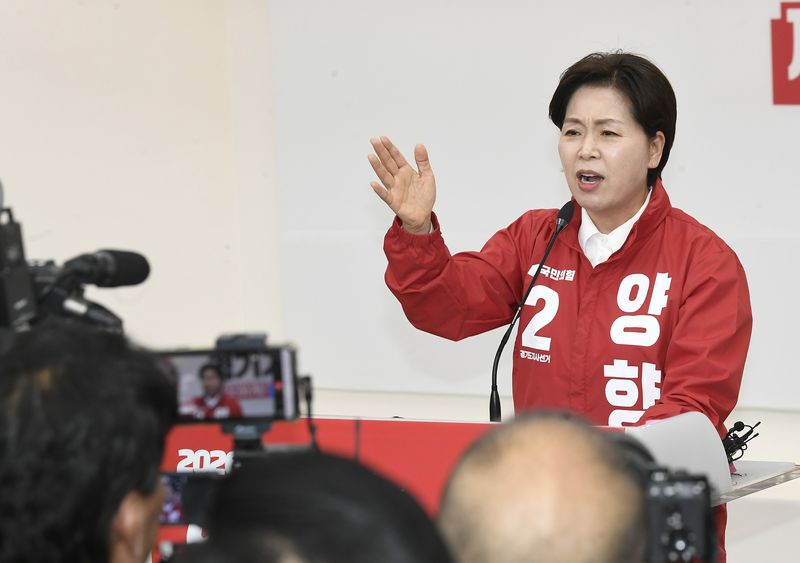
Meanwhile, Yang Hyang-ja, the first Samsung Electronics executive to have risen from a high school diploma background, held an emergency press conference at her campaign office on the day and criticized the enterprise-level labor union's planned general strike, saying, "Samsung's semiconductor business is not the private property of a single company. It is a myth built in the barren fields of the 1980s through the sweat and blood of the government and engineers, and a national strategic industry that supports the Korean economy."
She pointed out that "the reason the public allows special treatment for the semiconductor industry, such as tax breaks and priority access to electricity and water, is precisely because of that."
She went on to say, "The conflict between labor and management at Samsung's semiconductor business is not simply an internal corporate issue, but a matter of national security and the global industrial order," adding, "If the semiconductor industry stops, the Republic of Korea stops."
She stressed, "Labor and management must come to their senses and prevent a catastrophe through dialogue. The union should stop its extreme struggle, return to the negotiating table, and management must also do its utmost to communicate with and persuade the union until the very last moment."
She also urged the government to "stop standing by and take an active role in mediating and resolving the dispute between labor and management."
Earlier, the enterprise-level labor union said it planned to stage an 18-day general strike from the 21st to the 7th of next month, demanding that performance-based bonuses equal to 15% of operating income be paid as a fixed amount and that the cap be abolished.
If the general strike goes ahead, indirect and direct losses from disruptions to semiconductor line operations could reach as much as 100 trillion won, according to some estimates.
[email protected] Bae Han-geul Reporter