Global inflation fears send government bonds tumbling worldwide... "U.S. rate hike in December"
- Input
- 2026-05-16 04:16:56
- Updated
- 2026-05-16 04:16:56
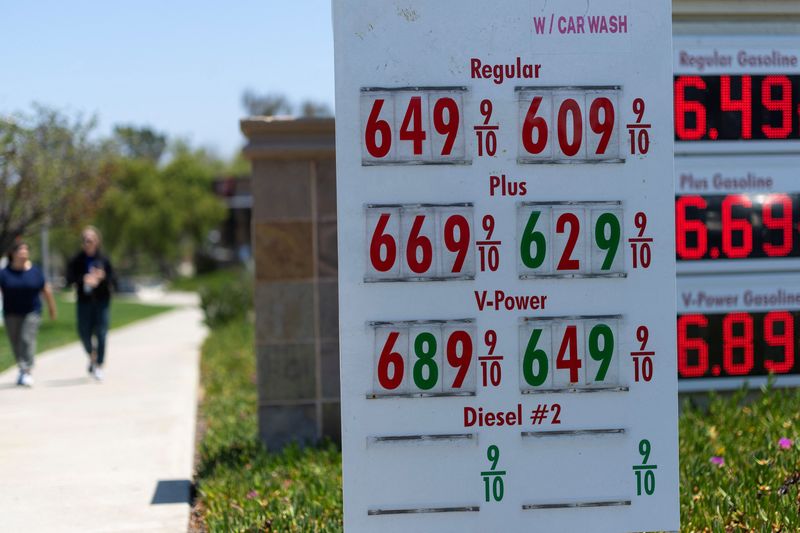
Long-term government bond prices around the world fell sharply on the 15th (local time). Yields, which move in the opposite direction of prices, jumped.
Fears that the Iran War will trigger inflation swept through global bond markets. Stock markets also fell as government bond yields surged.
The Financial Times (FT) reported that long-term government bonds faced heavy selling and stocks declined, as concerns grew over a lasting inflation shock from the Iran War.
Yields on long-term government bonds in major countries surge
The yield on the U.S. 30-year Treasury bond, a party to the war, jumped 0.11 percentage points to 5.12%, the highest level in a year.
Japan's 30-year government bond yield also rose 0.14 percentage points, breaking above 4% for the first time ever.
The 30-year yield on UK government bonds, known as gilts, jumped 0.2 percentage points to 5.85%, the highest level this century.
U.S. Department of the Treasury bond issuance was also hit. A 30-year bond issued this week was awarded at auction with a 5% yield for the first time since 2007. FT said this indicates that the sell-off in the bond market has spread to government bonds as well.
The Fed to raise rates later this year
Financial markets have begun to expect that central banks around the world will shift toward rate hikes because of surging inflation.
According to the CME Group Inc. FedWatch Tool, the first move by the Federal Reserve System (Fed) under Chairman Kevin Warsh is likely to be a rate hike. In the futures market, the probability that the Fed will raise rates by 0.25 percentage points in December this year is seen as above 50%. If the move is delayed until January next year, the probability rises to 60%, and by March, the chance of a hike is seen as above 71%.
Priya Misra, portfolio manager at JPMorgan Asset Management, said that "a perfect storm hit the bond market over the past week," adding that "inflation is surging, and yields on Japanese and UK bonds have risen."
Misra warned that "as the economy struggles with the oil shock, higher government bond yields will inevitably tighten financial conditions as well."
Tom Ross, head of the high-yield division at Janus Henderson Investors, said on the 15th that the "strong repricing" in global government bond yields partly reflects "the market's growing conviction that inflation risks will ultimately outweigh the political outlook."
Although U.S. President Donald Trump is pressuring new Fed Chair Kevin Warsh to cut rates, analysts say Warsh will not be able to accept that political pressure because of the inflationary impact of the Iran War, which Trump himself started.
Other countries are also likely to face strong political pressure for rate cuts as war-related energy supply disruptions hurt economic growth. Even so, central banks are expected to eventually raise rates in response to inflation.
Ross said, "Inflation is emerging as a risk that needs to be watched closely."
A survey released that day by Bank of America (BofA) showed that fund managers are "increasingly nervous about the risk of rising inflation in the United States." Twenty-five percent of respondents said the Fed is more likely than other major central banks to carry out steeper rate hikes than the market currently expects.
Concerns over a chain of defaults
Rising government bond yields also increase the risk of default for marginal companies.
Companies with uncertain prospects struggle first to secure funding, and even if they borrow, they must bear higher interest costs.
Deirdre Dunn, head of rates at Citigroup, was pessimistic, saying that "if the bond sell-off gains momentum, defaults will begin to rise."
Dunn warned that once defaults start to increase, the shock will spread to stock markets as well. She added, "We do not want bond market turmoil to spill over into equities, but the risk is real, especially for high-valuation stocks."
[email protected] Song Kyung-jae Reporter