Iranian Speaker of Parliament Says U.S. Pressure on Strait of Hormuz Could Trigger Financial Crisis
- Input
- 2026-05-15 18:28:09
- Updated
- 2026-05-15 18:28:09
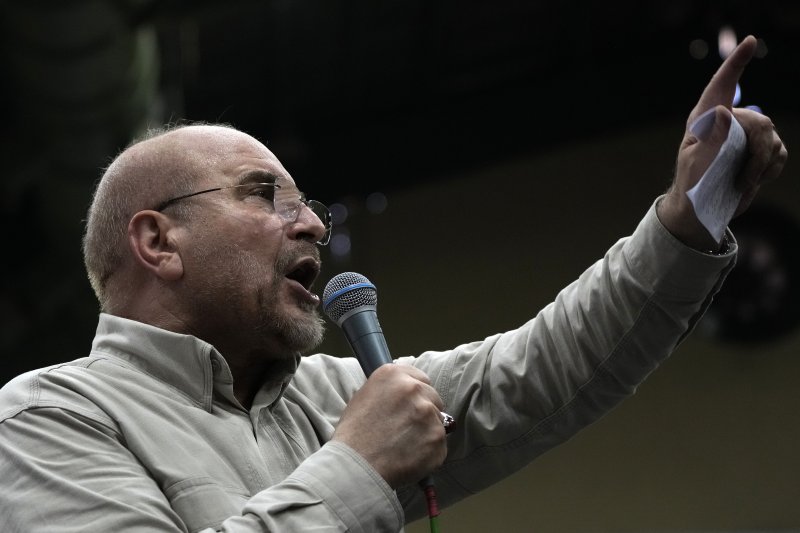
[Financial News] Senior Iranian officials are intensifying their criticism of the United States' military pressure in the Strait of Hormuz, even raising the possibility of a global financial crisis. They argue that rising tensions in the Middle East are pushing up energy prices and inflation, while adding to Washington's fiscal burden, as U.S. long-term Treasury yields have surged to levels seen just before the 2007 Global Financial Crisis (GFC).
On the 14th, local time, Mohammad Bagher Ghalibaf, Speaker of Iran's Parliament, wrote on social media platform X that "the United States is staging an expensive LARP in the Strait of Hormuz while carrying $39 trillion in debt" and that "what will eventually come back is a global financial crisis."
Ghalibaf also shared a Financial Times (FT) report saying that the yield on 30-year U.S. government bonds had climbed above 5%, using it to criticize both the country's fiscal position and its military involvement in the Middle East. His point was that the United States is fueling market anxiety by maintaining military pressure near the Strait of Hormuz while burdened by massive national debt.
According to FT, the United States Department of the Treasury issued $25 billion worth of 30-year government bonds on the 13th. The auction's highest yield came in at 5.046%. It was the first time since 2007, just before the Global Financial Crisis, that the yield on 30-year U.S. government bonds had exceeded 5%.
Rising long-term government bond yields place a burden on U.S. finances. As rates rise, the interest costs the government must pay when issuing new debt or refinancing existing obligations also increase. If volatility in international oil and energy prices widens because of the war in the Middle East, inflationary pressure could strengthen again.
Recent U.S. inflation data have also shown signs of instability. The Producer Price Index (PPI) rose 6.0% in April from a year earlier, far above the 4.3% increase in March and 3.4% in February. It marked the sharpest rise in four years, fueling concerns that war-driven energy price increases and logistics disruptions could push inflation higher again.
Ghalibaf also directly targeted U.S. Defense Secretary Pete Hegseth. He criticized him, saying that "a former TV host is being made to act like a war minister with money so large it has not been seen since 2007." Hegseth previously worked as a Fox News host.
Iran is also stepping up its claims over the Strait of Hormuz. Mohammad Reza Aref, Iran's first vice president, said on the same day that "we will not give up the Strait of Hormuz at any cost" and that "the strait has always been Iran's."
The Strait of Hormuz is a key passage for global crude oil shipments. After airstrikes by the United States and Israel, Iran has tightened control over hostile countries and their allies, and the strait is now effectively blocked. If tensions around the strait continue for a prolonged period, concerns are growing that international oil prices, shipping costs, and volatility in global financial markets could all rise at the same time.
[email protected] Kim Kyung-min Reporter