Interpreter's Notes Mention FCC, Rare-Earth Elements, and the Strait of Hormuz [U.S.-China Summit]
- Input
- 2026-05-15 18:05:08
- Updated
- 2026-05-15 18:05:08
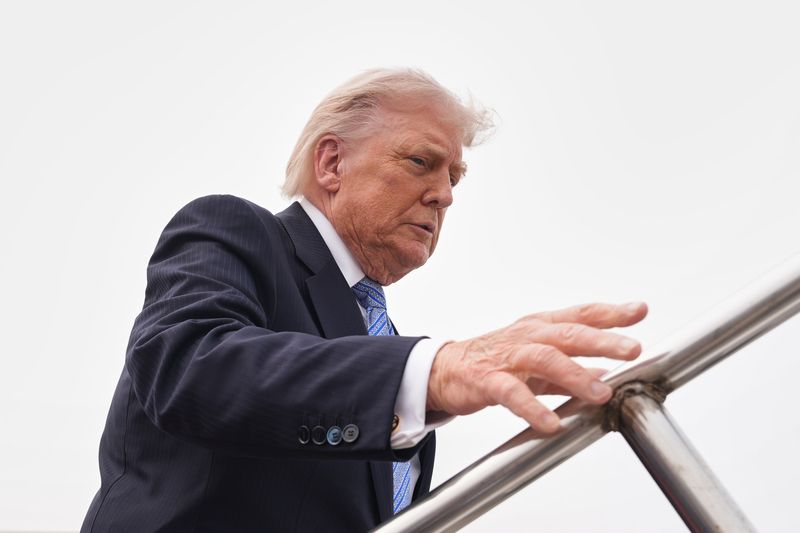
[Financial News] As notes left by an interpreter at the summit between U.S. President Donald Trump and Xi Jinping, President of the People's Republic of China, were made public, analysts say they offer clues about the actual agenda discussed between the two sides. The appearance of rare-earth elements, the United States' technology restrictions on China, the Iran War, and the Strait of Hormuz in the notes has strengthened the view that the meeting was more than a simple trade negotiation and instead a "super showdown" spanning security, energy, and technological dominance.
According to Taiwan United Daily News and others on the 15th, AFP photographed the notes on the interpreter's desk during the U.S.-China summit held the previous day at the Great Hall of the People in Beijing and identified key words.
The notes, written in a mix of Chinese and English, included terms such as "FCC," "blockade," "rare-earth elements," and "grain." Middle East-related terms such as "Islamic Revolutionary Guard Corps," "Strait of Hormuz," and "Lebanon" were also written, and the name of Ali Khamenei, Iran's supreme leader who died in recent U.S. and Israeli strikes, was reportedly included as well.
Particular attention is being paid to the mention of FCC. The Federal Communications Commission (FCC) has recently tightened regulations on Chinese institutions. Last month, it revoked the qualifications of Chinese inspection and certification agencies that had not signed mutual recognition agreements with the United States, and it also decided to ban three major Chinese telecom companies from operating data centers in the United States.
China immediately pushed back. MOFCOM warned that the U.S. measures seriously infringe on the interests of Chinese companies and said it would take countermeasures if necessary. The technology regulations and communications infrastructure issue are now being raised as one of the key points of conflict in the summit as well.
Rare-earth elements are also a central card in the U.S.-China dispute. China is tightening export controls on rare-earth elements in response to the United States' restrictions on semiconductor and AI technology exports. The United States, in turn, has increased pressure, viewing China's rare-earth controls as a threat to supply chains.
The note on grain appears to be linked to China's purchases of U.S. agricultural products. Before the summit, there was speculation in the United States that China might propose expanding purchases of U.S. soybeans, beef, and Boeing aircraft. On the other hand, many expected China to raise Taiwan, tariffs, and advanced technology export controls as its main agenda items.
Middle East issues also appear to have been on the main table. The White House said the two leaders agreed that Iran's possession of nuclear weapons is unacceptable and confirmed their opposition to the militarization of the Strait of Hormuz and the imposition of transit fees.
In an interview with Fox News, Trump said Xi had expressed his intention not to provide military equipment to Iran. He also explained that China had shown willingness to cooperate on resolving the issue of keeping the Strait of Hormuz open.
During a tea meeting with Xi at Zhongnanhai, Trump also said, "We think very similarly about Iran," adding, "We want that situation to end."
Foreign media outlets said the release of the notes showed that "a few short words revealed the real battlefield of the U.S.-China summit."
[email protected] Kim Kyung-min Reporter