Saudi Arabia Likely to Push for a "Middle East Nonaggression Pact" After the Iran War Ends
- Input
- 2026-05-15 07:23:57
- Updated
- 2026-05-15 07:23:57
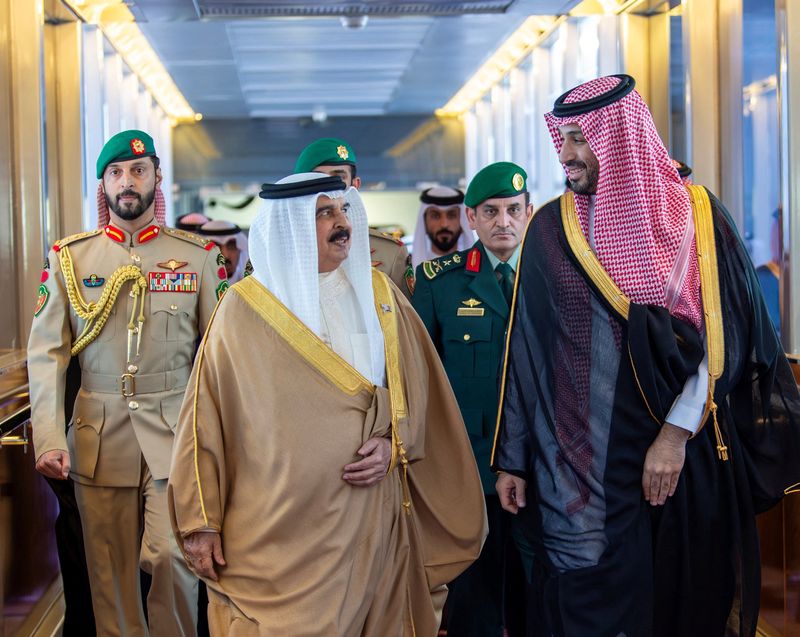
[Financial News] Saudi Arabia, the leading Sunni power in the Middle East, is pursuing a nonaggression pact between Iran and neighboring Middle Eastern countries after the Iran War ends. However, it remains unclear whether Israel, which attacked Iran, and the United Arab Emirates (UAE), which has recently drawn closer to Israel, will follow suit.
The Financial Times (FT) reported on the 14th, citing two Western diplomatic sources, that a nonaggression framework between Middle Eastern countries and Iran was discussed as Saudi Arabia and its allies explored ways to manage regional tensions after the war. FT also said the Saudi government is reviewing the 1970s Helsinki Final Act, which helped ease Cold War tensions in Europe, as a possible model.
The Helsinki Final Act, adopted at the Conference on Security and Cooperation in Europe (CSCE) in Helsinki, Finland, in 1975, is a 10-point document that set out principles including sovereign equality, renunciation of force, inviolability of borders, territorial integrity, and cooperation among states. Signed by 35 countries, including the United States and the Soviet Union, it helped bring an end to the 30-year Cold War in Europe that followed World War II.
After the United States and Israel bombed Iran on February 28, Iran indiscriminately attacked U.S. government facilities, civilian sites, and oil production facilities in six GCC countries, including Saudi Arabia and the UAE. According to the UAE Ministry of Defense, Iran launched 550 ballistic missiles and more than 2,200 drones at the UAE during the war.
On the 13th, The Times of Israel (ToI) reported that Saudi Arabia, which had long been at odds with Iran even before the war, used its air force to carry out retaliatory strikes on Iranian territory in late March. It would be the first time in history that Saudi Arabia, which has long opposed Iran, the leading power of Shiite Islam, directly attacked Iran.
ToI also reported on the 12th that Iran attacked a UAE petrochemical complex on the 5th of last month, and claimed that the UAE retaliated the next day with Israel by striking the South Pars Petrochemical Complex in southern Iran. The Wall Street Journal (WSJ), citing officials on the 11th, claimed that the UAE also bombed a refinery on Kharg Island off Iran's southern coast on the 8th of last month, immediately after the U.S.-Iran ceasefire took effect.
According to FT on the 14th, Saudi Arabia and other major countries believe that Iran will continue to pose security threats even after the Iran War ends, and they see a need to build a new regional security framework. Iran is also said to have little reason to reject a Middle East nonaggression system.
An anonymous Arab diplomatic source said, "A nonaggression agreement modeled on the Helsinki Final Act would be welcomed by most Arab and Islamic countries, as well as Iran." The source added, "Iran has long told the United States and the West that the Middle East should be managed by the countries in the region themselves." It is also said that major European countries and the European Union (EU) support the idea.
However, it is unclear whether Israel, which has repeatedly clashed militarily with Iran for decades, would accept a nonaggression pact. The Arab source predicted, "It will be difficult to bring Iran and Israel into the same framework under current conditions." The source added, "If Israel is left out, it could backfire. Many countries see Israel as the second-biggest source of conflict after Iran."
The stance of the UAE, which has recently grown closer to the United States and Israel, is another variable. FT said Saudi Arabia and the UAE, the two major powers in the Persian Gulf, have different visions for the Middle East order, and diplomatic sources are skeptical about the UAE's participation.
[email protected] Park Jong-won Reporter