Cheong Wa Dae Says Report on Using Semiconductor Windfall Tax Revenue Is Not True... Tax Revenue Conditions Are Discussed Continuously
- Input
- 2026-05-14 15:13:59
- Updated
- 2026-05-14 15:13:59
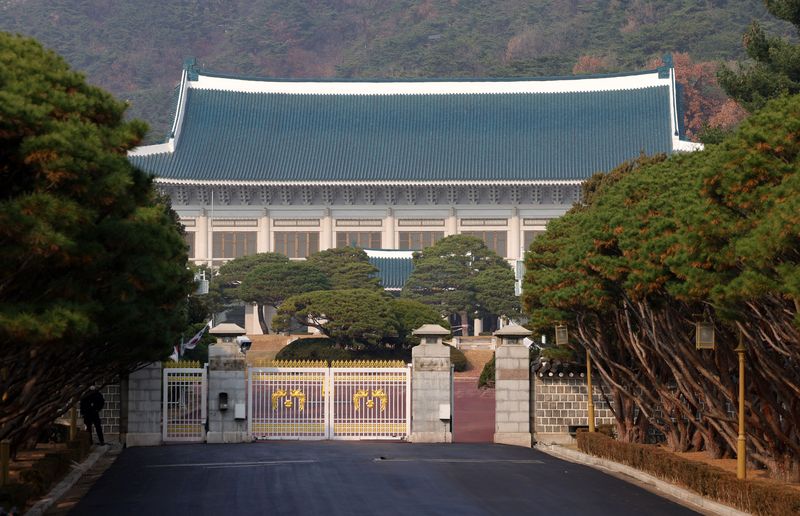
[Financial News] Cheong Wa Dae said on the 14th that a media report claiming it had ordered a review of how to use the extra tax revenue expected to surge on the back of the semiconductor boom was "not true." The ruling Democratic Party of Korea is also maintaining a cautious stance.
A Cheong Wa Dae official said that day, "It is not true that a review of how to use semiconductor windfall tax revenue was ordered." However, the official added, "The government is continuously discussing economic conditions, tax revenue conditions, and the direction of fiscal investment."
Earlier, Kim Yong-beom, Chief Presidential Secretary for Policy, wrote on Facebook on the 11th, "The fruits of the era of artificial intelligence (AI) infrastructure are not the result of a specific company alone," and added, "Some of those gains should be structurally returned to all citizens."
Kim then proposed a so-called "national dividend policy," under which part of the extra tax revenue generated by the boom in semiconductor and other AI infrastructure companies would be returned to the public. It is understood as a concept to redistribute to citizens the windfall tax revenue generated by excess profits at AI infrastructure companies such as Samsung Electronics and SK hynix.
Cheong Wa Dae later drew a line, saying, "The content posted by the chief policy secretary on social media is a personal opinion unrelated to any internal discussion or review at Cheong Wa Dae."
Still, with President Lee Jae-myung calling for "expansionary fiscal policy" and tax revenue expected to rise on the back of the semiconductor boom, observers say policy discussions over how to use additional fiscal room after the June 3 local elections will continue. That is because related discussions are becoming essential, as some forecasts suggest this year's corporate tax from Samsung Electronics and SK hynix alone could reach 120 trillion won, exceeding last year's total.
The Democratic Party of Korea is also taking a cautious approach, but it left room for longer-term consideration of a national dividend. Kang Jun-hyun, the party's Chief Spokesperson, told reporters at the National Assembly on the day, "This is something we can discuss sufficiently in the future," adding, "We need to have enough academic debate on the enormous changes brought by advanced industries such as AI and autonomous vehicles, and then carefully determine our direction." Jung Cheong-rae, leader of the Democratic Party of Korea, also said on the 13th that there had been no discussion with the Lee Jae-myung administration, but added, "If academia first conducts research, academic review comes first, and then there are opinions that we should apply the results to reality, it is a matter to be handled by gathering those views and building public consensus through policy and law."
Jin Sung-jun, a Democratic Party lawmaker, also appeared on MBC Radio that day and said, "In the AI era, excess corporate profits can be generated significantly in certain companies and sectors, which could widen the wealth gap in our society, often described as a K-shaped divide," adding, "How to deal with that is a major task. I think we need to reach agreement through diverse social discussions."
The opposition, meanwhile, is strongly protesting and calling for Kim's dismissal. Song Eon-seok, the People Power Party floor leader, said on the 12th, "The market reacted immediately to the shocking anti-market mindset that views corporate excess profits as something to be effectively recovered by society, and investors were deeply shaken."
[email protected] Choi Jong-geun Kim Yun-ho Reporter