K-Chemicals Rebound on Middle East Factors, but the Industry Is Not Celebrating Yet
- Input
- 2026-05-18 06:59:00
- Updated
- 2026-05-18 06:59:00
[Financial News] The domestic chemical industry posted a rare profit thanks to the Middle East war, but the mood is far from upbeat. The gains were largely driven by supply disruptions and inventory effects, making them more of a wartime windfall. Structural headwinds from oversupply in China also remain.
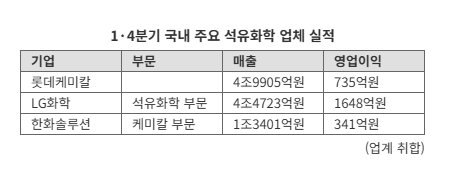
According to the industry on the 18th, Lotte Chemical posted consolidated sales of 4.9905 trillion won and operating profit of 73.5 billion won in the first quarter of this year. It was the company's first return to profit in 10 quarters. The result reflected sales of products made from raw materials secured before the war, sold during a period of high oil prices, as well as a reversal of inventory valuation losses. Lotte Chemical's inventory valuation loss reversal in the first quarter came to 50 billion won, while the lag effect on raw materials in its basic materials division was estimated at more than 250 billion won.
LG Chem Ltd.'s petrochemical division also posted sales of 4.4723 trillion won and operating profit of 164.8 billion won in the first quarter. It swung from an operating loss in the previous quarter to a profit, helped by a positive inventory lag effect and one-off income from a refund of Europe anti-dumping duties. Hanwha Solutions also returned to profit in its chemicals division for the first time in two and a half years. The division reported first-quarter sales of 1.3401 trillion won and operating profit of 34.1 billion won.
The industry's short-term improvement in profitability is tied to supply disruptions caused by the Middle East war. A crude oil supply crunch led to shortages of naphtha and ethylene, pushing up petrochemical product prices in Asia and disrupting supply and demand as some facilities cut operating rates.
Still, the industry expects the improvement in earnings to be temporary. From the second quarter on, costs could rise as more expensive feedstock secured after the war is fed into production. If the war ends and supply shortages ease as facilities in the Middle East and Asia normalize, product prices and spreads could fall again, raising the risk of another deterioration in profitability.
Structural oversupply has also not been resolved. As China continues to add large-scale new petrochemical capacity, competitive pressure remains intense in commodity products. Domestic companies are pushing ahead with business restructuring, but analysts say it will be difficult to eliminate global oversupply in the short term.
An industry official said, "The first-quarter improvement was the result of a combination of supply disruptions from the war and inventory effects, so results should remain decent through the second quarter." The official added, "Once conditions in the Middle East stabilize, supply will recover, but the burden of high-priced feedstock may also be reflected. The market outlook in the second half should therefore be viewed cautiously."
Hyunryul Cho, an analyst at Samsung Securities, also said, "Inventory effects will continue in the second quarter, so earnings are likely to remain above market expectations." He added, "However, the impact is largely temporary and tied to the Middle East war, and there are limited signs of a clear fundamental improvement beyond the inventory effect."
[email protected] Gu Ja-yun Reporter