Xi Jinping Cites the 'Thucydides Trap' as He Emphasizes U.S.-China Coexistence [U.S.-China Summit]
- Input
- 2026-05-14 13:40:31
- Updated
- 2026-05-14 13:40:31
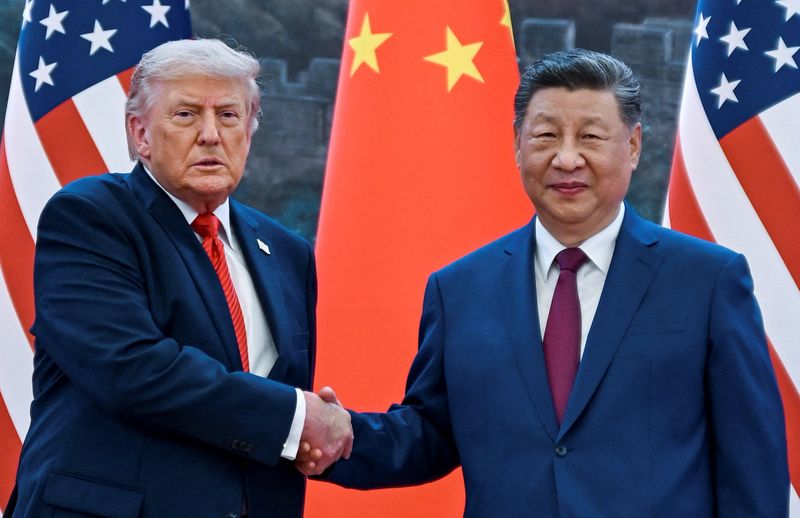
[Financial News] Chinese President Xi Jinping met with U.S. President Donald Trump, who visited China for the first time in about nine years, and emphasized cooperation and coexistence between the two countries. Trump replied that bilateral ties were very good.
According to CNN and other foreign media outlets, Xi held a closed-door summit with Trump on the 14th at the Great Hall of the People in Beijing. In his opening remarks before the main meeting, he said that "the stability of China–United States relations is good news for the world" and stressed that major powers should follow the right path of coexistence.
He said, "Whether China and the United States can move beyond the 'Thucydides Trap' and open a new paradigm for major-power relations is a historic question." He added, "It is also the answer of our time that you and I, as leaders of major powers, must write together."
The Thucydides Trap is a political term widely popularized by Graham Allison, a professor at Harvard Graduate School of Public Administration. The term comes from the war between Athens and Sparta recorded by the ancient Greek historian Thucydides, and it describes a situation in which an established hegemon feels uneasy about the rise of an emerging power, leading to rivalry and conflict that can eventually turn into confrontation. Xi has previously used the term in summit meetings with U.S. presidents in 2015, with Barack Obama, and in 2024, with Joe Biden, to underscore the importance of coexistence between the United States and China.
Xi said, "The common interests between China and the United States are greater than our differences, and I have always believed that each side's success creates opportunities for the other." He added, "When the two sides come together, both benefit; when they fight, both suffer." He argued that "there is once again proof that there are no winners in a trade war, and that the essence of US-China economic and trade relations is mutual benefit and win-win cooperation." At the same time, he said that "when differences and friction arise, equal consultation is the only right choice."
Xi said, "The fact that the two sides' economic and trade negotiating teams produced overall balanced and positive results yesterday is good news for the people of both countries and for the world." He urged both sides to work together to maintain this hard-won positive momentum.
Xi also said, "We should become partners rather than rivals, help each other succeed, and achieve common prosperity while following the right path for major-country coexistence in the new era." He argued that the two countries should respond to global challenges together, provide more stability to the world, and help improve the welfare of their peoples and the future of humanity.
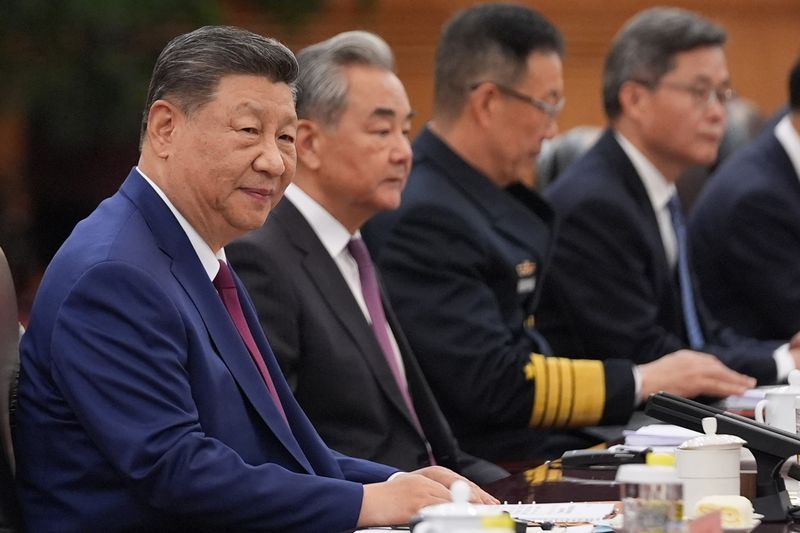
In response, Trump said, "I am very much looking forward to today's discussion. It will be a very important meeting," adding, "Relations between the United States and China will get better than ever." He emphasized that he had spoken with Xi by phone and explained, "People do not really know when we have clashed, but whenever problems arose, we resolved them very quickly."
Trump also stressed his willingness to expand economic and trade cooperation, saying, "We will build a fantastic future together." After noting that major U.S. corporate CEOs accompanied him on this trip to China, he said, "They are looking forward to trade and business with China," and added, "That will be completely reciprocal for the United States as well."
Trump also praised Xi as a "great leader" on the day. He said, "Some people do not like me saying this, but I am saying it because it is true."
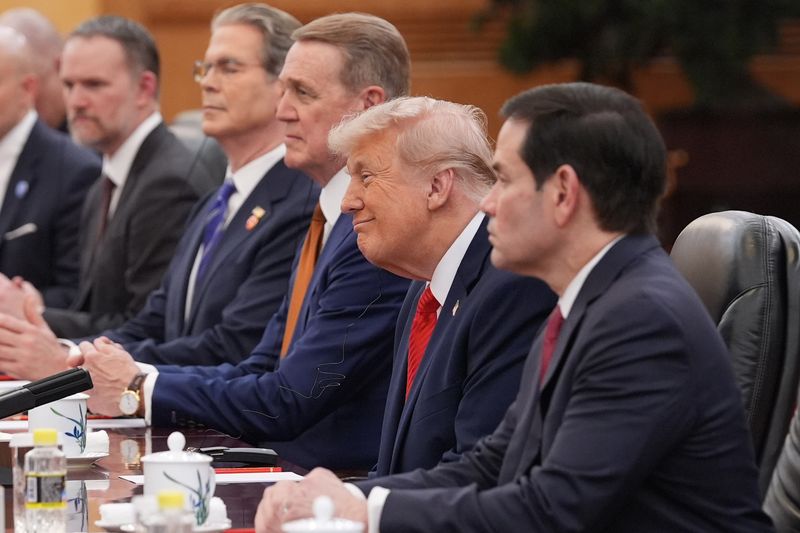
In addition to the two leaders, the Chinese side included Cai Qi, secretary of the Secretariat of the Chinese Communist Party, Wang Yi, director of the Office of the Central Foreign Affairs Commission of the Communist Party of China and foreign minister, and Vice Premier He Lifeng. The U.S. side included Secretary of State Marco Rubio, Defense Secretary Pete Hegseth, and Treasury Secretary Scott Bessent. The face-to-face meeting between the two leaders came about six months after their last meeting in Busan, South Korea, on Oct. 30 last year.
[email protected] Park Jong-won Reporter