Kia officially launches PV5 in Japan, saying it will step up local-tailored efforts including CHAdeMO charging
- Input
- 2026-05-13 11:21:21
- Updated
- 2026-05-13 11:21:21
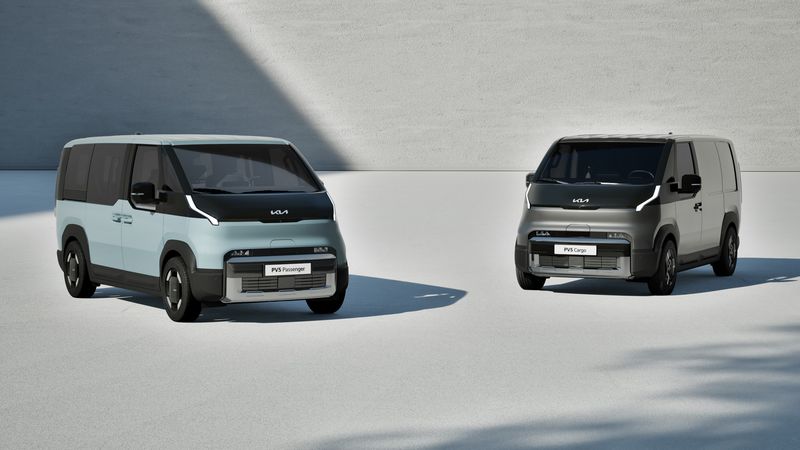
On the 13th, Kia held an official launch event for the local sales start of its first dedicated PBV model, the 'Kia PV5,' at the Kia PBV Japan Tokyo Nishi Direct Store in Tokyo. The event was attended by Sangdae Kim, executive vice president and head of Kia's PBV Business Division, and Yasunari Tajima, CEO of Kia PBV Japan.
At the event, Sangdae Kim said the launch of the Kia PV5 in Japan is an important milestone that demonstrates Kia's product competitiveness and brand trust. He added that, together with Kia PBV Japan, the company will build long-term trust by meeting the needs of Japanese customers and establish itself as a reliable partner supporting the transition to electrification.
The PV5 has already posted a series of achievements at global awards even before its launch. It won the 2026 International Van of the Year (IVOTY), one of the most prestigious awards in the commercial vehicle industry, by unanimous vote from the judges. It also took home three awards at the '2026 Commercial and Van Awards' hosted by What Car? In Euro NCAP's commercial van safety assessment, it earned the top five-star rating. Following the Kia EV6 GT in 2023, the Kia EV9 in 2024, and the Kia EV3 in 2025, Kia has been recognized for its leadership in electrified mobility on the global stage for four consecutive years with the PV5.
In particular, the PV5 stands out for its Japan-specific design. Based on a body measuring 4,695 mm in length and 1,895 mm in width, it has a turning radius of 5.5 meters, allowing it to operate even on narrow urban streets.
To reflect Japan's local charging infrastructure, CHAdeMO charging is also included as standard. It supports Vehicle-to-Load (V2L) and Vehicle-to-Home (V2H), allowing it to serve as an emergency power source during disasters such as earthquakes. Another strength is its ability to support a wide range of body configurations through the 'Flexible Body System,' which modularizes key components such as the body, doors, and tailgate.
Kia will first launch the Passenger and Cargo models, then expand the lineup with the WAV model for people with mobility challenges. It also plans to release the successor model, Kia Concept PV7, in 2028.
The foundation for Kia's push into the Japanese market is its local partnership. Kia teamed up with major Japanese trading house Sojitz to launch a new wholly owned subsidiary, Kia PBV Japan Corporation, in April last year. Sojitz is a major Japanese trading company with B2B distribution networks across industries including automotive sales, energy, metals, chemicals, and food.
It currently operates seven dealerships and 52 service centers, including the Tokyo Nishi Direct Store, and aims to build a network of 11 dealerships and 100 service centers by the end of the year. Kia is also pushing ahead with plans to establish a Kia Japan Branch and partner with BS Summit, Japan's largest maintenance association.
The Japanese government is pursuing a carbon-neutral policy that aims to raise EVs to 30% of new car sales by 2030. In response, Kia expects demand for small and mid-sized EV vans to gradually increase and is moving to address that market early with its PBV lineup.
[email protected] Kim Dong-chan Reporter