Trump Said Iran's Military Was "Finished". U.S. Officials Say "Most Survived"
- Input
- 2026-05-13 11:05:06
- Updated
- 2026-05-13 11:05:06
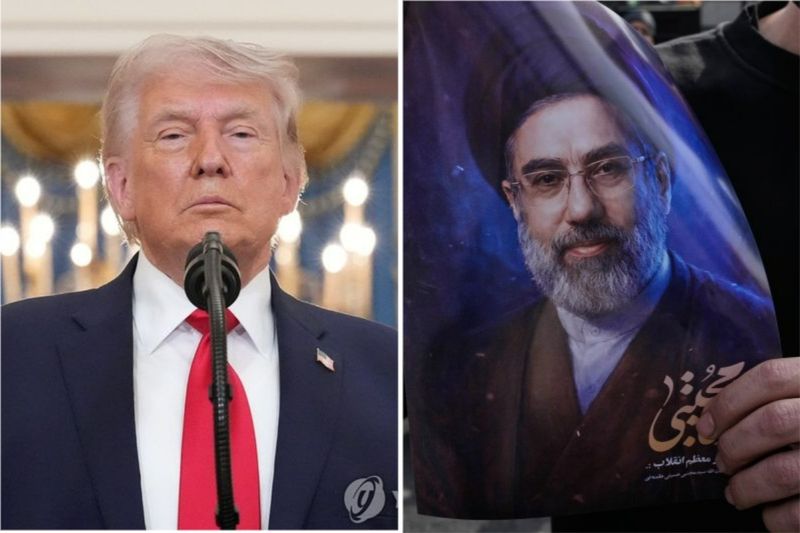
[Financial News] U.S. intelligence agencies have assessed that Iran's military remains largely intact. The finding stands in sharp contrast to Donald Trump's public claim that "Iran's military has been destroyed." The report also suggests that many missile bases around the Strait of Hormuz are back in operation, adding pressure on Washington's military strategy toward Iran.
On the 12th, The New York Times (NYT) reported, citing a classified U.S. intelligence assessment written earlier this month, that Iran has restored many of its missile bases, mobile launchers and underground facilities across the country.
The most worrying area is the Strait of Hormuz. Officials assessed that Iran has regained operational capability at 30 of the 33 missile bases in the area. They also estimated that Iran still retains about 70% of its mobile missile launchers nationwide and about 70% of its prewar missile stockpile. That includes ballistic missiles and short-range cruise missiles capable of striking countries in the Middle East.
Based on satellite imagery and other surveillance assets, NYT reported that about 90% of Iran's underground missile storage and launch facilities nationwide were now considered to be in "partial or full operational condition."
This directly conflicts with Trump's and Defense Secretary Pete Hegseth's repeated claims over the past several months that Iran's military had been destroyed. In a CBS interview in March, Trump said, "Iran's missiles were shattered, and there is nothing left militarily." Hegseth also said at a press conference in April that the U.S.-Israel joint operation, Operation Epic Fury, had "rendered Iran's military incapable of fighting for years."
The White House strongly pushed back against the report. White House spokesperson Olivia Wales said, "Iran's military has been completely crushed," adding, "Anyone who believes Iran has rebuilt its military is either delusional or a spokesman for the IRGC."
The Ministry of National Defense also criticized the NYT report. Acting Pentagon spokesperson Joel Valdez said, "The NYT is acting as a public relations arm for the Iranian regime."
Another concern is that the United States' stockpile of key precision-guided weapons is shrinking rapidly. In the war, the United States used about 1,100 long-range stealth cruise missiles, more than 1,000 TLAMs and more than 1,300 Patriot interceptor missiles. The number of TLAMs used was about 10 times the U.S. annual production volume, while the number of Patriot interceptor missiles expended is believed to exceed two years' worth of current production.
As a result, the U.S. military is said to have chosen to seal off entrances rather than destroy Iran's entire underground missile network, due to a shortage of bunker busters. There are also concerns that this could affect ammunition stockpile plans needed for a potential conflict with China or North Korea.
European allies are also expressing unease. Although European countries have bought large quantities of weapons from the United States for support to Ukraine, they are worried that supply disruptions could arise because of shortages in U.S. stockpiles.
In response, Dan Caine, Chairman of the Joint Chiefs of Staff of the United States, dismissed the concerns at a House of Representatives hearing, saying, "We currently have enough ammunition to carry out our missions."
[email protected] Kim Kyung-min Reporter