Qatar warns Iran not to weaponize the Strait of Hormuz
- Input
- 2026-05-13 07:26:00
- Updated
- 2026-05-13 07:26:00
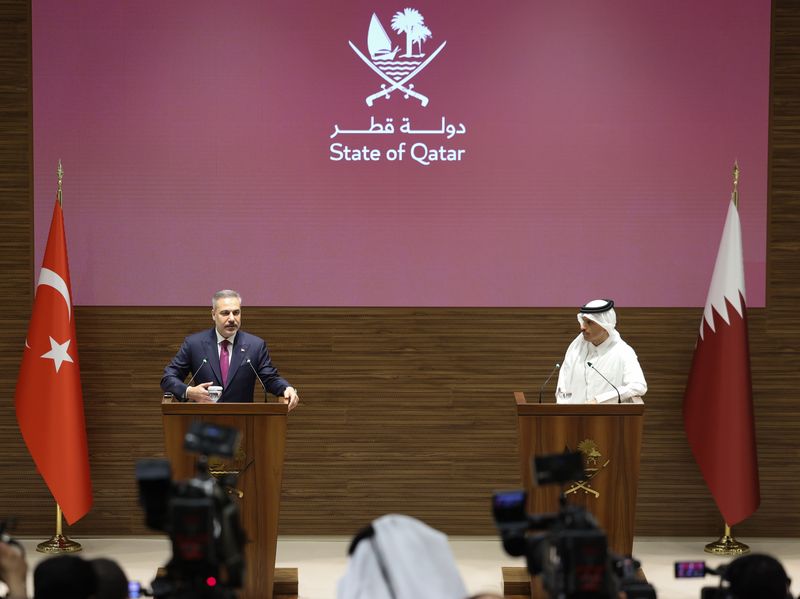
[Financial News] Qatar has strongly warned Iran not to use the Strait of Hormuz as a "weapon" to threaten neighboring countries or gain economic leverage.
On the 12th local time, Euronews reported that Mohammed bin Abdulrahman Al Thani, Qatar's prime minister and foreign minister, held a joint press conference with Hakan Fidan, Türkiye's foreign minister, in the capital, Doha, and said, "Iran must not use the Strait of Hormuz as a weapon to pressure or intimidate Gulf states."
Al Thani emphasized that "the Strait of Hormuz is an international waterway that must always be protected and kept safe," adding that "what is happening in the strait now must never be repeated."
Fidan also echoed the warning, saying that "preventing the weaponization of the Strait of Hormuz is crucial not only for regional security but also for the global economy." His remarks reflected concern over the impact that any blockade or escalation in this key route for global oil and gas supplies could have.
Qatar and Türkiye reaffirmed their full support for Pakistan-led mediation efforts aimed at ending the war in Iran and restoring normal conditions in the Strait of Hormuz.
Al Thani said, "We jointly support the ceasefire agreement and war-ending efforts being pursued by our brother nation, Pakistan," adding that "freedom of navigation must be restored as soon as possible." He also said he visited Washington, D.C. two days earlier and warned U.S. officials about the risks of a prolonged war, while urging constructive engagement with the peace plan.
Fidan said that both the United States and Iran want to end the war, reopen the Strait of Hormuz, and resolve the nuclear issue, but remain divided over the priorities and wording of a possible agreement.
The two foreign ministers also said attacks on merchant ships violate international law, and agreed that any unilateral action threatening maritime security must stop.
The diplomatic pressure comes as ceasefire talks between the United States and Iran have recently stalled. U.S. President Donald Trump has rejected Iran's latest proposal, calling it "completely unacceptable." Iran, meanwhile, is demanding full recognition of its sovereignty over the Strait of Hormuz, sanctions relief, and compensation for war damage, while warning that it will respond militarily if U.S. attacks resume.
[email protected] Yoon Jae-jun Reporter