"AI-driven super surplus likely to push South Korea's rates up by a total of 0.5 percentage points in the second half"
- Input
- 2026-05-12 18:30:36
- Updated
- 2026-05-12 18:30:36
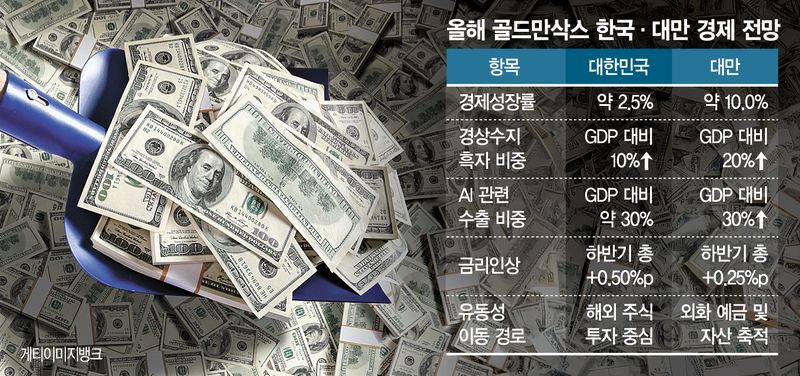
In a report released on the 11th local time, Goldman Sachs said South Korea and Taiwan have entered an unprecedented phase of an "AI-driven super surplus." The report projected that South Korea's current account surplus this year will exceed 10% of gross domestic product (GDP), while Taiwan's will top 20%. That is comparable to the surplus levels once enjoyed by oil-producing countries in the Middle East during periods of high oil prices.
What stands out is that, despite both countries' extreme dependence on energy imports, semiconductor export earnings are more than offsetting the rise in energy costs. Goldman Sachs economists said, "This AI boom is the strongest technology cycle in the economic history of South Korea and Taiwan," adding that "regardless of oil price volatility, semiconductor exports are serving as a safety net for the national economy." The flood of dollar inflows is complicating calculations for central banks. Rather than simply trying to cool an overheating economy, they now face the challenge of using interest-rate hikes to curb excess liquidity created by the massive current account surplus. Goldman Sachs forecast that the Bank of Korea (BOK) will raise rates by 0.25 percentage points in each of the third and fourth quarters this year, for a total increase of 0.5 percentage points.
[email protected] Kim Kyung-min Reporter