"The union should not hold the national economy hostage" ... Shareholders step up pressure [Samsung Electronics general strike at a critical juncture]
- Input
- 2026-05-12 18:28:58
- Updated
- 2026-05-12 18:28:58
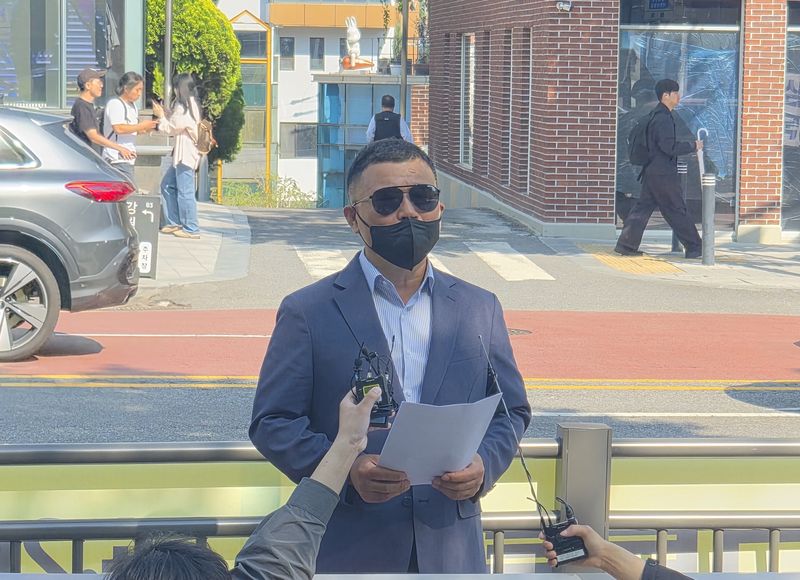
On the afternoon of the 12th, Shareholder Action Headquarters, a small shareholder group for Samsung Electronics, held a rally denouncing the Samsung Electronics labor union in the Hannam-dong, Yongsan-gu, Seoul area and said the union's excessive demands for performance bonuses are increasing the burden on corporate management. Following a banner protest on the 6th, the group has sharply escalated its response, signaling a full-scale shareholder-led pressure campaign.
That day, banners opposing the union's planned general strike lined the streets in the Hannam-dong area. They read, "A strike in a critical semiconductor process is more serious than a strike by the military or police" and "The strike that holds the national economy hostage must be stopped."
Kim, 58, who serves as secretary general of Shareholder Action Headquarters, argued, "Even under normal working conditions, negotiations are possible, so forcing through a general strike could cause enormous damage to the company." He added, "The union should withdraw the strike and apologize to the public."
Another small shareholder group, Korea Shareholder Action Headquarters, also issued a statement on Act, the country's largest shareholder activism platform, and said it would take a hard-line response. The group said, "A strike for the sake of performance bonuses could damage shareholder assets," and added, "We will exercise shareholder rights guaranteed by the Constitution and the system, and review all possible measures, including calls for legislation and legal action."
Industry observers say the dispute is evolving beyond a simple wage negotiation. In addition to the existing labor-management conflict, various stakeholders, including shareholders, the government and non-semiconductor unions, are becoming entangled, broadening the confrontation. As shareholder voices grow louder, criticism of the union's demands is also spreading. There are concerns that higher bonus demands could increase the company's financial burden and undermine shareholder property rights and management stability.
Experts are watching closely for the possibility that the dispute could turn into a conflict of interest between shareholders and workers. Since the size of performance bonuses can reduce the room for dividends, shareholders are likely to be sensitive to both the negotiation process and the outcome. Kwon Jae-yeol, a professor at Kyung Hee University Law School, said, "Performance bonuses are determined through labor-management negotiations, but the institutional mechanisms to control them are limited." He added, "If bonuses are set too high, dividend resources will shrink, making conflict between shareholders and workers inevitable."
[email protected] Lee Dong-hyuk Reporter