[Editorial] Bigger Challenges and Risks Ahead of 50 Years of Auto Exports
- Input
- 2026-05-12 18:11:15
- Updated
- 2026-05-12 18:11:15
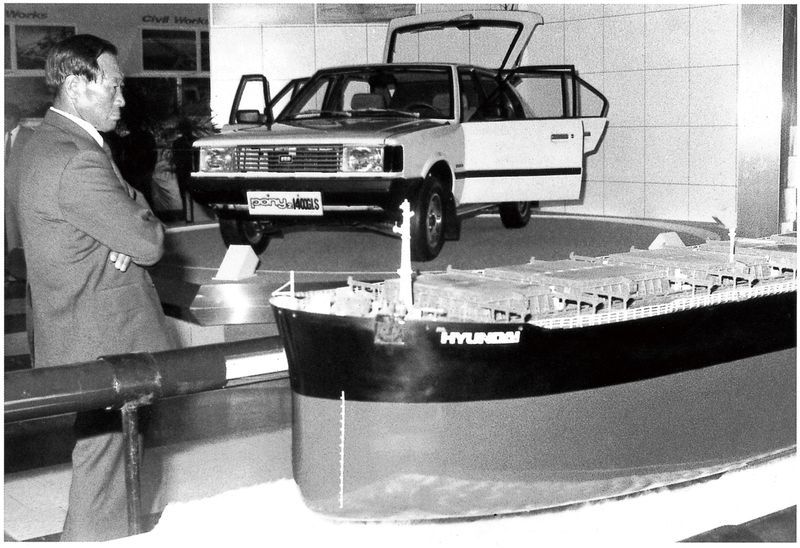
This is a remarkable achievement for an industry that started in a barren landscape with little in the way of technology, capital or infrastructure. South Korea's auto industry is now the world's fourth-largest by export volume, and annual export value exceeds $70 billion. Along with semiconductors, it has become a core pillar of manufacturing. At the Automobile Day ceremony jointly hosted by the government and private organizations, Hyundai Motor Vice Chairman Jang Jae-hoon received the Gold Tower Order of Industrial Service Merit, the nation's highest industrial honor, in recognition of the industry's contribution to the country. It was the first time in 19 years that the award had been presented on Automobile Day.
Korean automakers' success did not come easily. The industry endured years of distrust over quality, followed by the Asian financial crisis, the global financial crisis and supply chain shocks. It overcame each setback through the grit, vision and persistence of determined business leaders. It took half a century for technology, design and the parts ecosystem to reach the forefront.
That pride built over 50 years now faces a new challenge. In the midst of the artificial intelligence mobility upheaval, the industry is being asked to take on even greater risks. The shift to electric vehicles, software-defined cars, autonomous driving and AI-based services has become the future battleground. The environment surrounding the industry is extremely harsh. Protectionist barriers in the United States, Europe and elsewhere are becoming more entrenched. Governments are pressuring companies with local production requirements, tariffs and subsidies.
China's electric vehicle offensive is also intensifying. Chinese companies, backed by price competitiveness and battery supply chains, are shaking up the global market. The domestic market is no less precarious. In South Korea's EV market, the share of Chinese-made vehicles rose sharply from the 4% range in 2022 to 33.9% last year. Following BYD, Zeekr and Xpeng are now rushing to expand into the Korean market. Even though Hyundai Motor Company posted record sales in the first quarter, its operating profit fell 30% from a year earlier, reflecting these shifts in the global landscape.
As a pillar of Korean manufacturing, the auto industry needs strong support so it can secure an edge in the future mobility market. To sustain record exports, the domestic production base must become even more solid. Just as major countries are aggressively expanding incentives for local production, Korea should also consider similar support measures. Introducing a tax incentive to promote domestic production is worth reviewing. Regulations that hinder the commercialization of autonomous driving should be preemptively reformed, and bold support measures for future vehicles should be rolled out. A consultative body on transforming the auto ecosystem, involving academia, industry and research institutions, is expected to be launched this week. The key is meaningful support. We hope the miracle of the Pony can continue.