"People Line Up to Buy This Korean Fruit"...It Is Selling Fast Overseas Even at 10,000 Won Each
- Input
- 2026-05-13 08:04:55
- Updated
- 2026-05-13 08:04:55
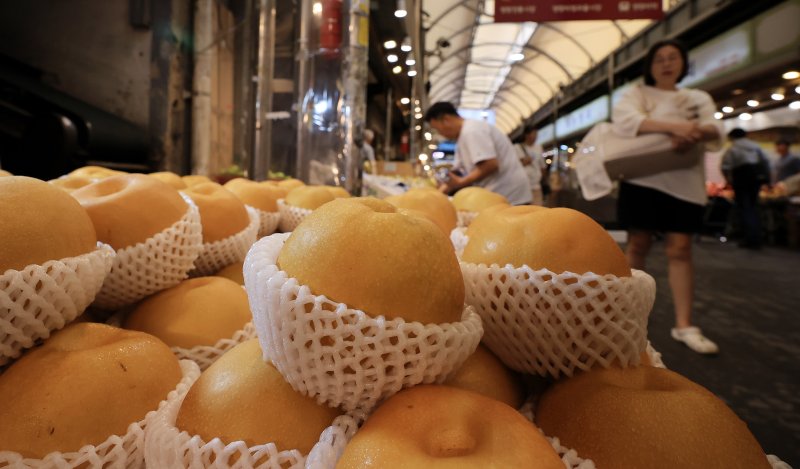
[The Financial News] As Korean agricultural and food products gain popularity overseas, Korean pears, known for their high sweetness and unusual recipes, are increasing sales in global markets. Fresh fruit exports are usually limited to nearby Southeast Asia because of storage constraints, but pears have excellent shelf life. That advantage is helping them expand into the Americas and the Middle East, driving the broader rise in fruit exports.
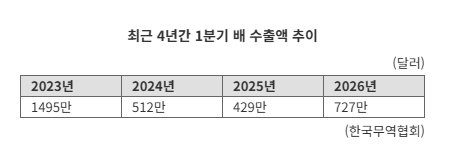
According to KITA on the 13th, pear exports in the first quarter of this year totaled $7.27 million. The figure fell from $14.95 million in 2023 to $5.12 million in 2024 and $4.29 million in 2025, but rebounded for the first time in three years. Exports had been hampered by poor harvests caused by recent unseasonably high temperatures and shrinking cultivation areas, but they have been recovering this year.
The popularity of Korean pears has been driven by their high sweetness and crisp texture. In the Middle East, Europe, and North America, Western pears with a gourd-like shape that are eaten with the skin on are common. By contrast, Korean pears, classified as Asian pears, are round and usually peeled before eating, so they were initially seen as unfamiliar. Still, their higher sweetness and juicier flesh than Western pears became a strength. That result came from cultivation in areas with large day-night temperature gaps and continuous varietal improvement.
Recently, a variety of recipes using pears, such as adding them to cocktails or making cakes, have gone viral on social networking service (SNS). As a result, demand has remained strong despite the high price, which is close to 10,000 won per pear.
Excellent storage life is another key factor behind the export expansion. Even with a Cold Chain system for fresh fruit exports, freshness can decline in distant markets. Pears, however, have thicker skin than other fruits, making them easier to store for long periods. In particular, the Shingo pear, which accounts for 80% of domestic pear production, can be stored for up to a year if temperature and humidity are properly controlled in cold storage. On that basis, exports are expanding beyond Southeast Asia to distant markets such as the Americas and the Middle East.
The industry is also steadily diversifying exports into processed pear products such as pear juice and sliced pears, in addition to whole fruit. Related organizations are also supporting overseas sales by developing customized recipes and maintaining strict quality control.
An official from the Korea Pear Export Association said, "We are supporting the development of recipes using pears so that exports can proceed smoothly to the United States, Taiwan, Vietnam and other markets." The official added, "We are also continuing efforts to strengthen product competitiveness by operating monitor staff to maintain quality control of products sold overseas and by using QR codes so customers can check the country of origin and detailed information."
[email protected] Park Kyung-ho Reporter