Lee Jae Myung: "Finance is inherently ruthless, but there are limits... Find a solution"
- Input
- 2026-05-12 13:55:17
- Updated
- 2026-05-12 13:55:17
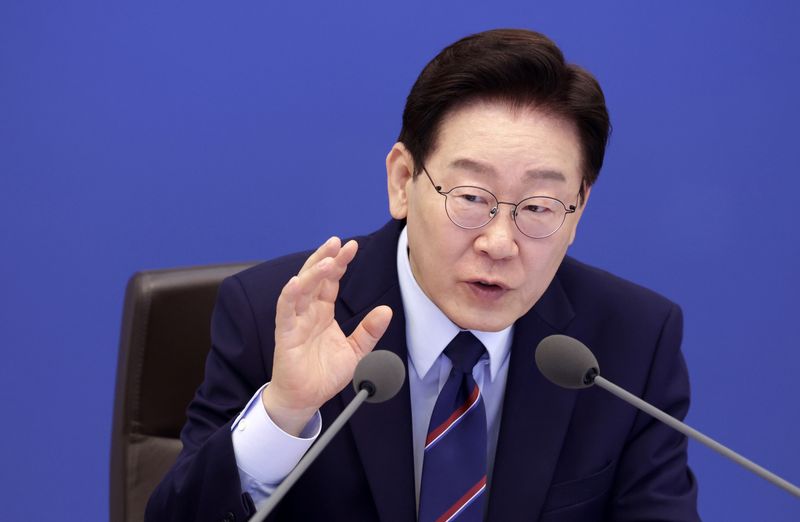
[The Financial News] On the 12th, President Lee Jae Myung instructed officials to "find a solution even through legislation" after some private bad banks declined to join the government's debt relief program for low-income households, leaving borrowers to suffer from collection efforts.
At the State Council of South Korea meeting and Emergency Economic Review Meeting he chaired at The Blue House that day, Lee said, "I saw media reports suggesting there is a private bad bank called Sangnoksu," adding, "There is an institution managing delinquent accounts from the card crisis as part of efforts to clean up bad debt, but it is still aggressively pursuing collections."
Lee asked, "During the card crisis, didn't card companies and financial institutions all receive money from government tax funds?" He added, "Yet they are still relentlessly collecting on the debt that caused the problem, while posting tens of trillions of won in annual operating profit and apparently receiving dividends worth more than 10 billion won, not just hundreds of millions."
Earlier that morning, Lee also shared a media report on X (formerly Twitter) saying that related debtors were struggling because private bad banks had not joined the government's debt relief policy for low-income households. He criticized the situation, saying, "I did not know that such primitive predatory finance was still openly surviving and tightening its grip on ordinary people." The article he shared said the private bad bank Sangnoksu did not participate in the government's Saedoak Fund, so related debtors could not receive debt relief benefits. It also reported that the bank had received about 42 billion won in dividends over the past five years. Sangnoksu's major shareholders include major domestic banks and card issuers.
Lee said, "There are limits even in economic activity and corporate profit-seeking," adding, "No matter how much money matters, these are our neighbors in a community where we must live together. Too much is as bad as too little."
When Lee raised the issue again at the State Council of South Korea meeting, FSC Chairman Lee Eok-won reported that the commission would consider separately contacting shareholders to seek their consent. Lee said, "It could later become a controversy over abuse of authority, and since this is a form of private property, we cannot force it," but added, "Finance is inherently somewhat ruthless. Its essence is money-making, but there are still limits."
He continued, "How many years has it been since the card crisis? As I said earlier, those card companies and institutions all received government support, didn't they? The people who fell behind on payments then are now seeing their interest grow for more than 20 years, turning tens of millions of won into hundreds of millions." He asked, "How are those people supposed to live? Does this fit the public's moral sense?"
Lee also said, "Financial institutions are not loan sharks, but they also benefit from using the government's power to issue currency in their business. Through licensing and approval systems, they restrict others from entering the market and gain advantages." He added, "Then they should bear public regulation and public burdens as well. It does not seem right to enjoy the benefits while refusing to shoulder any burden to the very end. We cannot force it, but please review whether there are any possible alternatives."
[email protected] Choi Jong-geun, Seong Seok-woo Reporter