AI Semiconductors Break Through the Roof: South Korea and Taiwan Enter a Massive Surplus Era on the Scale of Oil-Producing Nations
- Input
- 2026-05-12 13:31:15
- Updated
- 2026-05-12 13:31:15
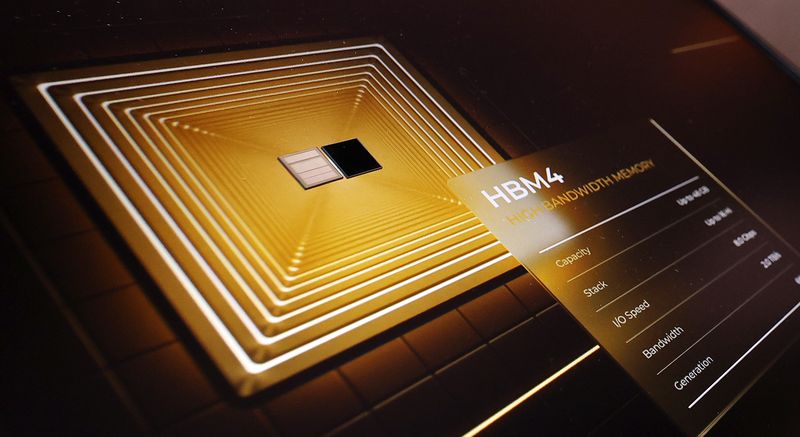
[Financial News] The surge in semiconductor demand triggered by the artificial intelligence revolution is fundamentally shaking the economic structures of South Korea and Taiwan. Beyond a boom in a single industry, a clear case of so-called Silicon Hegemony is emerging, in which the entire current account balance, monetary policy, and even the broader industrial ecosystem are being reorganized around AI.
AI-driven surplus that wipes out the energy crisis
In a report released on the 11th local time, Goldman Sachs said South Korea and Taiwan have entered an unprecedented phase of an "AI-driven super surplus." The report projected that South Korea's current account surplus this year will exceed 10% of Gross Domestic Product (GDP), while Taiwan's will surpass 20%. That is comparable to the surplus levels once enjoyed by Middle Eastern oil-producing countries during periods of high crude prices.
What stands out is that, despite both countries' extreme dependence on energy imports, semiconductor export earnings are completely outweighing the rise in energy costs. Goldman Sachs economists said, "This AI boom is the strongest technology cycle in the economic history of South Korea and Taiwan," adding that "regardless of oil price volatility, semiconductor exports are serving as a safety net for the national economy."
The flood of dollars is complicating the calculations of central banks. Rather than simply trying to cool an overheated economy, they may need to raise interest rates to curb excess liquidity caused by the huge current account surplus.
Goldman Sachs forecast that the Bank of Korea will raise rates by 0.25 percentage point in the third quarter and another 0.25 percentage point in the fourth quarter this year, for a total of 0.5 percentage point. Taiwan's central bank is also expected to carry out a gradual increase totaling 0.25 percentage point over the year. That means South Korea and Taiwan could be the only ones to tighten policy on their own at a time when major economies around the world are considering a pivot.
The steep tilt in the economic structure is also driving a rapid qualitative shift in industry. This year, South Korea's AI-related exports are expected to reach 30% of GDP. Given that the share was below 10% over the past decade, the economy has become sharply skewed toward AI semiconductors in just one or two years. Taiwan has also seen its AI ecosystem, led by TSMC, become a key pillar of total exports, pushing its share of GDP above 30%. In fact, Samsung Electronics and SK hynix are maximizing profitability by dominating the High Bandwidth Memory (HBM) market. As a result, the report expects South Korea's economic growth rate to rebound from 1.0% last year to 2.5% this year, while Taiwan's growth is projected to rise from 8.7% to nearly 10%.
K-shaped growth pains and money management challenges
Behind the dazzling numbers, however, lies the shadow of K-shaped growth, marked by widening polarization across industries. While semiconductors are racing ahead on their own, legacy sectors such as automobiles, petrochemicals, and steel are struggling to keep up. Oversupply, weaker global demand, and energy costs are weighing on these traditional manufacturers. Goldman Sachs warned that "the recovery in non-tech sectors remains limited," adding that excessive dependence on the technology sector could increase economic volatility in the years ahead. If the semiconductor cycle turns downward, the shock to the broader economy could be far greater than in the past.
The destination of the surplus money is also notable. In South Korea, surplus funds are flowing heavily into overseas stock investments, fueling the boom among Korean individual investors investing in overseas stocks. In Taiwan, by contrast, the money tends to accumulate in the form of foreign-currency deposits. Even so, the sheer scale of dollar inflows makes it difficult to avoid upward pressure on the Korean won (KRW) and the New Taiwan dollar (TWD).
Morgan Stanley said, "Asia has entered a new industrial supercycle centered on AI," adding that "managing currency fluctuations and liquidity created in the process will be the biggest economic challenge for East Asian countries over the next two to three years."
[email protected] Kim Kyung-min Reporter