KDI Says Economic Recovery Continues, but Downside Risks Remain From Middle East War
- Input
- 2026-05-12 12:00:00
- Updated
- 2026-05-12 12:00:00
[The Financial News] South Korea's economy is continuing its recovery, supported by strong semiconductor exports and an improvement in the services sector, a state-run think tank said. However, higher oil prices and inflationary pressure stemming from the prolonged Middle East war were identified as downside risks to the economy.
The Korea Development Institute (KDI) said in its "KDI Monthly Economic Trends" report for May, released on the 12th, that "the economy continues to improve, led by semiconductor exports and the services sector, but downside risks remain due to the Middle East war."
According to KDI, all-industry production rose 3.5% in March from a year earlier, widening from a 0.1% increase in the previous month. Services output increased 5.1%, led by finance and insurance, which rose 12.7%, and transportation and warehousing, which gained 6.6%. Industrial production also climbed 3.6%, supported by a 9.9% increase in semiconductors.
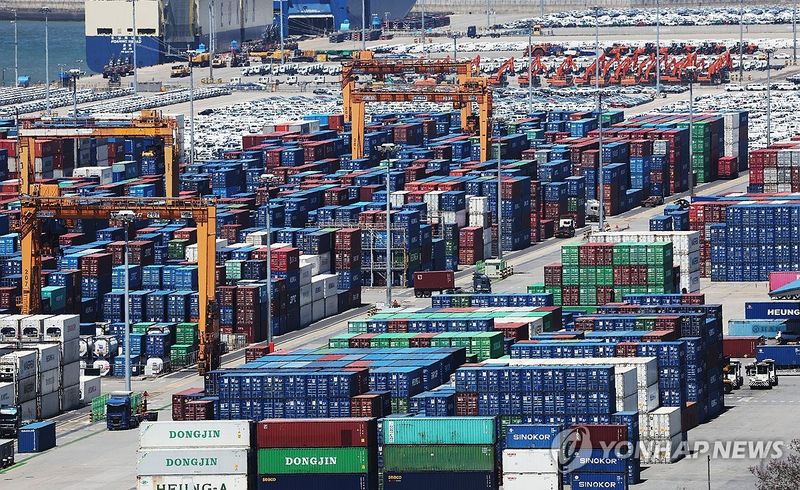
Exports continued to post strong gains, led by semiconductors. April exports jumped 48.0% from a year earlier. Semiconductor exports surged 173.5%, while computer exports soared 515.8%, driven by rising demand for artificial intelligence (AI). Ship exports also rose 43.8%, supporting overall export growth.
KDI explained that "as export prices surged on the back of strong semiconductor performance, export volumes also showed relatively strong growth."
Domestic demand also maintained a gradual recovery trend. Retail sales in March rose 5.0% from a year earlier. Sales of durable goods rebounded from minus 8.3% in the previous month to 15.0%, driving the recovery in consumption. Transportation and warehousing output, which is closely tied to services consumption, also increased 6.6%, extending its solid performance.
Facility investment also remained firm, supported by expanded spending centered on semiconductors. Facility investment rose 9.2% in March, while imports of semiconductor manufacturing equipment increased 55.5% in April.
By contrast, the construction sector remained sluggish. Construction completed work fell 5.4% in March from a year earlier, reflecting continued weakness in the building segment, especially residential construction.
Inflationary pressure is also rising as the Middle East war drags on. Consumer prices rose 2.6% in April, up from 2.2% in the previous month. Petroleum product prices jumped as much as 21.9%, and inflation expectations also rose from 2.6% in February to 2.9% in April.
Consumer sentiment also weakened somewhat. The Composite Consumer Sentiment Index (CCSI) fell sharply to 99.2 in April from 107.0 in the previous month.
KDI said that "high oil prices and supply chain disruptions are increasing downward pressure on the economy." It added that "as tensions persist in the Middle East, oil prices and global supply chain instability are continuing," and noted that "if high oil prices last for an extended period, there is a high likelihood that global growth forecasts will be revised down further."
[email protected] Kim Chan-mi Reporter