China's role in ceasefire talks grows as Trump meets Xi six times over two days
- Input
- 2026-05-11 18:27:35
- Updated
- 2026-05-11 18:27:35
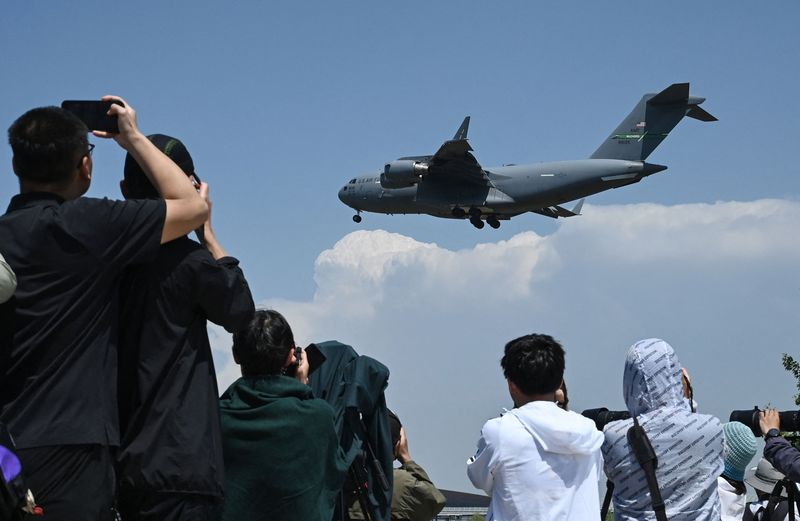
Trump, who arrives in Beijing on the night of the 13th, will hold six meetings over his three-day, two-night trip, including the summit on the 14th. The two leaders will then tour the Temple of Heaven in Beijing before attending a state dinner together. The White House said Trump also plans to have a bilateral tea meeting and a working lunch with Xi on the 15th before leaving China. Their last meeting was at the summit in Busan in October last year, making this their first encounter in six months.
Anna Kelly, a White House deputy press secretary, said Trump also hopes to host a reciprocal visit in Washington, D.C. later this year, inviting Xi and his wife Peng Liyuan. She added, "President Trump will recalibrate relations with China to restore America's economic independence, with reciprocity and fairness as top priorities." She said the summit agenda also includes efforts to advance a U.S.-China Trade Committee and an Investment Committee, as well as additional agreements in aerospace, agriculture, and energy.
■ Expectations for easing trade tensions
Trade tensions are a key agenda item. With the November midterm elections approaching, Trump is seeking visible diplomatic gains, including expanded Boeing aircraft sales, increased exports of U.S. soybeans, and the creation of a new trade committee to manage commercial disputes between the two countries. Boeing CEO Kelly Ortberg will also accompany the trip. On trade, the two sides could announce a truce agreement.
China is expected to press for tariff relief and eased export controls on advanced semiconductors. U.S. tariffs on Chinese goods range from 7.5% to 25% for ordinary items, but much higher rates are imposed on strategic industries, including 100% on electric vehicles and 50% on semiconductors and solar products. In addition, exports of high-performance artificial intelligence semiconductors to China remain tightly restricted. China is also likely to use its rare-earth elements supply chain as a bargaining chip. Experts say the most likely outcome is not a sweeping trade deal, but a limited agreement such as a pause on further tariff hikes and expanded purchases of U.S. agricultural products and aircraft.
■ A new variable brought by the Middle East war
As the United States struggles to make progress in ceasefire negotiations, it is also likely to seek China’s influence. China, which has significant leverage over Iran, has emerged as an important mediator and negotiating tool for both Washington and Tehran.
In particular, the United States designated four entities as sanctions targets on the 9th, including three Chinese companies and one Iranian institution. The U.S. government said the companies provided satellite imagery to Iran, helping it identify the locations of U.S. and allied military facilities. Chang Guang Satellite Technology was specifically accused of supplying images related to U.S. military facilities in the Middle East during American military operations against Iran.
On the 10th, Financial Times (FT) reported that "China will discuss issues such as providing dual-use components and potential weapons exports to Iran and Russia." The source also said that "recent U.S. sanctions measures against China will also be part of the leaders' talks." Ahead of the summit, China is also reported to have asked the United States to change its Taiwan policy. Beijing is said to want Washington to use a tougher phrase, such as "oppose Taiwan independence." A U.S. official drew a line, saying, "There will be no change in U.S. policy toward Taiwan."
[email protected] Reporter