[Editorial] KDI Warns of Soaring Inflation Through Next Year; Everything Is Tough Except Semiconductors
- Input
- 2026-05-11 18:25:12
- Updated
- 2026-05-11 18:25:12
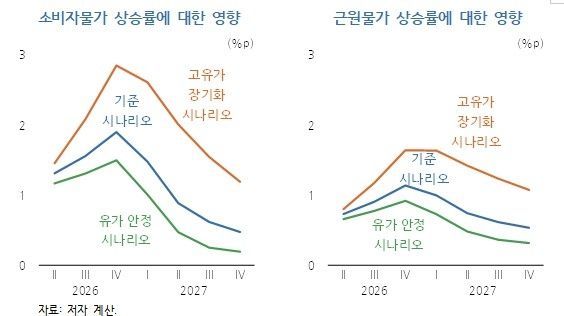
KDI's analysis is based on the assumption that global oil prices will remain at $105 per barrel. If oil prices ease gradually, the increase would be smaller than that. Even so, prices are still expected to rise by an additional 1.0 percentage point this year.
At present, the South Korean economy appears to be running smoothly without major problems. The reason is the boom in semiconductors. Strong exports continued in May, and from the 1st to the 10th of this month, they hit an all-time high for the same period. Semiconductors accounted for 46.3 percent of exports, nearly half. By contrast, passenger car exports fell 26.0 percent. The economy is being driven by a single dominant semiconductor sector. Semiconductors are also lifting stock prices, with the benchmark index repeatedly setting new records.
This kind of concentration and illusion does not help the health of the economy. If semiconductors are left out of the picture, the overall economy can hardly be called strong. If semiconductor exports weaken, total exports could even turn negative, and the stock market would not look nearly as good as it does now.
The semiconductor-driven imbalance will also deepen polarization. Performance bonuses will become a feast only for the Samsung Electronics labor union, which is demanding 700 million won, and for SK hynix, which has already received a substantial amount. Many companies are not even in a position to worry about bonuses; they are worried about survival. For workers at those companies, the bonus dispute at Samsung Electronics may feel like a problem in another country.
Inflation, especially consumer prices, is a barometer of the economy. Moderate inflation is necessary, and rising prices can be the result of an economic boom. But that is not the situation now. Prices are being pushed up by higher international oil and raw material costs. In other words, prices are not rising because the economy is strong, incomes are growing, and people are spending more.
If consumer prices rise while the broader economy, excluding semiconductors, remains weak, the pain for ordinary people will intensify. The government is artificially lowering inflation figures by enforcing a cap on oil prices, but it is difficult to keep relying on such measures indefinitely. If the semiconductor supercycle now underway turns downward, a major recession could follow. If prices rise during a downturn, the economy could slip into stagflation.
Global oil prices are beyond our control. The government can, however, act against hoarding and improve distribution management. Each ministry should also do everything possible to stabilize prices, including actively implementing supply-and-demand adjustment measures for items already in stock. According to KDI's analysis, high inflation will continue through next year, making the fight against rising prices a long one.
At the same time, the Samsung Electronics labor union should end its performance bonus dispute and return to the production line. It is so focused on immediate gains that it cannot see the country's future, or even its own. It must understand that pursuing only its own interests could end up damaging the nation's future. If the national economy worsens, both Samsung and the union will suffer as well. While the Samsung Electronics labor union is arguing over sums ordinary people cannot even imagine, there are also livelihoods being crushed in the shadows.