Lee Jae-myung Says Only Top Credit Tiers Can Borrow... Low-Interest Loans for the Bottom 50% Set in Motion
- Input
- 2026-05-12 05:59:00
- Updated
- 2026-05-12 05:59:00
According to the financial sector on the 12th, the Korea Inclusive Finance Agency and the Credit Counseling and Recovery Service (CCRS) plan to officially launch a research team for introducing basic financial rights on June 11.
The two organizations held two meetings, at the end of last month and earlier this month, to prepare for the launch. The research team will operate through four working groups covering law, data, case studies and other areas, and outside experts from institutions such as the Korea Institute of Finance (KIF) are also expected to take part. It will also consider ways to secure funding, including financing structures.
Starting with the concept of basic financial rights, the team aims to flesh out the so-called 'basic finance series,' including basic loans, basic deposits, basic insurance and basic debt adjustment. Basic financial rights refer to the right to use financial services and receive credit regardless of income, assets or credit rating. The original plan was to include the word 'basic' in product names to reflect the concept, but the team is now considering changing it to 'basic' to avoid confusion with basic income.
The proposed 'basic loan' would guarantee all citizens access to a certain amount of credit loans regardless of their credit rating. The idea is to provide at least a minimum level of access so that people with limited credit histories or financial records are not excluded from the financial system. Specifically, the team is considering offering low-interest loans of around 10 million won to low-credit borrowers in the bottom 50%.
For 'basic deposits,' the team is reviewing a plan to offer interest rates twice those of commercial banks to people in the bottom 20% to 30% of credit scores. The goal is to help low-income households with repayment capacity build seed money and establish a foundation for recovery.
Kim Eun-kyung, head of the Korea Inclusive Finance Agency and chair of the CCRS, said, "We plan to make legislative proposals that comprehensively cover the concept of basic financial rights and how to implement them." She added, "In the second half of the year, we will come up with specific bill names and details."
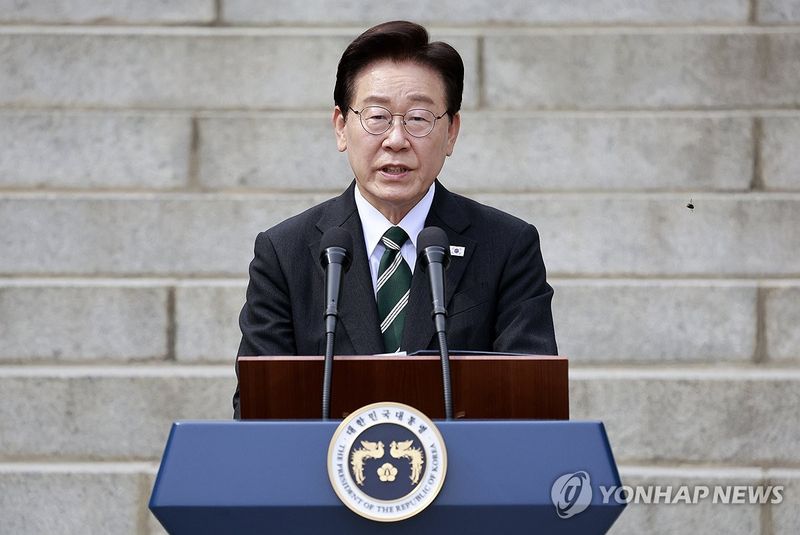
The financial sector expects the debate over basic financial rights to gain further traction as President Lee Jae-myung and Cheong Wa Dae policy chief Kim Yong-beom continue to point out so-called 'cruel finance' that leaves vulnerable groups behind.
Earlier, at a Cabinet meeting on the 6th, President Lee said, "Loans are being given only to top-tier borrowers, while everyone else is left out and forced to rely on secondary financial institutions, private lenders and loan sharks." Kim, a former economic policymaker, also publicly criticized the current financial structure, saying, "Top-tier borrowers can raise funds comfortably at low interest rates, but below them lies a steep cliff of high interest rates."
In response, the financial authorities are also discussing the launch of a tentatively named 'Inclusive Finance Promotion Task Force' within this month. It is expected to overhaul credit rating systems that burden low-credit borrowers with high interest rates, as well as lending practices centered on high-credit customers.
Basic finance was also one of President Lee Jae-myung's campaign pledges in the 20th presidential election. At the time, he promised to "ease financial inequality through basic finance," including △ basic loans, which would allow anyone to borrow 10 million won through a low-interest overdraft loan for 10 to 20 years, and △ a basic savings system, under which anyone could save up to 10 million won at an interest rate higher than ordinary deposits and use it as funding for basic loans.
However, there are also concerns that securing sustainable funding is essential for basic finance to become a reality. In particular, low-credit borrowers are more likely to see delinquencies and defaults surge all at once during an economic slowdown.
According to data on domestic bank lending and delinquency status that People Power Party lawmaker Kang Min-kuk of the National Policy Committee received from the Financial Supervisory Service (FSS), the overall delinquency rate for bank loans stood at 0.56% at the end of March, up 0.06 percentage point from the end of last year. In particular, the delinquency rate for borrowers in the bottom 50% of credit scores was 2.41%, more than four times higher than the overall rate.
[email protected] Lee Jumi Reporter