Japan's Leading Stocks Are Changing Hands as Automakers Fall Behind and Semiconductors, AI and Banks Rise
- Input
- 2026-05-11 10:02:07
- Updated
- 2026-05-11 10:02:07
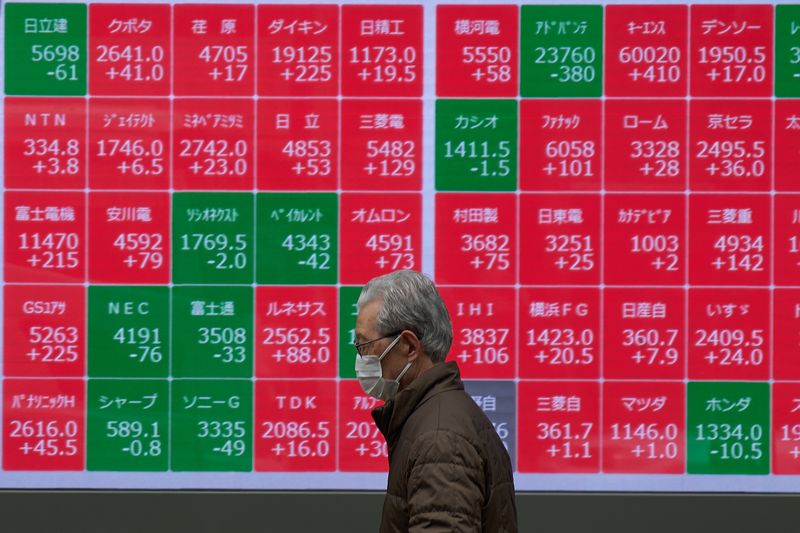
[Tokyo = The Financial News, Reporter Seo Hye-jin] Nihon Keizai Shimbun reported on the 11th that Japan's stock market is seeing a shift in leading stocks, driven by changes in the country's industrial structure and the impact of inflation. While automakers and telecom companies, once among the largest by market capitalization, have been lagging, semiconductor-related stocks, banks and trading houses are surging.
According to The Nikkei, as of the 8th, there were 27 listed companies with market capitalizations of 10 trillion yen or more, up four from the end of last year. In mid-last month, the number briefly rose to 30.
A decade ago, only three companies — Toyota Motor Corporation, NTT Docomo and NTT — belonged to the 10 trillion yen market-cap club. The number first topped 10 in December 2023 and then surpassed 20 in May last year. The number of companies with market capitalizations of 20 trillion yen or more has also risen to a record 10.
This reflects the rapid increase in corporate values, with the Nikkei 225 Stock Average closing above 62,000 for the first time ever on the 7th. The Nikkei Stock Average (Nikkei 225) has risen about 25% from the end of last year.
The rally has been led by semiconductor stocks. As of the 8th, Kioxia Holdings had a market capitalization of 24.2 trillion yen, more than 30 times its level at the time of its December 2024 listing, when it was valued at 784.3 billion yen based on the offering price. Its market-cap ranking also jumped from 43rd at the end of last year to fifth, overtaking major manufacturers such as Hitachi, Ltd. and Keyence Corporation.
As NAND flash memory prices have surged on stronger demand from artificial intelligence, earnings forecasts for the first quarter of 2027 and beyond are also being revised up quickly. Among the current top 10 companies by market capitalization, four are AI- and semiconductor-related firms, including Kioxia Holdings, SoftBank Group Corp., Tokyo Electron Ltd. and Advantest Corporation.
Japanese companies are supporting the AI boom with about 30% of the global market in semiconductor manufacturing equipment and about 50% in materials and components. Some firms have also added trillions of yen in market value this year, such as Mitsui Kinzoku Company, Limited, which holds more than 90% of the global market for ultra-thin copper foil used in semiconductor packaging.
The revival of bank stocks is also notable. Japan's three megabanks, including Mitsubishi UFJ Financial Group (MUFG), all surpassed 10 trillion yen in market capitalization last year. Their improved profitability reflects the higher-rate environment brought on by inflation.
Trading houses with resource investment networks spanning the globe have also made strong gains. Major trading firms, including Mitsubishi Corporation, have all climbed in the rankings.
At the root of this trend is the inflationary environment.
Tetsuro Ii, president of Commons Asset Management, said, "The biggest factor is that Japan's economic backdrop has shifted from deflation to inflation." He explained that with the end of long-term deflation, companies have found it easier to pass on rising costs and stronger demand through prices.
In an inflationary environment, corporate sales and profits tend to grow more easily, which in turn supports share-price gains that reflect expectations for growth. The Nikkei said, "Semiconductor stocks, where price increases and a sharp jump in earnings are occurring simultaneously as AI investment expands, are a symbolic example of inflation and stock-price gains."
By contrast, the automotive sector is struggling. Toyota Motor Corporation remains No. 1 with a market capitalization of 46 trillion yen, but the gap with the companies behind it is narrowing. Its stock hit a year-to-date low on the 8th amid disappointment over its earnings plan for the first quarter of next year, which forecast a third straight year of net profit declines.
All three major Japanese automakers, including Honda and Nissan, have price-to-book ratios below 1. In the TOPIX (Tokyo Stock Price Index), the transportation equipment sector accounts for 5.3%, down 2 percentage points over the past year and at its lowest level since 2000.
The Nikkei noted, "A decade ago, the top market-cap companies were mainly traditional firms that offered stable high dividends, but now investment funds are shifting toward growth companies." Akino Mitsunari, president of Ichiyoshi Asset Management, said, "In the past, Japan had little beyond automakers as a growth industry. It is positive that companies with global competitiveness are now rising to the top."
[email protected] Seo Hye-jin Reporter