"Can't Rest Even at Night": Retail Investors Head to Night Futures After Work... Daily Trading Tops 1.4 Trillion Won
- Input
- 2026-05-11 08:16:14
- Updated
- 2026-05-11 08:16:14
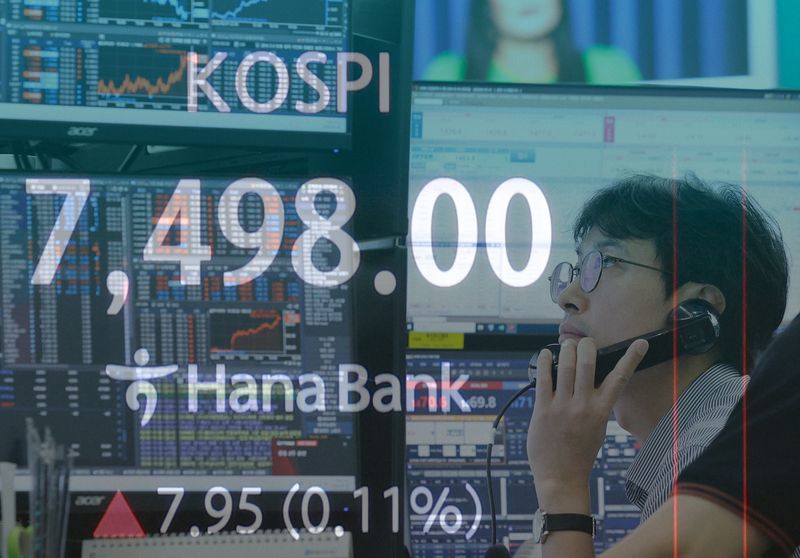
[Financial News] Trading in KOSPI 200 Index Futures during night sessions has surged sharply this year. The rise is seen as reflecting growing investor interest in the stock market amid an unprecedented bull run.
Night trading in KOSPI 200 Index Futures tops 14.6 trillion won... Triples in four months
According to the Korea Exchange (KRX) on the 10th, average daily night-session trading in KOSPI 200 Index Futures, including both buying and selling, reached 14.6133 trillion won from the start of this month through the 7th. That is nearly three times the 4.9106 trillion won recorded in December last year, marking a sharp increase in just about four months.
Average daily trading volume rose sharply to 8.035 trillion won in January, 11.8099 trillion won in February, and 13.6508 trillion won in March, before easing slightly to 10.8524 trillion won in April. It then rebounded this month, climbing well above 14 trillion won again.
Night trading in KOSPI 200 Index Futures runs for 12 hours, from 6 p.m. on weekdays until 6 a.m. the following day. Its key feature is that investors can respond in advance to a range of issues that emerge overnight after the regular session closes.
As overseas issues such as the U.S.-Iran war grew, night trading drew more attention
Market volatility increased after the war between the United States, Israel and Iran that broke out in late February, and interest in night trading rose along with it. In addition, as the KOSPI Composite Index broke through the 7,000 level this month and more investors entered the market, trading volume also appears to have increased.
Night trading in KOSPI 200 Index Futures is expected to keep growing. That is because geopolitical risks in the Middle East, which have had a major impact on the domestic market since March, have yet to be resolved.
Overseas developments that could move the market are also continuing. This week alone, investors are awaiting possible rate hikes or holds by central banks in major economies, as well as the April Consumer Price Index (CPI) release, which could show how the Iran war has affected U.S. consumption, and Walmart Inc.'s first-quarter earnings report.
If U.S. inflation comes in above market expectations, concerns over inflation could deepen and affect the domestic market as well.
Lee Jeong-won, a researcher at Mirae Asset Securities, said, "The average price of WTI in March and April was around $95 per barrel, up 52% from January and February," adding, "The accumulated rise in oil prices could be passed through to inflation."
Na Jeong-hwan, a researcher at NH Investment & Securities, said, "After the earnings season, the next catalyst for further gains will be whether inflation stabilizes," and predicted, "If the U.S. April core CPI matches the market consensus of a 2.7% increase from a year earlier, the market will likely move into a relief rally."
[email protected] Kim Hee-sun Reporter