Samsung Electronics at the center of labor strife as internal conflict peaks; all-out strike hinges on post-mediation talks
- Input
- 2026-05-10 18:24:25
- Updated
- 2026-05-10 18:24:25
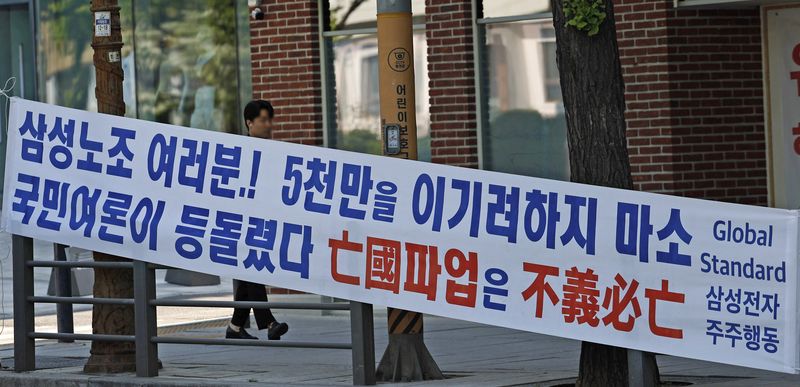
According to industry sources on the 10th, the post-mediation process between Samsung Electronics and its union is scheduled for the 11th and 12th. Formal talks will resume 45 days after negotiations were suspended on March 27. The latest mediation was arranged through government intervention. Earlier, Kim Do-hyung, head of the Gyeonggi District Employment and Labor Office, which oversees Samsung Electronics' workplaces, met with Choi Seung-ho, chairman of the Samsung Electronics Branch Union of the enterprise union. Subsequent labor-management-government discussions led to the decision to restart negotiations through post-mediation.
Although a table for renegotiating performance bonuses has finally been set up, analysts say it is still unclear whether the two sides can reach an agreement because their differences remain wide. The union has already announced an all-out strike plan for 18 days starting on the 21st. When announcing the post-mediation talks, Choi said, "If the result does not satisfy our members, we will not hesitate to launch an all-out strike."
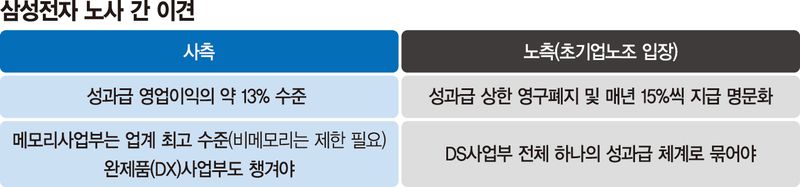
Labor and management remain far apart. The company is said to have proposed paying bonuses this year at about 13% of operating profit, or roughly 53 million won per employee. The union, however, wants a permanent abolition of the bonus cap and a written commitment to pay 15% every year. If the union's demand is accepted, Samsung Electronics would need to pay about 45 trillion won in bonuses this year, or around 600 million won per person based on memory operations. That amount is four times Samsung Electronics' shareholder dividend last year, which was about 11 trillion won, and it also exceeds the company's research and development spending over the same period, which stood at about 37 trillion won.
■ Internal union conflict deepens over excessive demands
Another major point of contention is how bonus funds should be allocated not only to the Memory Business, but also to non-memory operations such as System LSI and Samsung Foundry. The union's current proposal is close to grouping the entire DS division under a single bonus system. Under that scenario, the Memory Business would receive about 600 million won per employee, while the non-memory divisions would receive about 300 million to 400 million won. The company, however, says it may be able to offer industry-leading bonuses to the Memory Business, but the System LSI and Samsung Foundry divisions, which have posted losses for years, should be limited to less than 100 million won per employee. Its view is that it would be unrealistic to apply the same standard to divisions that are running large deficits.
There are also calls for consideration of the finished-products business, or DX. The National Samsung Electronics Union (SECU), the second-largest union under the Joint Struggle Headquarters, and union members in the DX division argue that company-wide common bonus funds should be secured so that employees in the set business can also receive a certain level of performance pay. By contrast, Choi, who is serving as the labor-side representative in this post-mediation process, is reportedly maintaining his position that the issue of a company-wide common fund will not be put on the negotiating table. The enterprise union says about 80% of its roughly 73,000 members belong to the DS division. As a result, some members have openly complained that the talks are, in effect, focused only on DS.
The business community says the company has already made concessions, so the union should also take a more flexible approach and review the company's proposal. "To reach a settlement, the union needs to bring its excessive demands down to a realistic level," said an industry source.
[email protected] Im Subin Reporter