Iran stays silent on ceasefire talks as Putin says Russia can take in exported uranium
- Input
- 2026-05-10 18:21:15
- Updated
- 2026-05-10 18:21:15
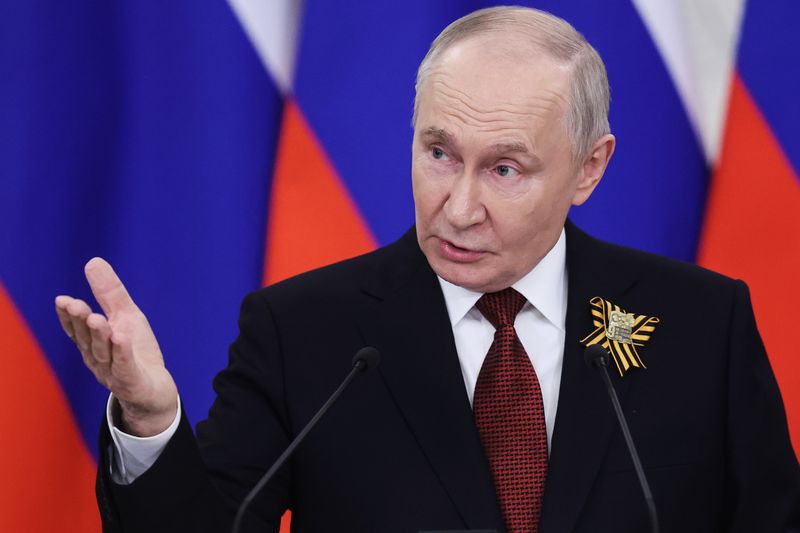
According to Russian state media outlet RT, Putin said in a speech on the 81st anniversary of Victory Day, after the parade on May 9 local time, that Russia was ready to take in and store Iran’s enriched uranium. He added, "We already did that once in 2015," and emphasized, "Iran trusted us completely."
Putin expressed confidence by referring to the Joint Comprehensive Plan of Action (JCPOA), which Iran signed in 2015 with the five permanent members of the United Nations Security Council (UNSC) and Germany. Under the deal, Iran was allowed to enrich uranium only up to 3.67% for 15 years, and any already enriched uranium was to be shipped to Russia, while the West would ease economic sanctions on Iran. At the time, Iran sent 11 tons of enriched uranium to Russia under the JCPOA.
After the Trump administration dismantled the JCPOA framework and Iran resumed high-level uranium enrichment, reviving the nuclear crisis, Putin again proposed in June last year that Iran’s highly enriched uranium be transferred to Russia.
The key issue in the current ceasefire talks is also how to handle Iran’s 440 kilograms of uranium enriched to 60%. Trump is demanding that all of the highly enriched uranium be handed over to the US. He also wants Iran to halt uranium enrichment for the next 20 years and shut down three major nuclear facilities. Iran, meanwhile, is insisting that some of the highly enriched uranium be moved to Russia and other countries, while the rest be diluted and kept at home.
Trump has repeatedly claimed that he would "hear back from Iran soon" on the ceasefire proposal, but Iran still had not sent its position on the US offer as of May 10. Iranian Foreign Minister Abbas Araghchi criticized Washington, saying, "The US military’s escalation of tensions in the Persian Gulf and its violations of the ceasefire make it hard to trust America’s sincerity about a diplomatic solution."
The Islamic Revolutionary Guard Corps (IRGC) also accused the US of maintaining a maritime blockade on Iranian ports. The IRGC warned that "any attack on an Iranian tanker or merchant vessel will trigger a powerful retaliatory strike against major US bases in the region and enemy ships."
■ The US steps up pressure on diplomacy as it tightens the Strait of Hormuz blockade
The warning came just one day after the US disabled two Iranian-flagged tankers with strikes. USCENTCOM said on May 9 that the maritime blockade was being "fully enforced," adding that since April 13 it had turned back 58 merchant ships and disabled four in order to block access to Iranian ports. Experts say, "The IRGC has seized power amid a leadership vacuum and is blocking the moves of moderate leaders who were seeking an agreement with the US." Trump has also said the Iranian regime is "out of control" and claimed that there is no clear ruler.
Meanwhile, US Secretary of State Marco Rubio and White House envoy Steven Charles Witkoff met with Qatar’s Prime Minister Mohammed bin Abdulrahman bin Jassim Al Thani in Miami on May 9 to discuss the ceasefire issue. At the meeting, Rubio stressed that "Iran’s attempt to control and claim authority over international waterways is absolutely unacceptable." Despite the tense standoff, Iran is currently pushing to establish a separate body to approve vessels passing through the Strait of Hormuz.
[email protected] Yoon Jae-joon, Hong Chae-wan Reporter