Iran's 'mosquito fleet' leaves the U.S. Navy powerless, stalling efforts to reopen the Strait of Hormuz
- Input
- 2026-05-10 07:09:33
- Updated
- 2026-05-10 07:09:33
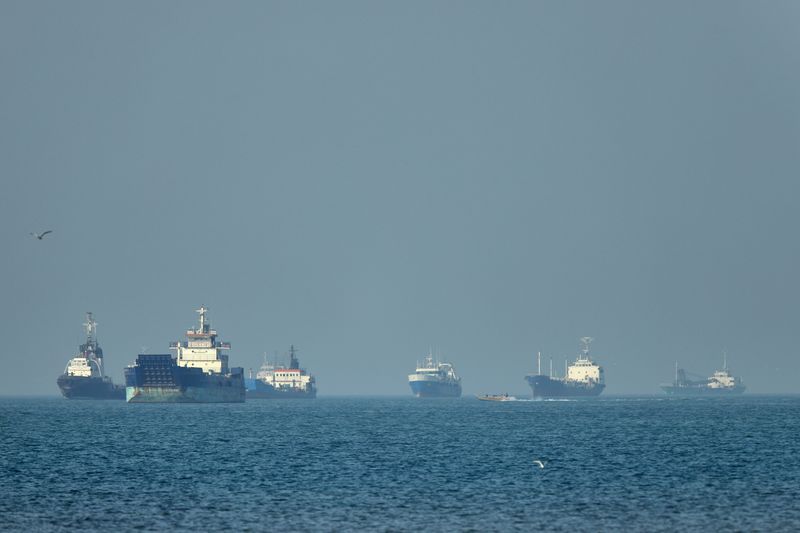
Hundreds of fast attack craft in Iran's so-called "mosquito fleet," hiding in caves and tunnels along the rugged southern coastline that borders the Strait of Hormuz, are cornering the world's most powerful navy, the United States Navy (USN).
Donald Trump boasted that the U.S. military had neutralized Iran's navy and that nothing was left for it to do. The reality is different. Hampered by Iran's asymmetric capabilities, the U.S. military is struggling to reopen the Strait of Hormuz, which handles 20% of global oil and natural gas shipments.
The Financial Times (FT) reported on the 9th local time that the Islamic Revolutionary Guard Corps (IRGC) mosquito fleet, armed with fast boats, suicide drones and anti-ship missiles, is neutralizing the powerful USN.
According to experts, the mosquito fleet under the IRGC Navy does not have enough firepower to pose a serious threat to U.S. warships or inflict major damage on modern tankers. But it is powerful enough to make merchant ships hesitate to sail, effectively blocking the strait.
Joshua Tallis, an analyst at the Center for Naval Analyses (CNA), said, "For sailors, anything flying toward a ship, whether a warship or a merchant vessel, is a real and immediate danger."
Weeks after the war with Iran began, Trump boasted that Iran's navy had "sunk to the bottom of the sea and been wiped out." Yet despite deploying the largest fleet in decades, the U.S. military has failed to reopen the strait because of the threat posed by the Iranian naval forces he claimed were destroyed.
Last month, Trump admitted that the United States had not attacked the fast boats because it had judged them to be "not a big threat." But on the 7th, he continued to brag, saying, "So what if they're fast? They've just got a machine gun mounted on the front."
Yet just as the battlefield has been shaken by Iran's massed Shahed drone attacks, which cost only a few million won each, the IRGC's mosquito fleet is unsettling U.S. forces that have deployed two carrier strike groups.
The mosquito fleet also has the resilience to withstand an American economic blockade. All of it is being produced cheaply inside Iran.
Bryan Clark of the Hudson Institute said, "Iran has practiced blockading the strait with its mosquito fleet for decades, but it never carried it out because it feared a serious escalation." He added, however, that this fleet, which had always been a potential threat, is now threatening the world "with a perfect pretext provided by the United States."
Siddharth Kaushal of the Royal United Services Institute (RUSI) in London said Iran's navy had become effectively irrelevant because of its outdated equipment, and that Trump's claim to have destroyed the regular navy was "true, but meaningless."
Kaushal said, "What Iran actually relies on is the IRGC Navy," referring to "asymmetric capabilities including the mosquito fleet, cruise missiles and drones." He stressed that there is no evidence the United States has weakened Iran's formidable asymmetric capabilities as much as it would like.
According to estimates by Farzin Nadimi, a researcher at The Washington Institute for Near East Policy, the IRGC has about 500 to 1,000 armed speedboats with varying capabilities, more than 1,000 drone boats, and missile batteries along the coast.
The USN has enough capability to destroy the mosquito fleet, but doing so would not be cost-effective, much like intercepting drones with MIM-104 Patriot surface-to-air missile systems or THAAD.
Nadimi said Iran's mosquito fleet was designed for a long war. He warned that if U.S. forces continue to remain in their current numbers, the fleet would not be a major threat, but if their presence is reduced, it could again become a serious danger.
Kaushal said, "Iran does not need to strike every ship. It only needs to hit enough to rattle the insurance market." He added, "By contrast, the United States has to protect every ship," calling it a complete Iranian victory in terms of cost-effectiveness.
[email protected] Song Kyung-jae Reporter