Defense Minister Ahn Gyu-back to Visit U.S. Tomorrow for Talks on Alliance Issues, Including Nuclear Submarines and Wartime OPCON Transfer
- Input
- 2026-05-09 13:52:05
- Updated
- 2026-05-09 13:52:05
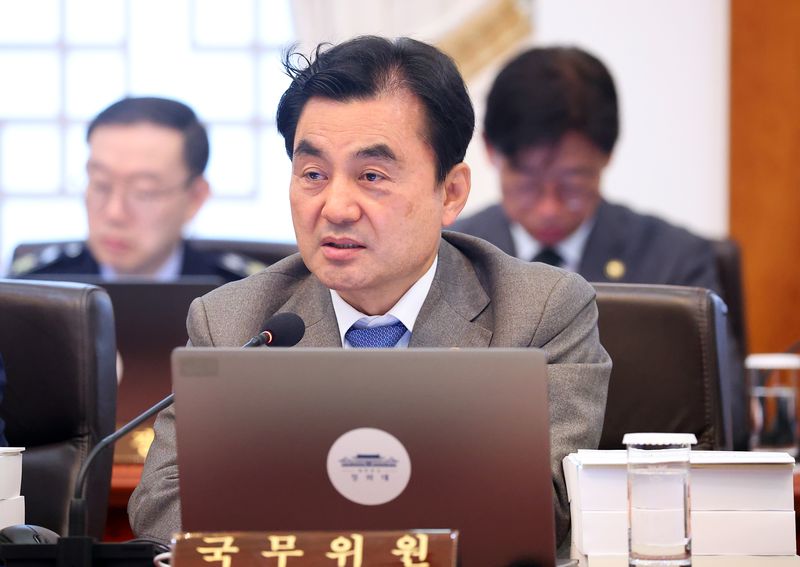
On the 9th, the Ministry of National Defense said Ahn will make his first trip to the United States since taking office in July last year. He is scheduled to depart on the 10th and return on the 14th.
During the talks, Ahn is expected to discuss key security issues between South Korea and the United States, including the transfer of wartime operational control and the introduction of nuclear-powered submarines. He is also set to meet with U.S. government and congressional figures, including the acting secretary of the United States Department of the Navy, the Chairman of the Senate Armed Services Committee and its ranking member, and the chair of the House Armed Services Subcommittee on Seapower and Projection Forces.
A ministry official said, "The visit is intended to facilitate direct communication between senior officials to review follow-up measures to the agreements reached at the Security Consultative Meeting (SCM) and the U.S.-ROK Joint Fact Sheet (JFS)." The official added, "The main issues will include the transfer of wartime operational control and discussions related to nuclear-powered submarines."
General Xavier T. Brunson, commander of U.S. Forces Korea, recently told a U.S. congressional hearing that the target year for the transfer of wartime operational control is the first quarter of 2029, signaling a subtle difference from the government's goal of completing the transfer within the current term. Ahn is expected to flesh out a practical roadmap during his visit.
Cooperation on building nuclear-powered submarines is another major issue. The matter was agreed upon by the two countries' leaders last year, but progress has recently slowed amid a range of diplomatic and security variables. Through his talks, Ahn is expected to focus on communication related to the issue in order to ensure the smooth implementation of key national policy goals.
Another sensitive topic on the agenda is the uneven information-sharing system between Seoul and Washington. The United States has reportedly restricted some intelligence sharing with the South Korean government. In fact, the U.S. has partially suspended the provision of satellite imagery and other information on North Korea, and has also conveyed its protest to the Ministry of Foreign Affairs. These measures have continued for nearly a month, raising concerns about cracks in trust within the security channel. Ahn is therefore expected to work to normalize the scope of sensitive information sharing restricted by the U.S. side and strengthen coordination in intelligence diplomacy.
Another key backdrop to the talks is the White House's release on the 6th of the "2026 U.S. Counterterrorism Strategy." In the document, the United States officially named South Korea, along with Japan and Australia, as a key counterterrorism partner in Asia for the first time. The move reflects the Trump administration's push to strengthen Burden Sharing with allies rather than shoulder the global counterterrorism burden alone.
As South Korea has been designated a key partner, Ahn is expected to exchange in-depth views with U.S. officials on new security roles that may be asked of Seoul, including contributions to freedom of navigation at sea.
[email protected] Lee Jong-yoon Reporter