Kim Yong-beom: Semiconductor Boom Could Bring Record Tax Windfall, Fiscal Policy Must Be Flexible
- Input
- 2026-05-09 00:05:28
- Updated
- 2026-05-09 00:05:28
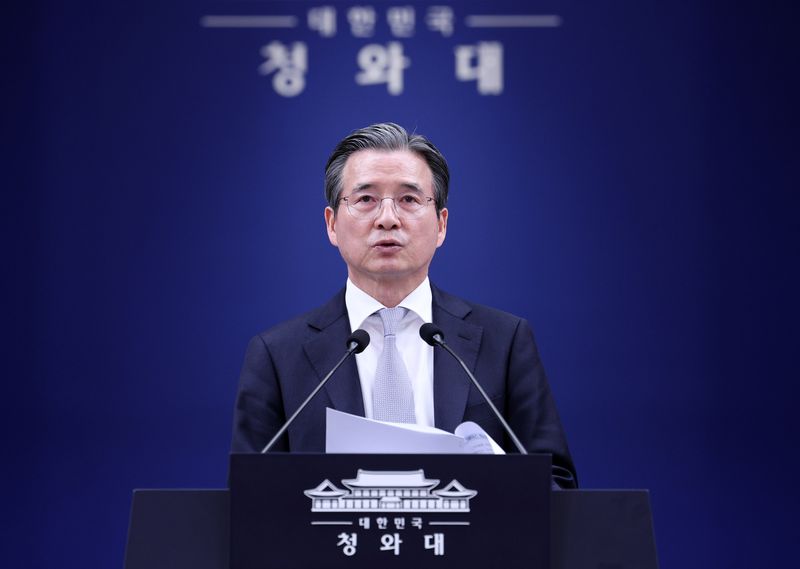
[Financial News] Kim Yong-beom, Chief Presidential Secretary for Policy at The Blue House, said that the recent boom in the semiconductor industry could generate a record tax windfall. He stressed that fiscal policy also needs a flexible approach.
In a Facebook post on the 8th titled "At the Threshold of KOSPI 7,500 and 10,000," Kim said, "South Korea's fiscal and macroeconomic outlook is basically driven by GDP growth forecasts. But this semiconductor boom has characteristics that the existing GDP framework has difficulty capturing." He made the remarks in the post.
Kim said, "If the semiconductor boom continues through 2027, tax revenue in 2026 and 2027 is likely to reach historic levels." He added, "If we take into account not only corporate taxes from Samsung Electronics and SK hynix, but also income taxes from highly paid semiconductor workers and the ripple effects of a larger trade surplus, a record tax windfall could build up."
He also wrote, "The key question is how quickly the policy system can reflect this reality. The revised 2026 economic outlook, due in the second half of this year, will be the first turning point." He explained that the level of that forecast will affect the direction of the 2027 revenue estimate and the overall budget size.
He went on to say, "What matters is not optimism or pessimism itself." He emphasized, "The issue is how flexibly the policy system can absorb industrial changes of a scale that is difficult to explain with the existing framework."
Kim noted that in 2021 and 2022, after the COVID-19 outbreak, the semiconductor boom led to a record tax windfall. However, revenue forecasts and the budget did not fully keep pace with reality. He added that in 2023 and 2024, as the industry weakened, tax revenue shortfalls emerged.
Kim said, "This cycle could be much larger than the last one." He suggested that relying only on existing methods could widen the margin of error. "If the structural shift centered on semiconductors is truly under way, fiscal policy also needs to move beyond thinking tied to past averages and take a more flexible, broader view," he said.
[email protected] Choi Jong-geun Reporter