Constitutional Revision Falls Through.. Woo Won-shik Says He Is "Frustrated" vs. People Power Party Says It Is "Meaningless"
- Input
- 2026-05-08 15:38:22
- Updated
- 2026-05-08 15:38:22
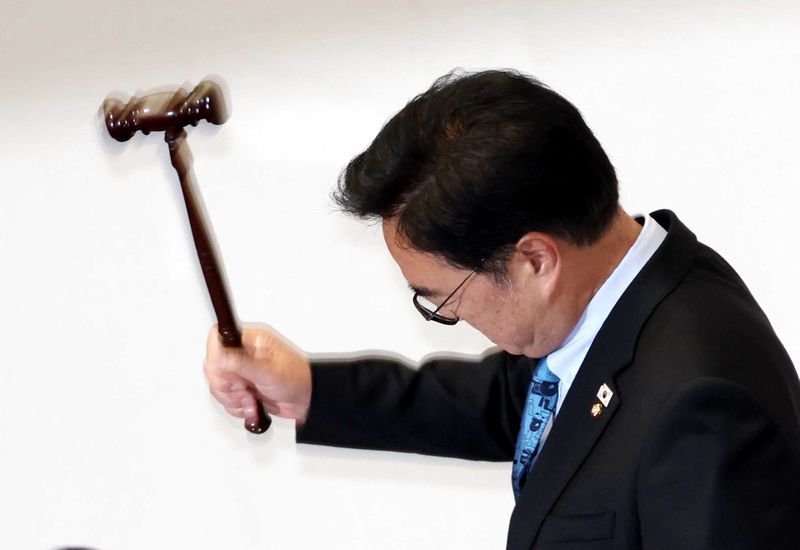
[The Financial News] Constitutional revision has fallen through. After the People Power Party skipped the vote on the amendment bill and then moved to launch a filibuster, Speaker of the National Assembly Woo Won-shik declared that he would no longer proceed with the process.
Woo opened the plenary session on the 8th, criticized the People Power Party for requesting a filibuster not only on the revision bill but also on 50 non-contentious bills, and then declared the meeting adjourned. Speaking in an agitated tone, he lashed out at the party and brought the gavel down forcefully when adjourning the session.
Woo said, "I proposed a constitutional referendum to be held alongside the local elections in my Constitution Day address in July 2023, and a consultative committee that included the People Power Party was formed in November of that year. But they said they did not oppose the substance, only to dismiss it as rushed and reject it," adding, "I am truly frustrated. The Speaker, who has the authority to submit bills, brought it forward, yet even bills agreed upon by both parties are being blocked by filibusters. Stopping bills needed for people's lives is not negotiation; it is taking the public's livelihood hostage."
The revision bill was drafted by six parties in the National Assembly of the Republic of Korea, excluding Woo and the People Power Party. It contains no contentious provisions, including adding the spirit of the Gwangju Uprising (May 18 Democratization Movement) and the Busan–Masan Uprising to the preamble of the Constitution and strengthening the National Assembly's oversight power over a presidential declaration of emergency martial law. The People Power Party says it does not oppose the content of the bill, but insists that after the local elections, a special committee on constitutional revision should be formed to produce a broader agreement that also includes restructuring the power-sharing system, which is the core issue of constitutional reform.
When the revision bill was put on the agenda the previous day, the People Power Party stayed away, and the vote failed because it did not meet the quorum of 191 members. Woo then convened the plenary session again on the 8th and reintroduced the bill, intending to keep the process alive until the 10th, the deadline for passage in the National Assembly of the Republic of Korea for a referendum to be held alongside the local elections. But he gave up after the People Power Party responded with a filibuster.
The People Power Party argues that the revision bill cannot be reconsidered because the failed vote is equivalent to rejection. It cites Constitutional Court of Korea precedent that treats failure to meet the quorum as a rejection.
Song Eon-seok, the parliamentary leader, told reporters after the plenary session, "It is clearly unconstitutional to place a rejected constitutional revision bill on the agenda again within the same session. What is the point of amending the Constitution if they do not even follow it?" He added, "The approach of drafting a revision bill among themselves and simply asking for a yes-or-no vote is deeply misguided. Are they trying to make a patchwork garment by changing this much now and that much later?"
Still, both Woo and the People Power Party agreed that the latter half of the National Assembly of the Republic of Korea should form a special committee on constitutional revision and try to reach a compromise. Attention is now on whether the committee will actually be launched in the second half of the Assembly after the local elections.
[email protected] Kim Yun-ho, Lee Hae-ram Reporter