"Samsung Electronics at 260,000 won, and buying the dip?" Retail investors rush to buy more as the market turns red: "It ended up rising after all" [World of Retail Investors]
- Input
- 2026-05-09 05:00:00
- Updated
- 2026-05-09 05:00:00
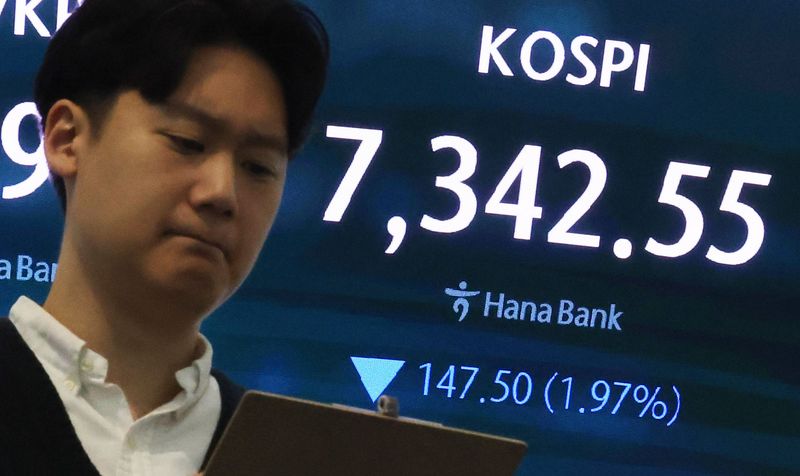
co. kr (End) /Photo = Yonhap News Agency [Financial News] "What if it keeps falling? Should I buy something else now?" On the morning of the 8th, a 46-year-old man identified only by the surname Ryu kept opening and closing his brokerage app.He spent his precious lunch break staring at his phone, torn between buying and waiting. When the KOSPI Composite Index surged past the 7,000 mark, he could not bring himself to buy more stocks.But after the market turned red for the day, he grew anxious and started wondering whether he should buy. Ryu, who usually had little interest in stocks, bought several high-performing names last month amid the KOSPI's upward momentum.
He had long avoided the market because he once bought Samsung Electronics Co. , Ltd.and was stuck with losses for a long time after buying at the top. After selling everything in disgust when the so-called "9th-floor rescue team" arrived in October last year, he had stayed away from stocks.In the end, he could not overcome his fear of missing out (FOMO) and started investing again. In hindsight, there was no reason not to buy.
Everything had changed, and the KOSPI, led by semiconductor heavyweights, looked set to keep climbing. After a friend told him, "If you wait any longer, you really won't be able to buy," Ryu pressed the buy button almost under a spell.
As the KOSPI rose more than 30% in April, his account balance swelled too. Ryu checked his returns every morning and felt he had made the right decision to return to stocks.
94. 8 saba@yna.
But when he opened his account, the gains had shrunk. Each holding was down about 1% to 3%.
94. 8 saba@yna.They were not losses, but the blue numbers on the screen made him uneasy. The nightmare of being trapped in Samsung Electronics at the top came back.Still, after hesitating, Ryu chose to buy more. And before the market closed that day, the KOSPI managed to turn positive.Between blue and red: averaging down and buying into strength Whether averaging down or buying into strength depends on the current stock price relative to your average purchase price. Averaging down means buying more when the stock price falls.Because you are buying at a lower price, your average cost goes down. Buying into strength is the opposite.It means buying more when the stock price rises. In Ryu's case, he bought additional shares at a price higher than his average purchase price in April, so this counts as buying into strength.Because he bought at a higher price than before, his average cost went up.But his holdings also increased, which means that if the rally continues, the absolute amount of profit can grow larger.On the other hand, if the stock price falls even slightly, gains can shrink sharply or turn into losses.The fundamental problem with buying into strength lies in psychology.In a bull market, it can push investors to make larger emotional bets.The issue is that the belief that "it is going up, so I can buy more" can drive a single stock's share of a portfolio too high.
Jesse Livermore, the legendary early 20th-century investor who popularized the strategy, also emphasized "cutting losses immediately when your judgment is wrong," but that is not easy for retail investors to do in real life.Whether averaging down or buying into strength, the key is to have a clear standard.Experts point out that individual investors tend to buy more when a stock falls because they want to break even, and they often enter late into rising stocks out of fear of missing an opportunity.They warn that without clear criteria, investors may end up buying when prices fall and buying again when they rise, creating unnecessary risk.I do not want to become someone who keeps saying, "I should have bought, I should have sold, I should have held.
94. 8 saba@yna.
" Yet it feels like everyone else is doing fine with stocks, real estate, and investing while I am left behind.The world of investing is hard no matter how much you study.If you want to receive [World of Retail Investors] comfortably and share in the empathy, please subscribe to the reporter page.We also welcome tips from retail investors who have investment stories they would like to share.
94. 8 saba@yna.[email protected] Kim Hee-sun Reporter