Iran Sets Up New Persian Gulf Strait Authority, Formalizing Control Over the Strait of Hormuz
- Input
- 2026-05-08 10:16:05
- Updated
- 2026-05-08 10:16:05
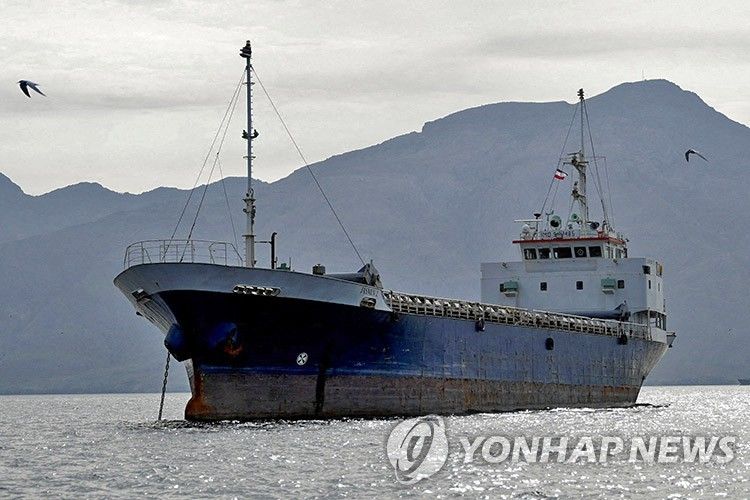
[Financial News] Iran is said to have established a new government body, the Persian Gulf Strait Authority (PGSA), to formalize its control over the Strait of Hormuz. The move, which would require ship declarations and effectively introduce a transit fee system, is expected to intensify tensions over the international shipping order.
According to AP and CNN on the 7th local time, Iran has recently launched the Persian Gulf Strait Authority (PGSA) and is formalizing procedures for vessels passing through the Strait of Hormuz.
The PGSA will review transit applications from ships and impose costs that amount to a de facto tax. Iran is also reported to have distributed a "ship information declaration" form to the shipping industry and informed operators that all vessels must submit it to receive safe passage.
The application obtained by CNN contains more than 40 items. It requires details such as the ship's name and identification number, port of departure and destination, the nationality of the shipowner and operator, the crew's nationality, and cargo information.
The PGSA is also reported to require ships to list their previous names. This information must be submitted in advance by email to Iranian authorities before entering the Strait of Hormuz.
It has not been confirmed whether any vessel has actually submitted the application so far.
The Strait of Hormuz is, in principle, an international waterway through which vessels from all countries may pass freely. However, the situation changed sharply after the February 28 clash involving the United States, Israel, and Iran.
Iran laid mines to effectively restrict shipping other than its own oil tankers, while the United States responded by deploying a large fleet and launching maritime protection operations.
As a result, thousands of ships and tens of thousands of crew members remain effectively trapped in the Persian Gulf inside the Strait of Hormuz.
CNN analyzed the creation of the PGSA as an attempt by Iran to make its control over the strait a fait accompli, despite warnings from the United States and neighboring countries.
The Strait of Hormuz is a key energy shipping lane through which about 20% of the world's seaborne crude oil and liquefied natural gas (LNG) passes. With the blockade prolonged, global oil prices have already climbed above $100 per barrel, and U.S. gasoline prices have risen above $4.50 per gallon.
Iran's Supreme Leader, Ayatollah Mojtaba Khamenei, recently ordered the establishment of a "new management system" for the Strait of Hormuz.
In a message for Persian Gulf National Day on the 30th of last month, he said, "The Persian Gulf is part of the civilization and identity of Iran and Muslim countries," and raised the need for a new management system.
Then, in a Telegram post on the 6th, he emphasized "a new regional and international order based on a strong Iranian strategy" and directly referred to "using the blockade of the strait as leverage."
Iran has also argued that transit fees are necessary as compensation for damage caused by U.S. and Israeli attacks. Some reports say the fee could be as high as $2 million per ship.
The United States strongly pushed back. Mike Waltz, the U.S. ambassador to the United Nations, criticized Iran, saying it is effectively forcing international shipping vessels to submit declarations, pay bribes, and pay transit fees. "This is not just a regional issue; it affects the entire world," he said.
The shipping industry has already been subject to similar information requests from Iran, but observers are focusing on the fact that Tehran now appears to be trying to institutionalize and formalize the practice.
A source at maritime intelligence firm Lloyd's Intelligence told CNN, "Shipowners have faced similar demands before, but this time it appears to be an effort to turn them into an official procedure."
[email protected] Kim Kyung-min Reporter