Missiles Cross the Military Demarcation Line... The United States and Iran Clash Again in the Strait of Hormuz
- Input
- 2026-05-08 07:30:19
- Updated
- 2026-05-08 07:30:19
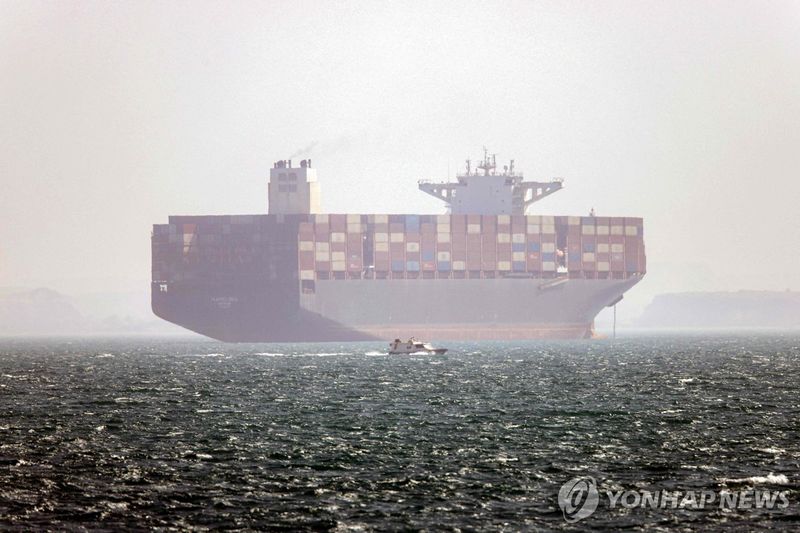
[Financial News] Tensions in the Middle East are rising sharply as the United States and Iran clash again in the Strait of Hormuz. Iran claimed that the United States violated the ceasefire and attacked oil tankers and civilian areas, while the United States countered that its response was an act of self-defense against Iranian missile and drone attacks.
United States Central Command (CENTCOM) said in a statement on the 7th local time that the U.S. Navy destroyers USS Truxtun, USS Rafael Peralta and USS Mason, which were passing through the Strait of Hormuz, came under attack by Iranian forces.
CENTCOM explained that Iran attempted the attack using missiles, drones and small boats, but U.S. forces intercepted them and then struck Iranian military facilities in self-defense.
The U.S. military said the targets included missile and drone launch sites, command and control facilities, and intelligence, surveillance and reconnaissance hubs. It also emphasized that no U.S. vessels were damaged. CENTCOM said, "The military does not want an escalation, but it is maintaining the posture needed to protect U.S. forces."
Iran, however, claimed that the United States was the first to violate the ceasefire.
According to the semi-official Tasnim News Agency, Khatam al-Anbiya Central Headquarters of Iran's armed forces said in a statement, "The United States attacked an Iranian oil tanker and another vessel that were moving from Iranian coastal waters toward the Strait of Hormuz."
Iran also claimed that the United States attacked ships near the Port of Fujairah in the United Arab Emirates, while simultaneously carrying out airstrikes on civilian areas including Bandar Hamir, Sirik and Qeshm Island.
It added, "As an immediate retaliatory measure, we attacked U.S. warships east of the Strait of Hormuz and south of Chabahar Port, inflicting significant damage." The U.S. military, however, denied that any damage occurred.
Mehr News Agency also reported that clashes broke out around Bandar Abbas and Qeshm Island.
Both sides insist they do not intend to escalate the conflict, but the actual military confrontation is becoming increasingly intense.
According to Fox News, a U.S. official said, "This incident does not mean the resumption of war or the end of the ceasefire." Earlier, U.S. Secretary of Defense Pete Hegseth and Chairman of the Joint Chiefs of Staff Dan Caine also condemned Iran's attack on the UAE, but described it as "low level incidents."
The clash came as the possibility of a final Memorandum of Understanding (MOU) between the United States and Iran had recently been discussed. Some foreign media outlets had reported that the two sides were close to signing a one-page final agreement.
However, the continued clashes around the Strait of Hormuz have once again highlighted how fragile the ceasefire remains.
Through its recent "Operation Sentinel" project, the United States has been helping civilian merchant ships trapped in the Strait of Hormuz sail safely through the area. Iran, meanwhile, has strongly objected, calling it a violation of its sovereignty and an attempt to undermine the maritime blockade.
The Strait of Hormuz is a key energy transport route through which about 20% of the world's seaborne crude oil passes. If the confrontation drags on, concerns are growing that international oil prices and instability in the global shipping market could rise again.
[email protected] Kim Kyung-min Reporter