After Blocking Reciprocal Tariffs, the Court Rules the 10% Global Tariff Illegal Too
- Input
- 2026-05-08 06:59:55
- Updated
- 2026-05-08 06:59:55
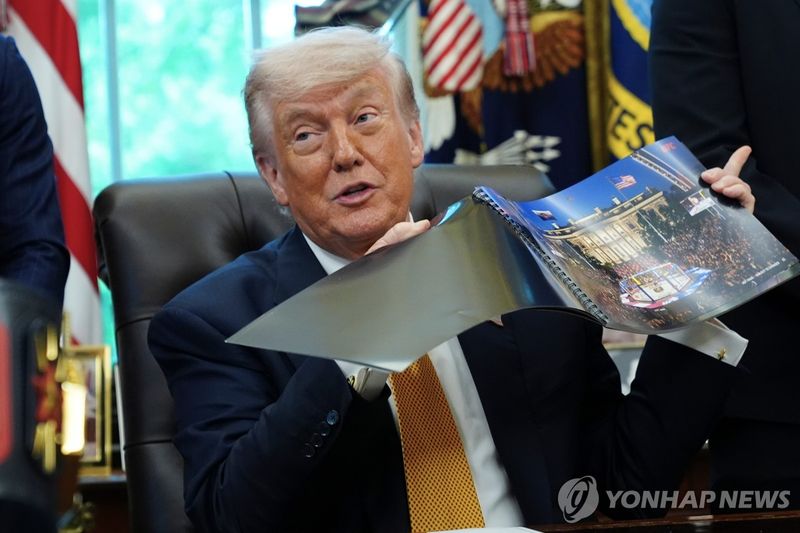
[The Financial News] After a court ruled that Donald Trump’s reciprocal tariffs were illegal, the 10% global tariff he pushed as an alternative has also been blocked by the court.
On the 7th local time, the United States Court of International Trade ruled that the Trump administration’s blanket 10% global tariff on trade partners around the world could not be justified under Section 122 of the Trade Act of 1974.
The decision was issued by a three-judge panel.
Earlier, after the U.S. Supreme Court in February found that reciprocal tariffs imposed under the International Emergency Economic Powers Act (IEEPA) were illegal, Trump sought a new workaround.
At the time, the Supreme Court said the country-by-country reciprocal tariffs exceeded presidential authority. In response, the Trump administration revised its policy and imposed a 10% tariff on all trade partners, regardless of country, citing Section 122 of the Trade Act of 1974. The administration has effectively used this as a substitute tariff.
With this ruling now finding that the global tariff also lacks legal justification, Trump’s broader tariff policy is likely to face renewed pressure.
Section 122 of the Trade Act of 1974 allows the president to impose limited emergency tariffs in specific economic situations, such as a worsening balance of payments. However, the panel appears to have concluded that the global tariff went beyond the purpose of the law.
The ruling is expected to add another burden to Trump’s core economic and trade agenda. During his presidential campaign, Trump argued that "tariffs are a tool to make America wealthy" and pushed a sweeping protectionist policy.
Still, the Trump administration may move quickly to appeal.
[email protected] Kim Kyung-min Reporter