[Editorial] Samsung Electronics labor union has alienated the public, fellow workers, and shareholders
- Input
- 2026-05-07 18:48:17
- Updated
- 2026-05-07 18:48:17
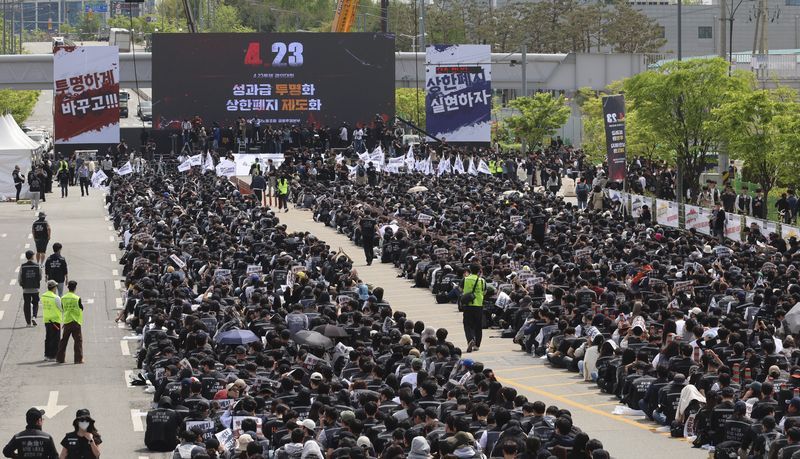
The fact that divisions have emerged within the union itself is especially damaging to the case for a general strike. It has been alleged that the Samsung Electronics branch of the Samsung Group Supercorporate Labor Union, which secured majority-union status, referred to the minority Samsung Electronics Labor Union Companion as a "company union" and did not even share bargaining information with it. In effect, labor conflict has broken out within labor itself.
The conflict appears to have intensified as demands for performance-based bonuses, led mainly by employees in the semiconductor division under the Joint Struggle Headquarters, pushed out workers in the Device Experience division, which handles home appliances, smartphones, and TVs. Even among union members who are colleagues at the same company and are confronting management together, friction has emerged. While the company and the union disagree over how performance bonuses should be distributed, the unions themselves are also fighting each other, wasting both legitimacy and momentum.
Shareholders have also turned away. On the 7th, Korea Shareholder Action Headquarters held a press conference at the National Assembly of the Republic of Korea and declared that it would launch full-scale shareholder action if the strike or an unfair agreement were forced through. The union has the right to pursue and exercise its own interests. But shareholders who want sustainable corporate growth fear that this strike will lead directly to production disruptions and damage to corporate value. Many stakeholders have a say in a company's interests, and if shareholders suffer greater harm from the union's one-sided pursuit of its own gains, they are prepared to respond.
Public sentiment is growing colder by the day. Samsung Electronics Co., Ltd. is a company that has grown over decades with tax benefits and industrial support at the national level since the foreign exchange crisis. The public believes that today's Samsung Electronics Co., Ltd. stands on a foundation built together by the government and the people, including the Semiconductor Cluster and the National Strategic Technology Tax Credit. Of course, the contributions of workers who have labored hard must be recognized at the highest level. But public support has turned away from behavior that acts as if the industry was built solely through the union's own efforts, while using a strike as a pressure tactic in a sector nurtured by social assets and broad public backing.
Any struggle loses its legitimacy if it fails to earn the trust of fellow workers, the support of shareholders, and public sympathy. That is exactly the precarious position the Samsung Electronics branch of the Samsung Group Supercorporate Labor Union now finds itself in. In this situation, trying to force through the union's collective interests by holding corporate value hostage will be hard to justify. What Samsung Electronics labor union needs right now is not a louder battle cry, but dialogue with fellow unions, communication with shareholders, and a convincing rationale it can present to the public.