[Editorial] Exports, the Economy’s Reliable Workhorse, Must Break Free of Semiconductor Dependence
- Input
- 2026-05-07 18:48:15
- Updated
- 2026-05-07 18:48:15
Last year, South Korea's exports surpassed $700 billion for the first time, giving the economy a major boost during a prolonged downturn. With domestic consumption remaining weak for an extended period, exports have been filling the gap by staying buoyant. If exports do overtake Japan this year, it would become a symbolic milestone, following the country's already higher per capita gross domestic product (GDP).
First-quarter exports came to $219.9 billion, up 37.8% from a year earlier, marking the highest figure ever for the period. That was largely thanks to semiconductors, which posted $78.5 billion in exports, a 139% increase from the previous year. Rising memory chip prices and surging demand tied to Artificial Intelligence (AI) servers have driven the gains. In exports, semiconductors are playing the role of the ultimate growth engine.
The strong performance of semiconductors offers several lessons. Above all, it underscores how important it is to nurture advanced industries. South Korea can take pride in having world-class companies such as Samsung Electronics Co., Ltd. and SK hynix. Japan, long regarded as a technological powerhouse, is losing ground economically and in exports because it has fallen behind in competition in advanced sectors such as semiconductors.
Semiconductors are not the only future industry that needs to grow. Investment should also be expanded in areas where global competition is intensifying, including AI, robotics, autonomous vehicles, biotech and pharmaceuticals. Losing focus even briefly could mean falling behind. South Korea should take a cue from the policy support that has helped China become the world's largest economic power, and the public and private sectors must work together to keep advancing advanced industries.
The second lesson is that dependence on semiconductors is too high. Semiconductors account for more than 30% of total exports. In other words, when the semiconductor cycle weakens, exports can quickly lose momentum as well. The same applies to this year's growth forecasts, which have been revised upward one after another by institutions.
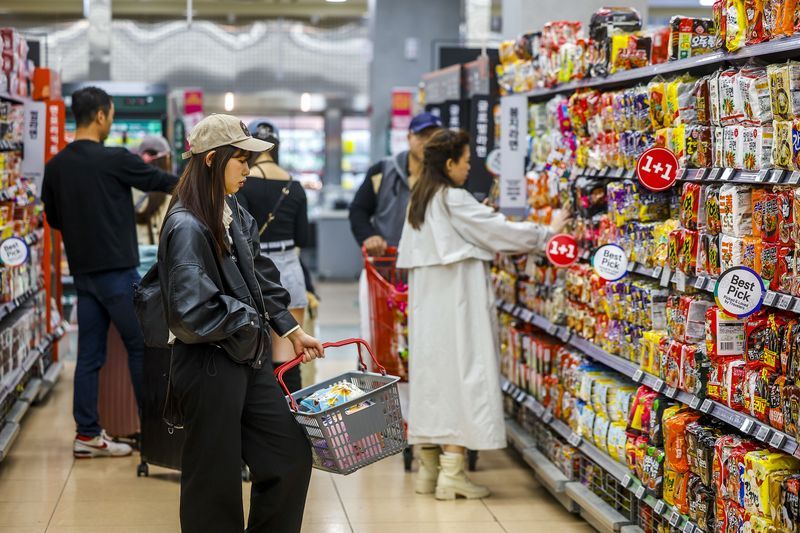
For exports to continue serving as a pillar of the economy, industries beyond semiconductors must step up and open new markets. The rise in Korean consumer goods exports, often described as K-beauty and K-food, is encouraging in that regard. In the first quarter, cosmetics exports rose 21.5% to $3.13 billion, while exports of agricultural and marine food products increased 7.4% to $3.11 billion, making a significant contribution to overall export growth.
The government has expanded the list of 15 key export items to 20 by adding five new categories, including cosmetics and agricultural and marine food products. It must continue efforts to diversify export items as well as markets. High-value advanced industries should be identified and nurtured so they can become the next reliable engine of export growth.
The overall export environment remains unfavorable, with rising global oil prices caused by tensions in the Middle East, supply chain instability and U.S. protectionist policies. Export conditions can deteriorate at any time. Rather than simply celebrating strong results, the government should always be prepared with support measures in case conditions worsen. Labor-management disputes, including Samsung Electronics' performance bonus dispute, must also be resolved quickly.