U.S. Fires on Iranian Tanker for Second Time After Strait Blockade, Causing Some Damage
- Input
- 2026-05-07 07:12:53
- Updated
- 2026-05-07 07:12:53
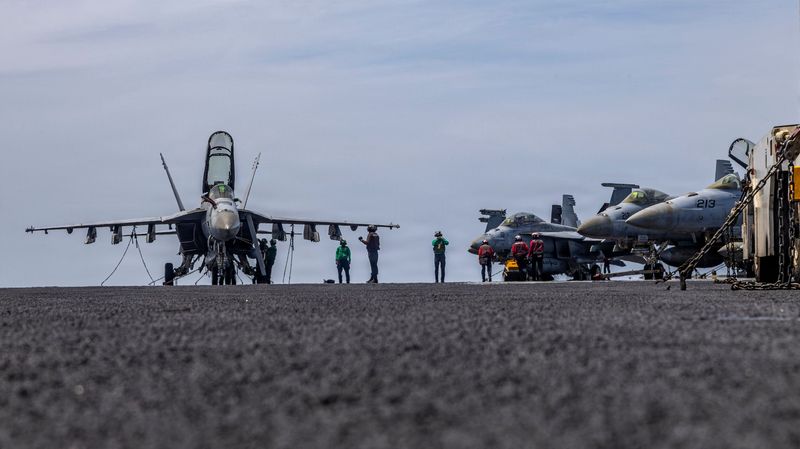
[Financial News] U.S. forces controlling Iran-linked vessels in the Strait of Hormuz and nearby Iranian ports have fired on an Iranian ship for the second time amid ceasefire talks between Iran and the United States.
CENTCOM, which is leading the U.S. campaign against Iran, said in a post on social media platform X on the 6th local time that "U.S. forces conducting operations in the Gulf of Oman disabled an empty Iranian-flagged tanker that was heading toward an Iranian port."
The tanker in question was identified as the Iranian-flagged M/T Hasna. The vessel was trying to approach Iran from international waters in the Gulf of Oman, outside the Strait of Hormuz, around 9 a.m. Eastern Time on the 6th.
CENTCOM claimed that "U.S. forces issued multiple warnings to the Iranian-flagged vessel and informed it that it was violating the U.S. blockade." It added that when the crew of the Hasna failed to respond to repeated warnings, U.S. Navy carrier-based F/A-18 Super Hornet jets launched from the USS Abraham Lincoln (CVN-72) fired several 20 mm rounds. CENTCOM said it "disabled the tanker’s rudder" and that "the Hasna is no longer sailing toward Iran."
CENTCOM also said that "the U.S. blockade on vessels attempting to enter or leave Iranian ports remains fully in effect." It stressed that "CENTCOM forces continue to act in a deliberate and professional manner to ensure compliance with the blockade."
Since February, the United States has been attacking Iran. After Iran blocked the Strait of Hormuz, U.S. forces began preventing Iran-linked vessels from entering or leaving the strait and nearby Iranian ports from the 13th of last month, despite a ceasefire reached on the 7th of the same month.
According to the U.S. military, a total of 52 vessels had been diverted or turned back under the maritime blockade operation as of the 6th. Agence France-Presse (AFP) said the Hasna case was the second instance in which U.S. forces actually fired since the American "counter-blockade" began on the 13th of last month. CENTCOM said on the 19th of last month that it fired into the engine room of the Iranian-flagged tanker Motor Vessel Tusca, which ignored warnings while attempting to violate the Strait of Hormuz maritime blockade, and seized the ship. A CENTCOM spokesperson said on the 4th that "U.S. forces handed over 22 crew members from the Tusca to Pakistan for repatriation to Iran."
The move came as a final agreement between the United States and Iran appeared to be nearing. Speaking to reporters at a White House event on the 6th, U.S. President Donald Trump said he had "very good talks over the last 24 hours" with Iran and that "there is a very good chance of a deal." He added, "Iran cannot have a nuclear weapon and will not have a nuclear weapon," and said that "they have agreed to that point, along with several other things." Axios, citing a source, reported that Trump will visit China on the 14th and 15th, and that the White House expects negotiations with Iran to be wrapped up before the end of his trip.
[email protected] Park Jong-won Reporter