[Editorial] China’s Cars Are Encroaching on the South Korean Market — Act Now Before It Is Too Late
- Input
- 2026-05-06 18:06:38
- Updated
- 2026-05-06 18:06:38
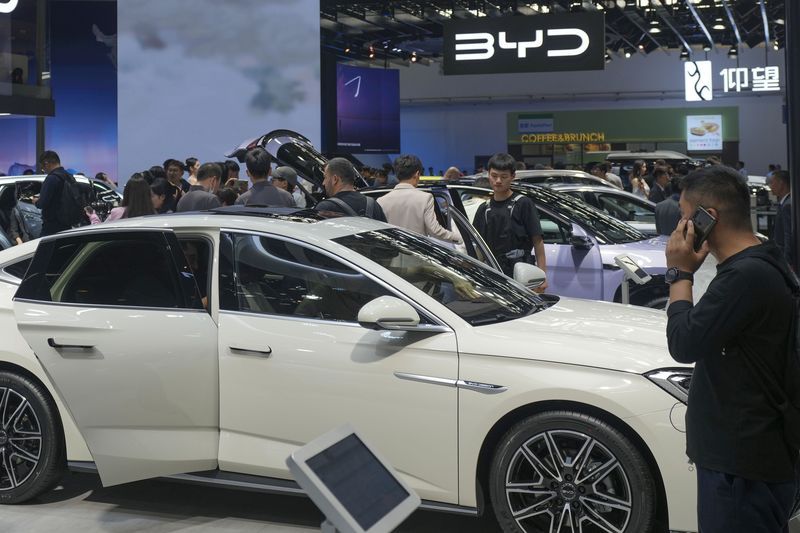
BYD, which has already landed in South Korea, sold 3,968 vehicles here in the first quarter of this year, nearly 400 times more than in the same period last year. Zeekr is targeting the premium car market and is already being praised globally for its performance, safety and convenience features, as well as its design. Xpeng is regarded as an innovative company in autonomous driving and is even called “China’s Tesla.”
Of the 70,078 newly registered electric passenger cars in the first quarter, 36.5% were made in China. That was up 14.8 percentage points from the first quarter of last year. This year, the annual share is expected to exceed 40% as well. Chinese automakers are said to be betting everything on exports, just as they have done in other sectors such as steel amid overheated competition and excess production.
The main weapon of Chinese automakers is low prices. The prevailing view is that Chinese government subsidies are behind this advantage. In February, BYD launched a small electric hatchback in South Korea for just 24.5 million won. It is almost impossible for South Korean electric vehicles, which cost more than twice as much, to compete on price. Quality has also improved significantly. Industry concerns that the electric vehicle market could fall under China’s control within three years are not an exaggeration.
As China presses ahead with electric vehicles, sales of EVs by domestic companies such as Hyundai Motor Company and Kia are falling. The market is already being eroded. If the auto market shifts further toward electric vehicles, Chinese cars will become an even greater threat. South Korean TVs once dominated the world, only to see the market eaten away by Chinese products. There is no guarantee the same will not happen in the auto sector.
The problem is that there is no adequate response to China’s automotive offensive. In many industries, China’s push is already shaking South Korea’s manufacturing base and, by extension, the broader economy. In semiconductors, too, China has come close and has even overtaken South Korea in some areas. Neither the government nor companies should remain complacent, only to be caught off guard later, as happened in the petrochemical and steel industries.
The United States and Europe are countering Chinese electric vehicles with regulatory barriers. The United States and Canada have effectively blocked imports by imposing tariffs of more than 100% on Chinese EVs. Based on the results of its anti-subsidy investigation, the European Union (EU) has been imposing additional tariffs of 17.8% to 45.3% by company, on top of a 10% tariff, on Chinese EVs since 2024.
The South Korean government is also reviewing new subsidy criteria, but the plan is running into difficulties because it could restrict consumer choice. Imposing tariffs is not something to decide lightly, since it could trigger trade friction. Even so, the issue should be considered carefully after clear evidence has been secured. An indirect approach, such as cutting taxes on electric vehicles produced domestically, should also be considered. Lee Jae-myung has previously mentioned this idea.
The fundamental answer to low-price aggression is better quality. To survive fierce competition, companies must keep raising quality through innovation. Whether in cars or TVs, the way to fend off and defeat China’s offensive is innovation first, and innovation second.