"The KOSPI Composite Index Surged 6%, but My Account Melted by 15%"... Retail Investors Who Said the Bubble Burst Was Only a Matter of Time [World of Retail Investors]
- Input
- 2026-05-07 06:00:00
- Updated
- 2026-05-07 06:00:00
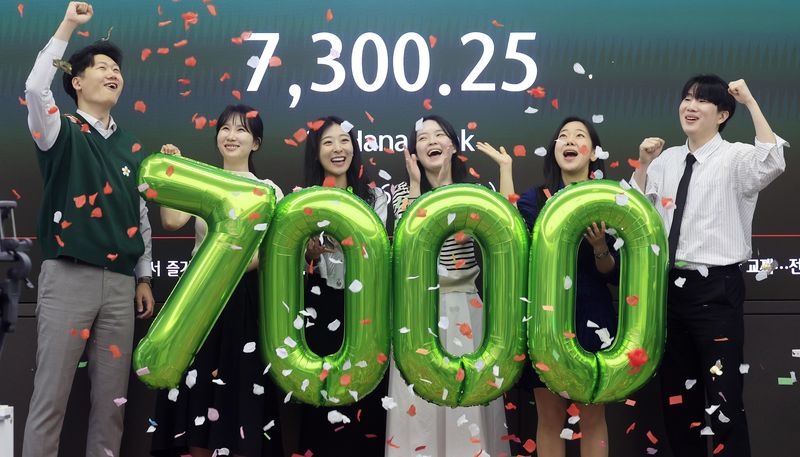
[Financial News] Moon Bo-hyun, 32, a pseudonym, opened his brokerage app, let out a sigh, and quickly closed it. On the 6th, the KOSPI Composite Index climbed past 7,000 for the first time in history and then broke through the 7,400 level. The news sparked a celebration around him. People kept saying, "It's scary because it's gone up too much," but also, "If you can't make money in a market like this, aren't you just foolish?" The mood was one of carefree excitement over the so-called '7,000-point KOSPI.'
But Moon could not laugh. His account held the Samsung KODEX 200 Futures Inverse 2X ETF, a double inverse leveraged ETF that profits when the KOSPI Composite Index falls. On that day, when the index surged more than 6%, his account dropped more than 15% in just one day.
"This is bubble territory"... The beginning of confirmation bias, not conviction
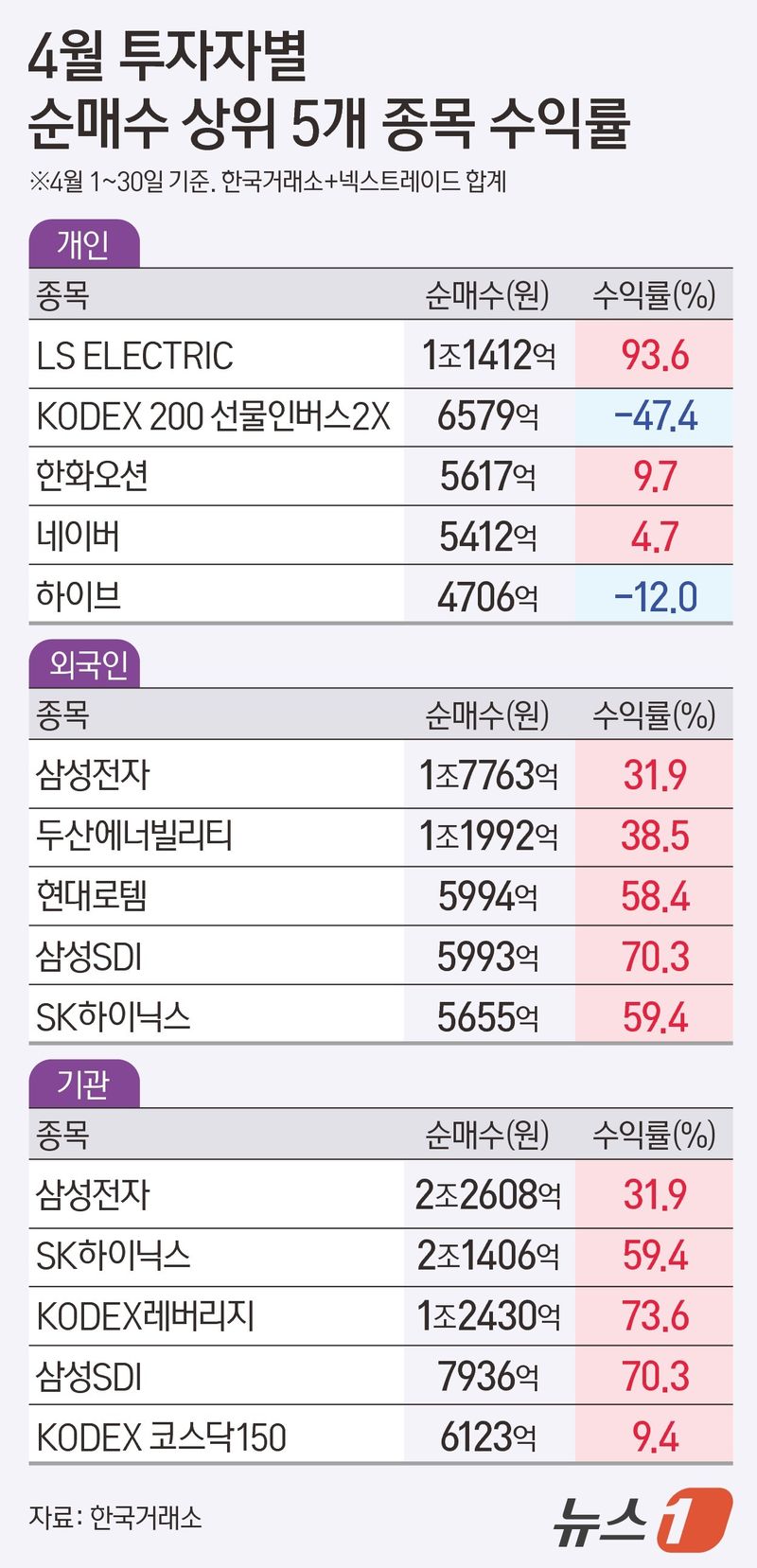
Moon bought the double inverse leveraged ETF in late February, when the KOSPI Composite Index first broke through the 6,000 mark. At the time, he looked at the U.S.-Iran tensions, high oil prices, and signals that interest rates would remain unchanged, andbecame convinced that "a decline was only a matter of time."In his view, there were simply too many negative factors in the market. Perhaps many others thought the same way, as individual investors net bought 645.4 billion won worth of the Samsung KODEX 200 Futures Inverse 2X ETF last month.
But the KOSPI Composite Index did not fall. After moving above 6,000, it kept rising steadily, then surged further and eventually reached the '7,000-point KOSPI.' Brokerage firms rushed to raise their targets, and Shinhan Securities projected that it could climb as high as 8,600 points.
He selectively gathered only the bad news that fit his belief that the market would fall, while dismissing strong positives such as robust semiconductor earnings and foreign buying as mere 'bubble' talk. And trapped in this'confirmation bias', Moon had no choice but to ignore his account turning increasingly red as the KOSPI Composite Index kept rising.
Eroding principal, the fear of negative compounding
Since Moon first bought the double inverse leveraged ETF, the KOSPI Composite Index has risen about 23%, while the ETF has fallen roughly 49%, from the 250 won range to 128 won over the same period. The problem is that the tragedy of the double inverse leveraged ETF is not simply that it loses as much as the index rises.
Because the double inverse leveraged ETF tracks the opposite of the index's daily return at twice the magnitude, losses become larger when the index rises. In addition,the negative compounding effectmeans losses can pile up even when the index simply moves up and down repeatedly.For example, if an index falls 20% and then rises 20% again, a regular product with 1x exposure would move from 100 to 80 to 96, resulting in a 4% loss. But a leveraged product with 2x exposure would move from 100 to 60 to 84, resulting in a 16% loss.
"I didn't want to lose what I'd already lost"... and then came the sunk cost fallacy
Moon said his biggest regret was that he could not bring himself to cut the position even as losses grew. His stubborn thoughts — "If I sell now, the loss is locked in at 100%," and "It can't keep going up forever; I just need to hold on a little longer" — kept him from cutting his losses.
This is a psychological pattern known as the'Sunk Cost Fallacy.'It is the tendency to keep making irrational decisions because the money already invested feels too precious to give up. In the end, even on the day the KOSPI Composite Index broke through 7,400, Moon could not bring himself to sell the double inverse leveraged ETF he held.
While he kept holding on, the product, which had hit a 52-week high of 2,160 won, plunged intraday to 126 won. Of the 11 inverse and double inverse leveraged ETFs that track the KOSPI 200 Index futures in reverse, seven have fallen below 5 billion won in net assets, raising concerns about possible delisting. For ETFs listed for more than one year, if trust principal and net assets are below 5 billion won at the end of a half-year period, they are designated as monitored issues. If they remain below 5 billion won at the end of the next half-year period after designation, they are delisted.
I don't want to become someone who says, 'I should have bought, I should have sold, I should have held on'... Stocks, real estate, and investing all seem to be going well for everyone except me. The world of investing is hard no matter how much you study, so if you want to receive and relate to stories that make you clap in agreement,[World of Retail Investors]please subscribe to the reporter profile page.We also welcome tips from retail investors who have investment stories they would like to share.
[email protected] Kim Hee-sun Reporter