"Raising Interest Rates to Counter High Oil Prices Will Only Trigger a Global Recession"
- Input
- 2026-05-06 03:10:17
- Updated
- 2026-05-06 03:10:17
\r\n
\r\n
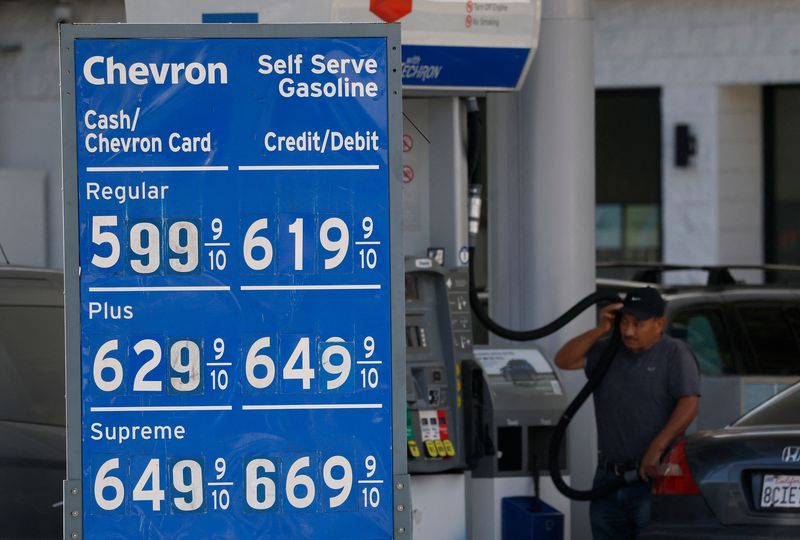
A warning has emerged that if central banks around the world rush to raise interest rates in response to surging oil prices, they could trigger a global recession.
The warning came as the Reserve Bank of Australia (RBA) raised its policy rate to 4.35% on the 5th local time.
Julian Howard, head of multi-asset investment strategy at GAM Investment, told CNBC that expectations for rate hikes are rising around the world. He said central banks are "on the verge of stepping into policy mistake territory."
Howard said that when the source of a price shock lies on the supply side, as it does now, the traditional response of raising rates to offset higher energy costs would be a mistake.
He warned that "you would have to push rates very, very, very high" to make people stop buying gasoline and flying. He added that a half-hearted rate hike would do nothing to achieve that policy goal and would "only bring on a recession."
The European Central Bank (ECB) left rates unchanged last week even though Eurozone inflation reached 3% last month, while the Bank of England (BoE) also held rates steady despite high oil prices.
Still, markets remain worried about the possibility of further rate hikes.
The ECB is expected to raise rates next month. Andrew Bailey, governor of the BoE, also told CNBC that if the oil price shock persists, a benchmark rate hike may become unavoidable.
The RBA raised its benchmark rate by 0.25 percentage points to 4.35% on the day. It moved after inflation jumped from 3.7% in February to 4.6% in March on the back of high oil prices.
Markets widely expect other central banks to follow suit.
Howard, however, underscored the limits of monetary policy, saying that "central banks cannot print oil molecules."
He noted that rate hikes may help address second-round inflation, such as wage demands driven by high oil prices. But he said raising rates to respond to an immediate rise in energy prices would be the wrong move.
Howard also stressed that when energy prices rise, consumers cut back on other spending, so overall prices do not rise as sharply as many fear.
He pointed out that although oil prices surged after the outbreak of the Russo-Ukrainian war, U.S. services inflation remained relatively subdued. He said the reason was that consumers trimmed other spending under pressure from higher energy costs.
\r\n
dympna@fnnews.com Song Kyung-jae Reporter