A Second Round of Tax Reform... Will Long-Term Holding Deductions and Property Taxes Also Be Revised?
- Input
- 2026-05-05 18:29:47
- Updated
- 2026-05-05 18:29:47
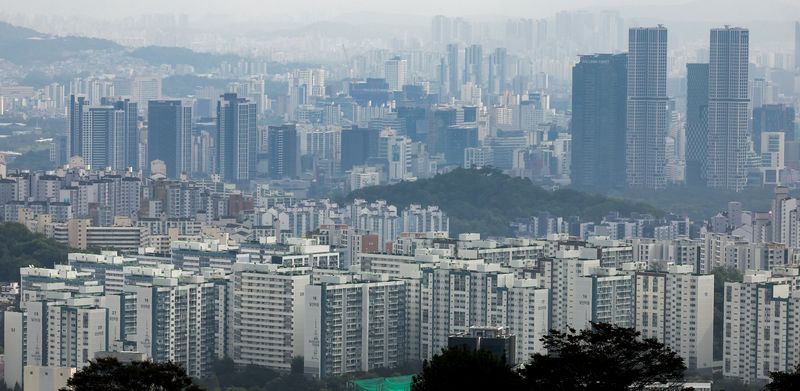
The government’s effort to overhaul real estate taxes, which began with Capital Gains Tax, is now expanding in scope. As bills related to tax reform, including revisions to the long-term holding special deduction, are being introduced one after another, Cheong Wa Dae has also said it is reviewing tax plans for different types of owners. Tax policy has become a central issue in the market.
According to industry sources on the 5th, Kim Yong-beom, Chief Presidential Secretary for Policy, said at a press briefing the previous day that the government is reviewing tax measures by category for multi-home owners, non-resident single-home owners, and owners of ultra-high-priced homes. He also reaffirmed the stance that excess gains from speculative ownership will not be tolerated.
In the market, specific measures being discussed include raising the official housing price realization rate, revising the long-term holding special deduction, increasing the fair market value ratio, and strengthening the Comprehensive Real Estate Holding Tax.
The National Assembly is also continuing discussions on tax reform surrounding the long-term holding special deduction. Independent lawmaker Choi Hyeok-jin proposed a bill on the 27th of last month to restructure the deduction system around actual residence, while Progressive Party lawmaker Yoon Jong-oh introduced a bill on the 8th of last month to abolish the deduction and convert it into a tax credit.
Under the current system, the long-term holding special deduction allows up to an 80% deduction on capital gains from homes held for a long period. The deduction rate varies depending on the holding and residence period. However, critics have argued that the benefits are concentrated among owners of high-priced homes. Kim also said, "There needs to be a discussion about whether applying the same 40% deduction rate to both residence and ownership is appropriate for reshaping the housing market toward actual home occupancy."
Experts say the center of gravity in the housing market has already shifted from supply to taxes. One real estate expert said, "The direction of tax reform after the end of the Capital Gains Tax policy will have a greater impact on the market," adding, "Until the uncertainty is resolved, the market is likely to remain in a wait-and-see mode."
In fact, the number of homes listed for sale continues to decline. According to real estate big data firm Asil, the number of apartment listings in Seoul recently fell to the low 70,000 range. The drop appears to reflect a growing tendency to hold rather than sell. There is also speculation that the figure could fall below 70,000 after the end of the temporary suspension of heavier Capital Gains Tax rates.
[email protected] Jang In-seo Reporter