[Editorial] In the Middle East crisis, protect the national interest with balanced strategy and calm judgment
- Input
- 2026-05-05 18:17:56
- Updated
- 2026-05-05 18:17:56
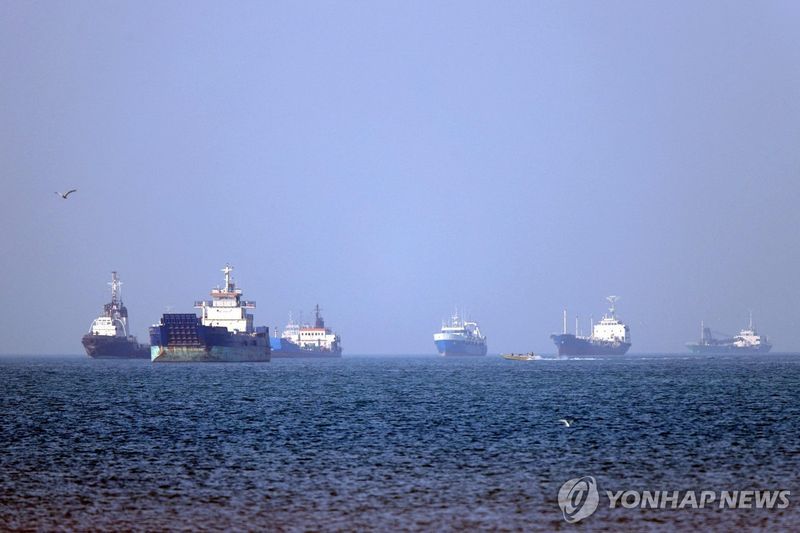
Coincidentally, an explosion and fire broke out on a vessel operated by HMM Company Limited (HMM) in the Strait of Hormuz. The exact cause is still unknown, but because the accident occurred amid the turmoil of the Middle East crisis, it is being taken as a sign of worsening danger.
In this situation, there are two stances we must maintain. One is calmness, so we do not get swept up in excessive psychological crisis rhetoric. The other is a proactive posture that prepares for the worst-case scenario.
First, we must be wary of psychological alarmism that exaggerates signs into a crisis. Regarding the HMM vessel incident, the government said it had completed firefighting efforts and moved the ship to a nearby port for investigation. It has not yet been confirmed whether the cause was an external attack or a defect in the vessel itself. However, U.S. President Donald Trump has already labeled it an Iranian attack and is pressuring South Korea to join operations in the Strait of Hormuz.
If we are swept up in this incident through crisis rhetoric and suspicion, only our national interest will suffer. Moreover, the issue of deploying troops should be decided calmly, based on fact-finding and the national interest, and in accordance with international and domestic legal procedures. It is not something to be decided lightly under alliance pressure.
In the case of the vessel incident, the top priority is a thorough investigation into the cause, along with securing the safety of our ships, crew members, local businesspeople, and citizens. Separately from this vessel incident, the economy should also not be dragged into an atmosphere of excessive crisis rhetoric. There is no need to shrink the economy through public anxiety. Treating unverified claims as established fact is nothing more than self-inflicted harm that narrows our own room for diplomatic judgment.
On the other hand, we must also guard against complacency that expects only the best while ruling out the worst-case scenario. Recent developments in the Middle East show signs that negotiations could give way to a prolonged conflict. Kristalina Georgieva, Managing Director of the International Monetary Fund (IMF), warned that if the war with Iran continues into next year, the global economy will deteriorate further and damage to supply chains will deepen. There are also assessments that the buffer mechanisms that had helped restrain oil price increases are losing their effectiveness as signs of a prolonged Middle East crisis emerge. The Strait of Hormuz, through which about 20% of the world's crude oil trade passes, is increasingly likely to fall into a prolonged state of instability. For South Korea, which depends heavily on energy imports and has an export-driven economic structure, this is a highly threatening scenario.
What needs to be done now is clear. First, the investigation into the incident vessel must be treated as the top priority, and practical measures should be taken to secure the safety of our ships, crew members, and companies. At the same time, we must fundamentally review stockpiling strategies and plans to diversify alternative supply lines in preparation for shocks to the energy supply chain.
The situation in the Middle East is a variable we cannot control. But if we are swept along by excessive crisis rhetoric and follow the crowd, we will only invite losses to the national interest. Yet if we simply watch the situation with a complacent attitude, we will be caught in the wave of a global economic crisis triggered by the Middle East turmoil. Only a balanced strategy, one that faces the situation with a clear eye while preparing thoroughly for the worst-case scenario, can turn this crisis into an opportunity.