[Editorial] A Brighter Growth Outlook This Year, but Dependence on Semiconductors Must Be Overcome
- Input
- 2026-05-04 18:40:51
- Updated
- 2026-05-04 18:40:51
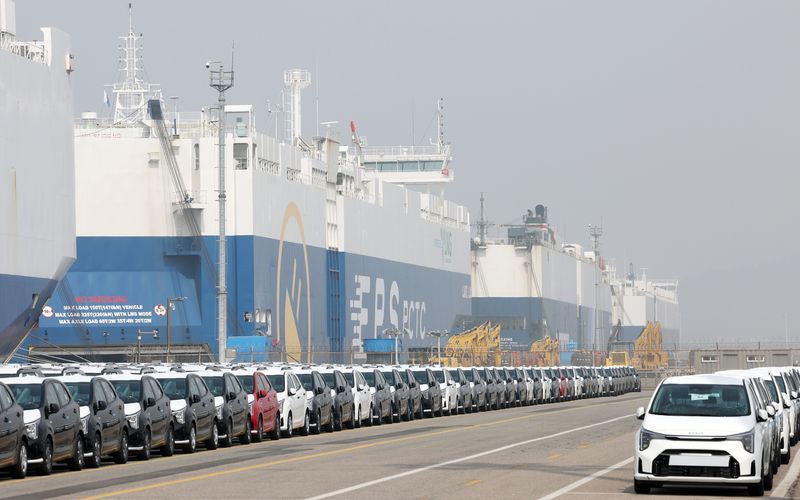
The reason institutions are raising growth forecasts is the export boom led by semiconductors. South Korea's exports in the first quarter reached $219.4 billion, despite turmoil in the Middle East. That figure is said to have surpassed Hong Kong and Italy, which had posted stronger export results than South Korea last year, and is comparable to Japan's. If the pace continues, South Korea will not only exceed its annual target of $740 billion, but could mathematically reach the $800 billion mark.
Thanks to the export rebound, real Gross Domestic Product (GDP) growth in the first quarter came in at 1.7%, the highest level in five years and six months since the third quarter of 2020. As domestic and foreign institutions predict, full-year real growth could approach 3%. The KOSPI, driven by semiconductors, has also surged and is now eyeing the 7,000 level.
Still, this surprise growth is hard to celebrate, because it rests on the boom in just one industry: semiconductors, powered by the AI wave. Semiconductor exports are highly sensitive to the business cycle, and the industry is currently in a supercycle phase. That boom cannot last forever. Once the cycle turns downward, exports could take a hit in the opposite direction.
For industry to develop in a stable way, all sectors need to perform well in a balanced manner. Yet South Korea's dependence on semiconductors is as high as Taiwan's. It would be ideal if the country's main industries, including automobiles, shipbuilding, petrochemicals and steel, all grew together. The reality, however, is different. Except for autos and shipbuilding, other sectors are struggling amid the Middle East crisis and China's offensive. Domestic demand remains sluggish, and self-employed businesses are facing their worst difficulties on record.
Labor-management conflict over bonuses has also emerged as another variable. If Samsung Electronics' union actually goes on strike starting May 21, production and exports will suffer immediate damage. The union's excessive demand for about 700 million won per worker cannot be accepted, but the company also faces a dilemma: it cannot refuse if it wants to avoid a strike.
Another reason not to rejoice too much over the upgraded growth outlook is inflation. The average forecast for South Korea's consumer price inflation this year, based on estimates from 38 major institutions, stands at 2.5%, up 0.2 percentage point in a month. The Bank of Korea (BOK) also says that the surge in oil prices and exchange rates triggered by the Middle East war will begin to be fully reflected in consumer prices from April onward.
In that sense, the current temporary boom in the South Korean economy is little more than an illusion created by one sector: semiconductors. It would be good if the ripple effects of the semiconductor export boom spread quickly across the broader economy, but that will take time, and the spillover may not be as large as hoped. That is also why most people do not feel the economy is doing well, except in a few industries and fields.
In the end, semiconductors must continue to secure an edge in global competition on their own, while the public and private sectors join forces to help other industries that are stuck in recession and stagnation get back on their feet. Above all, the bonus dispute, in which labor and management are locked in a fierce standoff, must be resolved smoothly. The government should also do its utmost to manage inflation, without undermining the principles of a market economy.