Trump's 'Strait of Hormuz Rescue Operation' Raises Tensions as Iran Accuses the U.S. of 'Ceasefire Violation'
- Input
- 2026-05-04 08:59:21
- Updated
- 2026-05-04 08:59:21
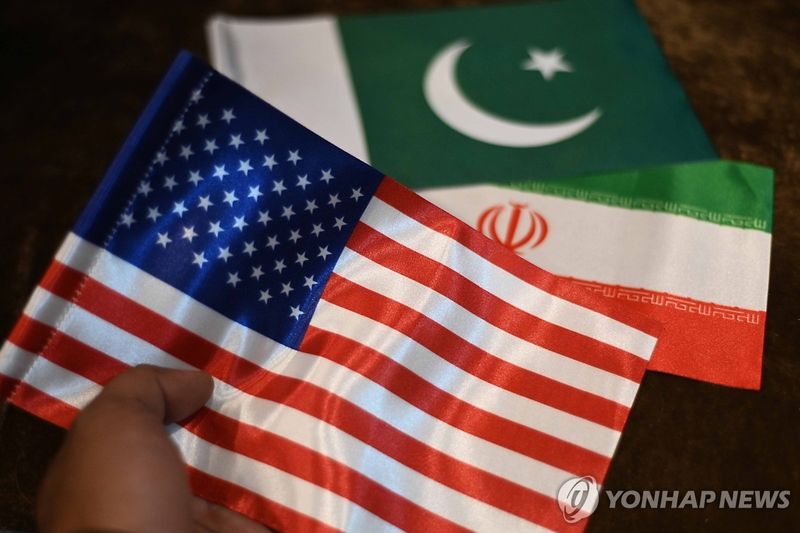
[Financial News] As U.S. President Donald Trump moves to personally extract third-country vessels trapped in the Strait of Hormuz, the risk of renewed maritime clashes in the Middle East is rising. With the U.S. naval blockade and Iran's control of the strait now in direct opposition, a rescue operation that could lead to military confrontation is being prepared. Iran, however, strongly condemned the plan as a "ceasefire violation."
On the 3rd local time, Trump said on his social media platform Truth Social that "requests have come in from various countries asking us to free the ships trapped in the Strait of Hormuz." He added that "the United States will help ensure a safe withdrawal." He described the vessels as "neutral entities unrelated to the current conflict" and said he would move them out of the strait so they could "continue business freely."
The operation has been named "Project Freedom" and is set to begin on the morning of the 4th, Middle East time. Trump stressed that "we will do our utmost to safely move the ships and their crews," calling it "a humanitarian measure." He also highlighted the mission's justification by noting that "food and hygiene supplies are running short for about 20,000 crew members." He added that "if this humanitarian process is obstructed, we will have no choice but to respond strongly," signaling that he would not rule out military confrontation if Iranian forces intervene.
Iran immediately rejected the U.S. plan to support passage, viewing it as a serious challenge to its control over the strait. Ebrahim Azizi, a member of the Iranian Parliament National Security and Foreign Policy Committee, warned on X, formerly Twitter, that "any U.S. interference in the new maritime regime of the Strait of Hormuz will be regarded as a ceasefire violation." He went on to say that "the Strait of Hormuz and the Persian Gulf will not be managed by Trump's delusional posts," suggesting that physical clashes could occur if the U.S. military intervenes.
Tensions are already high. According to AP, a bulk carrier was attacked in the Strait of Hormuz on the same day, bringing the number of attacks on civilian vessels since the war to at least 24. An estimated 850 to as many as 2,000 ships are currently stranded in the strait and nearby waters.
The Strait of Hormuz is a critical passage through which about 20% of the world's crude oil shipments pass, giving Iran leverage to shake global oil prices by blocking it. Analysts say the United States appears to be trying to undermine Iran's effective control of the strait by removing third-country vessels, while also seeking to stabilize oil prices.
The key question is how far Iran will go in its response. If Iran allows U.S. escorts and vessel movements, its strongest weapon, control of the strait, could be weakened. If it tries to stop the operation by force, however, the standoff could escalate into direct military conflict with the U.S. and completely collapse the fragile ceasefire.
[email protected] Kim Kyung-min Reporter