U.S. daily oil exports hit record high in April as Asian importers rush in amid war fallout
- Input
- 2026-05-04 07:13:25
- Updated
- 2026-05-04 07:13:25
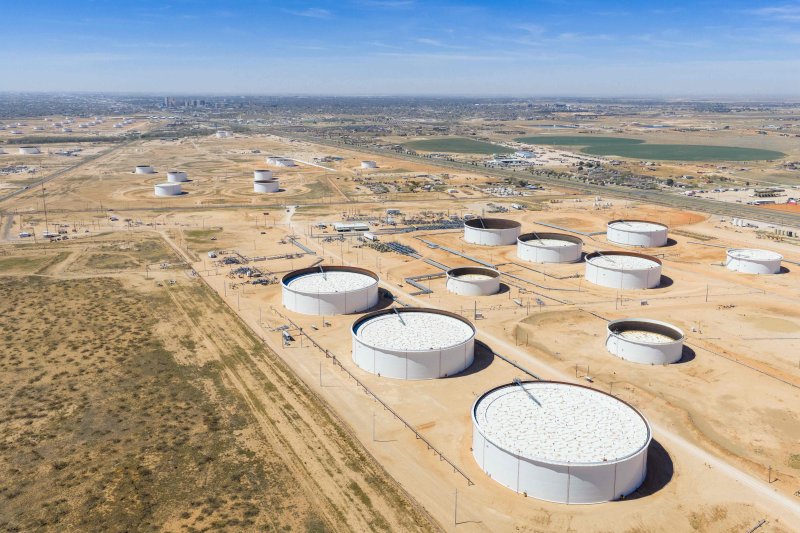
[The Financial News] Since the outbreak of the Russia-Ukraine war, the global energy supply chain has been reshaped, and U.S. crude oil exports have reached record highs.
As Asian countries, worried about supply disruptions from the Middle East, flocked to the Gulf Coast of the United States, American ports have been enjoying an unprecedented boom.
On the 3rd local time, CNBC reported, citing data from energy analytics firm Kpler, that U.S. daily oil exports in April reached 5.2 million barrels. That was more than 30% higher than the 3.9 million barrels recorded in February, before the war.
The Port of Corpus Christi in Texas is going through the busiest period since it opened. Kent Britton, CEO of the port authority, said, "March was the busiest month in the port's history, and the first quarter as a whole was also a record-breaking period." He added, "Tankers are coming and going nonstop every day."
The number of vessel transits at Corpus Christi rose from a normal monthly level of about 200 to more than 240 in March. About half of all U.S. crude oil exports are now handled there, while Houston ports account for most of the rest.
According to the data, about 50 to 60 very large crude carriers are sailing toward U.S. ports every day. That is twice the level seen in the same period last year.
These giant vessels, each capable of carrying up to 2 million barrels, are coming mainly from Asian countries.
Matt Smith, director of commodity research at Kpler, said, "Asian markets that used to import oil from the Middle East are turning to the Gulf Coast of the United States because of the disruption to shipping routes through the Persian Gulf." He added, "Asian buyers are now buying whatever they can get their hands on, especially large volumes of U.S. light sweet crude."
Not only crude oil, but exports of refined products have also surged.
Experts say this sharp rise in U.S. exports is likely a temporary emergency response to the war.
U.S. light sweet crude is not a perfect substitute for Middle Eastern heavy sour crude, and many refineries are equipped to process oil optimized for Middle Eastern grades.
U.S. export capacity is also considered to have a ceiling of just over 5 million barrels per day because of port terminal constraints. At Corpus Christi, pipeline limitations mean the current maximum is about 2.6 million barrels per day.
Smith said, "The United States, South America, and West Africa can help cover part of the shortfall, but they cannot fully fill the huge gap left by the Middle East." He added, "In the end, the only fundamental solution is to secure the safety of Middle Eastern supply chains."
[email protected] Yoon Jae-jun Reporter