German Chancellor Says U.S. Remains an Important Ally Despite Troop Cuts in Germany
- Input
- 2026-05-04 05:55:13
- Updated
- 2026-05-04 05:55:13
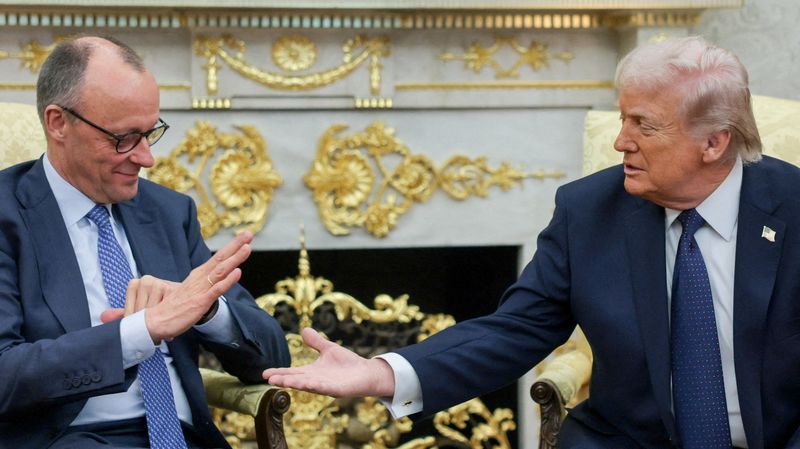
[Financial News] German Chancellor Friedrich Merz has moved to ease tensions with the United States after a decision to reduce U.S. Forces in Germany, dismissing speculation of a rift between the two countries.
However, the relationship between the two countries has entered an unprecedented chill amid President Donald Trump's continued pressure and economic retaliation.
In an interview with German broadcaster ARD on the 3rd local time, Merz said the U.S. decision to cut troops had "nothing to do" with his recent clash of views with Trump over the Iran crisis. He stressed that he was focused on calming the situation, saying, "I am convinced that the United States remains our most important partner within NATO."
The dispute began on the 27th of last month, when Merz made remarks that appeared to criticize the U.S. and Israeli attacks on Iran. At the time, he warned that the United States was being "humiliated" by Iran without a clear exit strategy. Foreign Minister Johann Wadephul later tried to clarify the remarks, saying they referred to Iran's inappropriate stance in negotiations, but Trump lashed out, saying, "Merz doesn't even know what he's saying," and hinted at withdrawing U.S. troops.
Then on the 1st, U.S. Secretary of Defense Pete Hegseth ordered a reduction of about 5,000 troops, or 14% of the U.S. Forces in Germany, over the next 12 months.
That same day, Trump also raised economic pressure by announcing higher tariffs on automobiles and trucks from the European Union, including Germany.
Germany has long supported the Gaza Strip war as a major arms supplier to Israel, while cracking down on pro-Palestine protests at home.
Merz also said last year, after Israel launched airstrikes on Iran, that "they did the dirty work for us."
However, as the economic damage from the recent surge in oil and raw material prices has grown, Germany appears to be changing its stance.
The rift within NATO appears to be deepening further as some EU countries, including Spain, have closed their airspace to U.S. forces and made clear their opposition to the war.
On the 3rd, Trump shared an article on social media saying, "Fix the broken country," in reference to Merz, and suggested he was also considering withdrawing U.S. troops from Spain and Italy.
German Defense Minister Boris Pistorius told DPA that the decision to cut U.S. Forces in Germany was "expected" and said, "Europeans must now take more responsibility for their own security."
NATO Spokesperson Allison Hart said on X that the alliance is in talks with the U.S. side to learn more details about the decision.
[email protected] Reporter Yoon Jae-jun Reporter