[Editorial] Samsung union strike pours cold water on an economy trying to get back on its feet
- Input
- 2026-05-03 18:18:07
- Updated
- 2026-05-03 18:18:07
Despite tensions in the Middle East, domestic and overseas research institutes are raising their growth forecasts for Korea this year. Hyundai Research Institute said on the 3rd that it would lift its forecast to 2.7%, up 0.8 percentage points from the previous estimate. The main reason for the higher growth outlook is strong exports, and the export rebound is largely thanks to rising semiconductor shipments.
Industries and companies outside semiconductors are not doing particularly well this year. In some cases, business results are flat or even worse than last year. It is no exaggeration to say that the Korean economy has held up this year despite worsening external conditions solely because of semiconductors.
A concentration in which the national economy depends heavily on just one or two sectors, such as semiconductors, is by no means desirable. If the semiconductor industry, which is highly sensitive to the global economy, turns down, the entire economy could deteriorate sharply. Growth led by only a few sectors or companies is inherently risky. That is why public concern over a Samsung Electronics strike is greater than over strikes at other companies.
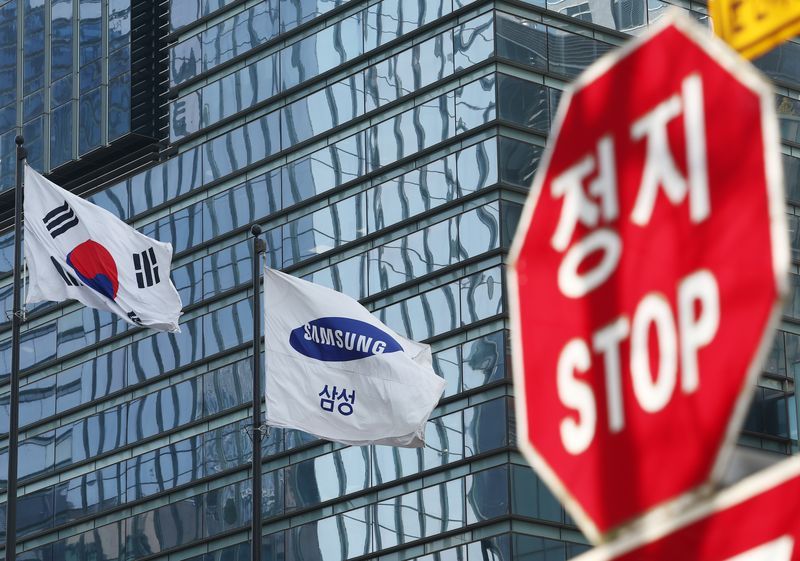
The Samsung Electronics labor union is openly pressuring management, saying a strike could cause losses of up to 30 trillion won. From the union's perspective, only the 600 million won in bonuses per person seems visible, while the national economy does not. Samsung Biologics has already suffered more than 600 billion won in losses from the strike, yet the union is instead criticizing management, saying the company has already lost more than it would have if it had accepted the union's demands.
The Samsung Biologics labor union is demanding an average wage increase of 14% and a performance bonus equal to 20% of operating profit. The push for higher bonuses is not just a Samsung Electronics issue; it is spreading to other affiliates, making the situation more serious. In addition, demands for higher performance pay in Samsung Electronics' semiconductor division are fueling labor disputes with unions in home appliance and smartphone units, where weak business conditions make large bonuses difficult.
For a long time, labor activity within Samsung Group was not very active. That was partly because of management's policy of suppressing union activity, and partly because workers received better treatment than at other companies, which helped maintain a high level of trust between labor and management. But as union activity has become formalized and membership has gradually increased, conflicts are emerging at a level rarely seen in other manufacturing industries.
Members of Samsung Group unions do have the right to collective bargaining and collective action. However, demands that shake the national economy or go too far in terms of fairness compared with other companies cannot escape public criticism. As in the case of Samsung Biologics, management cannot simply accept every union demand out of fear of losses.
A union exists because there is a company, and a company exists because there is a nation. The notion that workers can simply look after themselves without regard for damage to the national economy or for the fact that companies must cut investment for the future is deeply problematic. Moreover, it should not be forgotten that Samsung's current success was built not only on government support but also on the sweat and sacrifice of employees at partner companies. Shareholders who provided capital also played a role. The right to demand performance bonuses is not limited to union members alone; it belongs to many stakeholders.