Iran Says, "Let's End the War Within 30 Days"; US Responds, "Have You Given Up Nuclear Weapons?"
- Input
- 2026-05-03 12:58:46
- Updated
- 2026-05-03 12:58:46
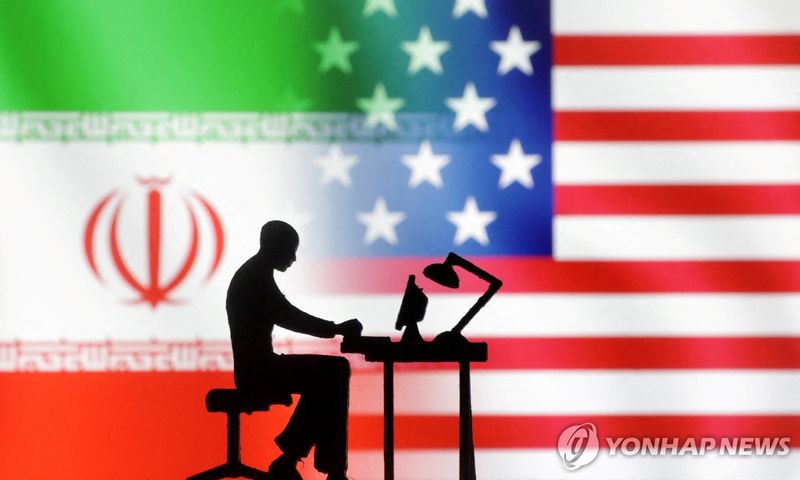
[The Financial News] Iran has presented the United States (US) with a 14-point revised proposal that calls for war reparations and recognition of its control over the Strait of Hormuz. US President Donald Trump said he would "review the new proposal soon," but maintained that there would be no deal unless US demands, including the dismantling of Iran's nuclear program, are accepted.
Iran submits 14-point revised proposal
According to Tasnim News Agency on the 2nd local time, the Iranian government prepared a 14-point revision to the nine-point ceasefire plan proposed by the US and delivered it to mediator Pakistan. The key point of the proposal is that it seeks a comprehensive end to the war, including fronts such as Lebanon, rather than a simple extension of the ceasefire.
Iran has called for all issues to be settled within 30 days, instead of the two-month ceasefire proposed by the US. The move is seen as an attempt to sharply shorten the negotiation timeline and secure the initiative.
The proposal includes demands for war reparations, guarantees against renewed military aggression, the withdrawal of US forces from areas near Iran, the lifting of the blockade on Iran's maritime routes, broader sanctions relief including the unfreezing of overseas assets, a full end to fighting on fronts such as Lebanon, and the creation of a new mechanism for traffic through the Strait of Hormuz.
In particular, the demand related to the Strait of Hormuz has emerged as the biggest issue in the talks. Iran is asking to be recognized as having the right to collect transit fees and manage ship passage, which would effectively formalize its control over the strait.
The US has made clear that it cannot accept this. Trump has described control of the Strait of Hormuz as a nonnegotiable issue. With war reparations also on the table, analysts say the gap between the two sides has widened further. It is unlikely that Trump, who has emphasized a victory narrative, would accept a deal that amounts to recognizing liability for reparations.
Nuclear and strait issues remain deadlocked, and talks keep going in circles
Trump said he would review Iran's proposal, but he also struck a skeptical tone. He said, "I will review the plan Iran has put forward," but added, "Given its past behavior, it will be difficult to accept." The day before, Trump had also taken a negative stance, saying, "Iran wants a deal, but it is not satisfied."
The war began on February 28 after airstrikes by the US and Israel. As Iran's top leadership was hit in the process, the conflict escalated into a full-scale war. The two sides agreed to a ceasefire on the 8th of last month, but tensions rose again after ceasefire talks in Pakistan collapsed.
In response to Iran's blockade of the Strait of Hormuz, the US is tightening its maritime blockade on Iranian ports and increasing economic pressure. The clash over this vital energy route has expanded into both military confrontation and economic warfare.
Mediators are trying to restart negotiations based on Iran's revised proposal, but they have yet to find common ground on the core agenda. The US is demanding that Iran abandon its nuclear program and open the strait, while Iran is insisting on sanctions relief and guarantees for regime security.
Iran's internal power structure is also a variable. As the hard-line IRGC has taken the lead in the talks, the anti-US stance has hardened. With less room for flexibility, analysts say a quick agreement is unlikely.
Earlier, foreign media reported that Iran had proposed a phased approach: first finalize a ceasefire agreement and resume traffic through the strait, then move the nuclear issue to separate talks. Under that approach, Iran would discuss limits on uranium enrichment in exchange for sanctions relief, while still maintaining its right to enrich uranium for peaceful purposes.
[email protected] Kim Kyung-min Reporter