HD Hyundai Posts KRW 4.684 Trillion in Net Profit, Ranking Fourth Among Major Conglomerates... Balancing Growth and Stability
- Input
- 2026-05-03 09:00:00
- Updated
- 2026-05-03 09:00:00
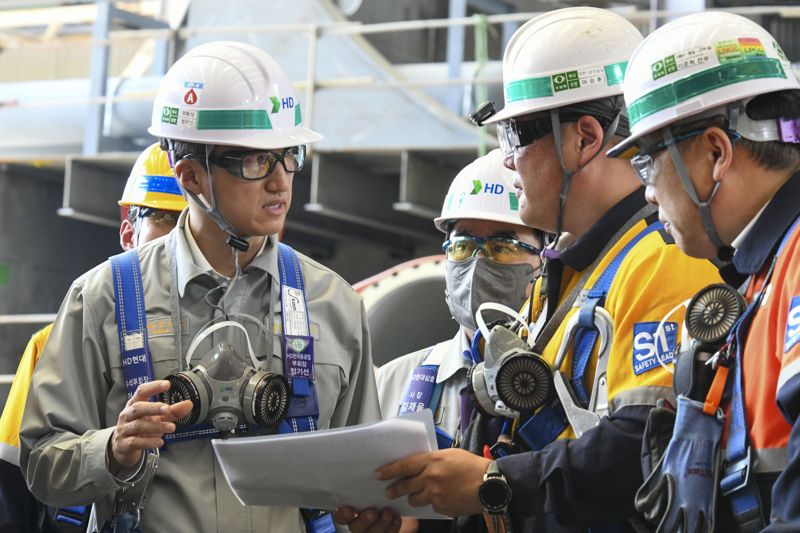
[The Financial News] HD Hyundai Co., Ltd. posted KRW 4.684 trillion in net profit for the year, ranking fourth in profitability among the top 10 conglomerates. As shipbuilding and power equipment drove sharp earnings growth, the company’s market capitalization also surpassed KRW 200 trillion for the first time, underscoring market expectations.
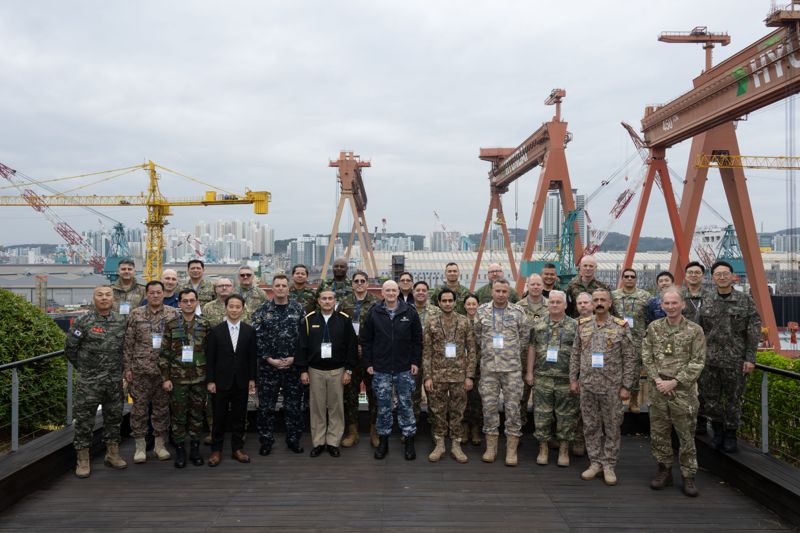
Shipbuilding, power equipment and marine solutions all post broad-based growth
According to industry sources on the 3rd, HD Hyundai’s net profit was tallied at KRW 4.684 trillion in the business performance data released by the Korea Fair Trade Commission (KFTC) on the 29th for the 2026 designated conglomerate groups. That marked a 70.4% jump from the previous year’s KRW 2.749 trillion. Considering that the combined net profit growth rate of the 102 designated conglomerate groups this year came to just 38.8%, HD Hyundai’s earnings increase far outpaced the average.
Net profit is the earnings left after subtracting all costs, selling and administrative expenses, financial costs and corporate taxes from revenue. If assets and sales show the scale of a company, net profit reflects its true ability to generate earnings. HD Hyundai’s rise to fourth place in net profit among major conglomerates means that its sales growth translated directly into bottom-line gains.
The biggest contributor to the rise in net profit was shipbuilding. HD Korea Shipbuilding & Offshore Engineering Co., Ltd. (HDKSOE), the intermediate holding company, recorded consolidated sales of KRW 29.9332 trillion, operating profit of KRW 3.9045 trillion and net profit of KRW 2.9284 trillion last year. Compared with the previous year, sales rose 17.2%, operating profit 172.3% and net profit 101.3%. The increase was driven by expanded deliveries of high-value-added vessels such as LNG carriers and eco-friendly fuel-powered ships, along with improved process efficiency.
In shipbuilding, revenue and profit are recognized according to construction progress after an order is secured, while cash flow tends to surge when the vessel is delivered. The recent improvement in earnings reflects both the full-scale recognition of orders placed at high ship prices in the past and gains from higher productivity and more stable operations.
HD Hyundai Electric Co., Ltd. was another pillar of the company’s earnings expansion. Last year, it posted sales of KRW 4.0795 trillion, operating profit of KRW 995.3 billion and net profit of KRW 731.8 billion, up 22.8%, 48.8% and 46.8%, respectively, from a year earlier. Both sales and profit have increased for five straight years since 2021. Demand for electricity has surged as the AI industry expands and data center investment rises, creating a favorable order environment for power equipment such as high-voltage transformers. In the United States, structural growth continues as aging power grids are replaced, renewable energy connections expand and data centers are built out.
HD Hyundai Marine Solution Co., Ltd., which handles ship after-sales service, earned KRW 269.5 billion in net profit last year. The result was driven by the expansion of its parts- and service-centered aftermarket business, along with rising demand for eco-friendly retrofits and digital services. In the refining segment, HD Hyundai Oilbank posted KRW 53.1 billion in net profit, swinging back into the black. Improved refining margins and cost management played a key role.
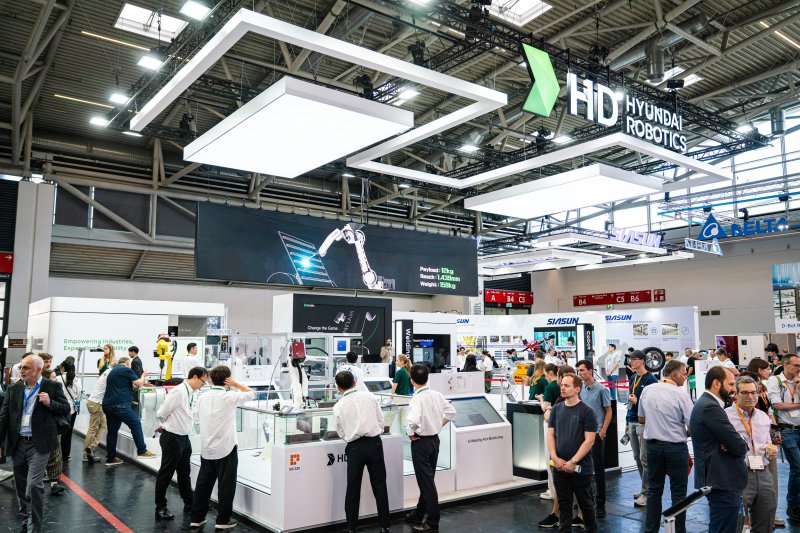
Market capitalization tops KRW 200 trillion as merger synergies, AI shipyards and SMR revalue future potential
The market is also responding to HD Hyundai’s transformation. As of the close on the 27th of last month, the combined market capitalization of its listed affiliates reached KRW 202.3555 trillion, surpassing KRW 200 trillion for the first time in the group’s history. It has been 24 years since the company was spun off from Hyundai Group in 2002. If the KFTC’s fourth-place net profit ranking shows current earnings power, the KRW 200 trillion market cap milestone reflects the market’s assessment of its future growth potential as well.
Behind the expansion in market value lies a restructuring of the business portfolio under Chairman Kisun Chung. The company is strengthening its profit structure around shipbuilding and power equipment while nurturing future businesses such as robotics, autonomous navigation, electric propulsion, fuel cells and small modular reactors (SMR). In his New Year’s address this year, Chairman Kisun Chung highlighted “unique technology” and “fearless challenges” as key management themes.
The integrated HD Hyundai Heavy Industries was created through the merger of HD Hyundai Heavy Industries and HD Hyundai Mipo. By combining capabilities in large commercial vessels, special-purpose ships and medium-sized ships under one company, it has improved production efficiency and market responsiveness. The move is especially significant as a strategic step toward the Korea-U.S. shipbuilding cooperation project, MASGA. Last year, HD Hyundai signed a memorandum of understanding (MOU) with Cerberus Capital Management and the Korea Development Bank (KDB) to establish the Korea-U.S. Maritime Investment Partnership, securing the first MASGA agreement.
In the construction equipment segment, HD Hyundai Construction Equipment and HD Hyundai Infracore launched HD Construction Equipment Co., Ltd. The integrated company posted sales of KRW 2.3049 trillion and operating profit of KRW 190.7 billion in the first quarter, its first since the merger. Operating profit jumped 88.3% from a year earlier, proving the merger synergies.
HD Hyundai is also pushing ahead with its future advanced shipyard project, FOS, or Future of Shipyard, with completion targeted for 2030. The plan is to apply digital twins, AI and big data across the shipyard to optimize design, production and process operations. Once FOS is completed, productivity is expected to improve by 30%, while shipbuilding time is projected to be cut by 30%.
In the next-generation energy sector, SMR is emerging as a new growth engine. After investing in TerraPower, a next-generation reactor innovation company, HD Hyundai also won a project to manufacture reactor vessels for sodium-cooled fast reactors (SFR). It is also participating in the establishment of the Maritime Nuclear Energy Consultative Body, taking part in efforts to shape global standards.
“As earnings improvement centered on shipbuilding and power equipment becomes visible, and future growth pillars such as AI shipyards, MASGA and SMR are added, HD Hyundai’s growth potential is becoming even greater,” industry insiders said.
[email protected] Kang Gu-gwi Reporter