The 'Events' That Decided the Winners and Losers in Past Local Elections... What About This Time?
- Input
- 2026-05-05 06:00:00
- Updated
- 2026-05-05 06:00:00
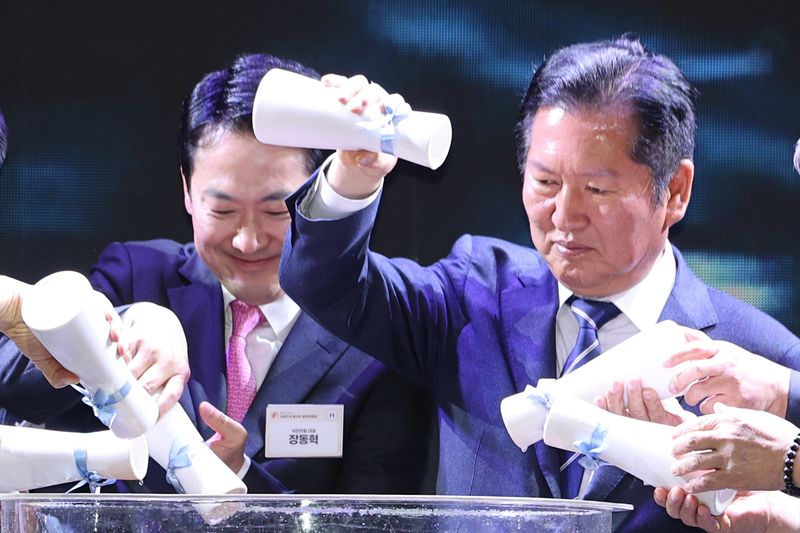
[Financial News] Elections are often said to hinge on three major variables: the candidate, the lineup, and the political mood. In local elections, which are meant to choose local workers who have spent years with residents, the candidate factor is seen as more important than in presidential or general elections. But that is only theory. Reality is different.
According to the political world on the 5th, in the eight elections held since 1995, one party swept a majority of metropolitan and provincial governors in five of them. In the relatively recent 2018 election, the Democratic Party of Korea won 14 seats, and in 2022 the People Power Party took 12, both landslide victories. Those results were driven by the impeachment of former President Park Geun-hye and the launch of the Yoon Suk Yeol administration, respectively. In this way, support for or backlash against the ruling power has been the biggest factor deciding local election outcomes.
Meanwhile, brief moments or events that seemed unrelated to elections have sometimes become triggers that had a major impact on the vote. In March 2024, the so-called green onion controversy, sparked when former President Yoon Suk Yeol picked up a bundle of green onions, affected the crushing defeat of the then-ruling People Power Party. It created the image of a government and ruling party that were ignorant of the economy and indifferent to livelihoods. Looking back at the history of local elections in Korea, we examined the pre-election "events" that decided their fate.
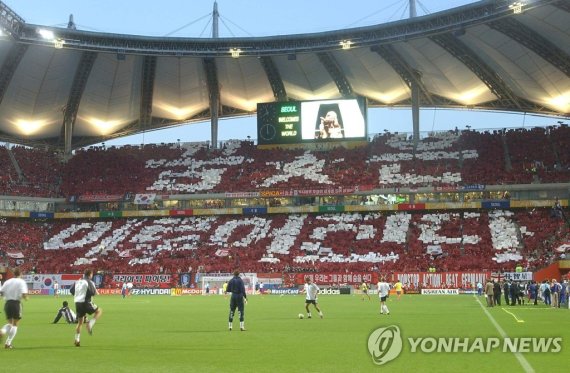
"The Miracle of the Semifinals," and the Democratic Party shed tears
It was June 2002, when the whole country was swept up in World Cup fever. In the first match on the 4th, the South Korea national football team defeated Poland 2-1. On the 10th, it drew 1-1 with the United States to secure a place in the round of 16. On the 14th, Park Ji-sung scored a wonder goal against strong Portugal, sending Korea to the top of its group.The 3rd Nationwide Local Elections were held on June 13, just three days after qualification for the round of 16 was confirmed. While everyone was caught up in the festive mood, only about half of eligible voters, 48.85%, went to the polls. At the time, there was a common belief that low turnout favored conservatives. Voter turnout among people in their 20s was only 31.2%, while turnout among those aged 60 and older reached 72.5%, more than double. That naturally suggested that conservative voters cast more ballots.
In that local election, the opposition Grand National Party swept 11 metropolitan and provincial governor posts, while the ruling Millennium Democratic Party won only four. The remaining one went to the United Liberal Democrats, which had strong support in the Chungcheong region. There was another event that created a political mood unfavorable to the ruling party just before the election. In April, two months before the local elections, the so-called Choi Kyu-sun Gate broke out. It involved Kim Hong-gul, the former lawmaker and third son of then-President Kim Dae-jung, and is widely seen as a major blow to the ruling party.
"The beginning of the election queen"... "What about Daejeon?"
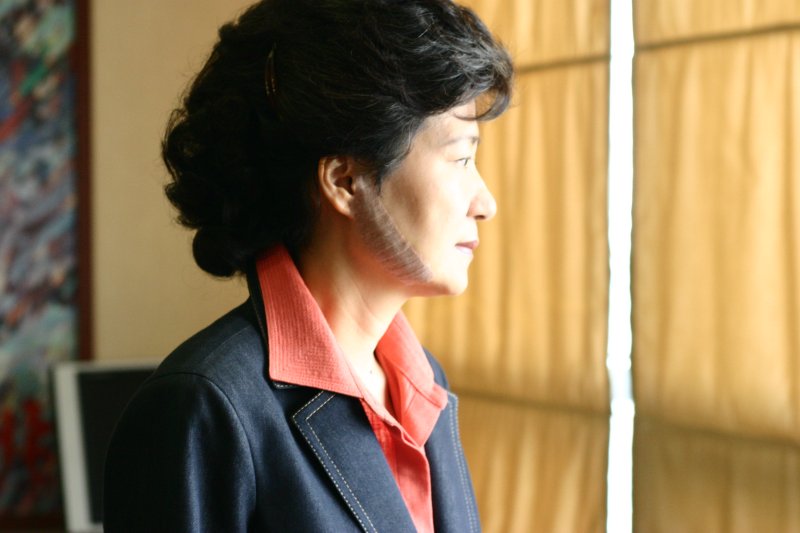
The 4th local elections in 2006 were held in a climate favorable to the Grand National Party, and the results followed suit. They took place near the end of the Roh Moo-hyun administration, when anti-incumbent sentiment was strong, and the ruling Uri Party was divided. At the time, Uri Party members even wore ribbons on their chests reading, "Please stop the Grand National Party from sweeping everything." Did the public hear their plea? Of the 15 metropolitan and provincial governor posts, Uri Party won only one, in North Jeolla, while the Grand National Party took 12 and the Democratic Party won two. In the Seoul metropolitan area, public sentiment hit rock bottom, with the Grand National Party sweeping all 25 district mayor posts.It was a single scene that changed the Daejeon mayoral race. On May 20, 2006, Park Geun-hye, then leader of the Grand National Party, was attacked with a box cutter by a citizen while campaigning in Sinchon, Seoul, and was taken to the hospital. At the time, Uri Party candidate Yeom Dong-cheol was in a favorable position in the Daejeon mayoral race. Park's first words after regaining her composure were reported to be, "What about Daejeon?" That line gave her the image of putting the party first and the nation second, and is seen as having reversed the race.
The sinking of ROKS Cheonan and the Sewol ferry sinking became major issues in the 2010 and 2014 local elections
The 5th local elections, held on June 2, 2010, could not help but be influenced by the sinking of ROKS Cheonan near Baengnyeongdo on March 26. About two weeks before the vote, the investigation team announced on May 20 that the ship had sunk because of a North Korean submarine torpedo attack, causing a major shock. Then, on May 24, President Lee Myung-bak delivered a national address and announced the May 24 Measures, suspending inter-Korean trade and exchanges.Originally, the 2010 local elections were expected by some to be a difficult contest for the Grand National Party, as they were held amid the successive deaths of former Presidents Roh Moo-hyun and Kim Dae-jung, as well as public criticism of the KORUS FTA. But with the Cheonan incident fueling a wave of anti-North Korea sentiment, the direction of the election became hard to predict. The result was 7 seats for the Democratic Party, 6 for the Grand National Party, 1 for the Liberty Forward Party, and 2 for independents, a showing that could be described as a Democratic Party advance and a solid performance by the Grand National Party.
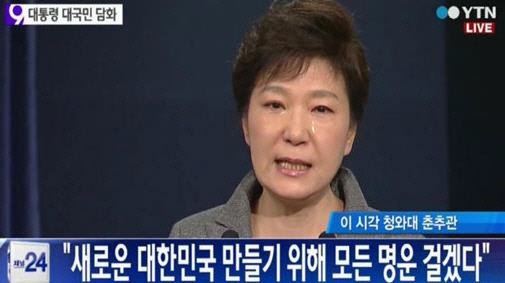
The 6th local elections in 2014 were affected by the sinking of the ferry MV Sewol on April 16. At the time, controversy over the so-called "missing seven hours" erupted, and public anger toward the Park Geun-hye administration, which had failed in the rescue effort, grew intense. The election was also expected to become a referendum on the administration, with a crushing defeat for the ruling Saenuri Party. More than a month after the disaster, on May 19, President Park shed tears during a national address and read out the names of the "heroes of Sewol." Surveys later showed that her approval rating rebounded after those tears. Some candidates even used her tears in their campaigns, urging voters to "wipe away the president's tears." Analysts also said the emotional appeal helped consolidate conservative support.
The result was 9 metropolitan and provincial governors for the New Politics Alliance for Democracy and 8 for the Saenuri Party. Given the scale of the Sewol ferry disaster, it was fair to say this was the best result the ruling party could have hoped for. Even at the basic local government level, the Saenuri Party won 117 seats to the New Politics Alliance's 80.
Summit diplomacy and the launch of the Yoon Suk Yeol administration... what comes next?
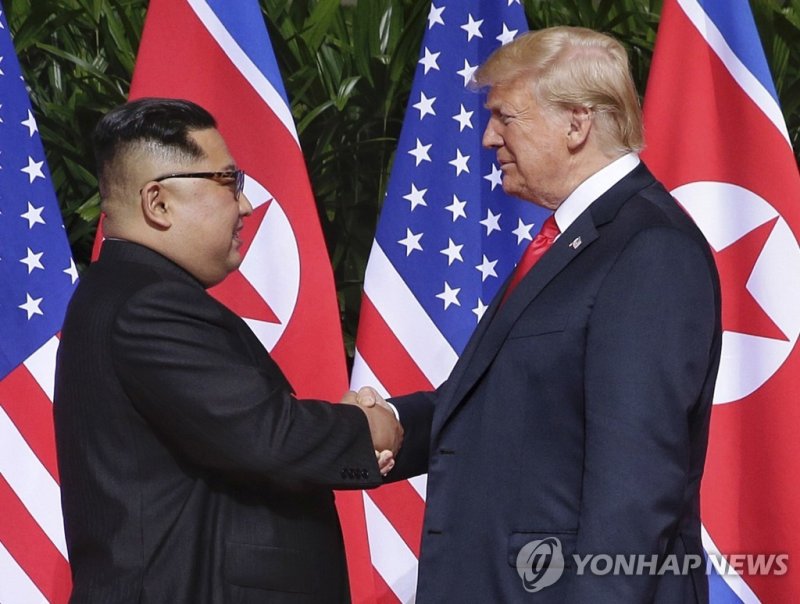
The 7th local elections in 2018 and the 8th local elections in 2022 were elections overshadowed by huge issues rather than by a single dramatic scene. In 2018, the popularity of the Moon Jae-in administration, which had been launched after Park's impeachment, was at its absolute peak. Relations with North Korea began improving after the PyeongChang Winter Olympics, and on April 27 a historic scene unfolded as the two Koreas' leaders met at Panmunjom. On June 12, the day before the election, another historic moment came when Kim Jong Un shook hands with U.S. President Donald Trump. The conservative camp's long-running disgrace, which began with the 2016 impeachment, also led to further fragmentation among parties such as the Liberty Korea Party and the Bareunmirae Party, resulting in a disastrous 14-2 defeat.By contrast, the 2022 local elections were held one month after the launch of the Yoon Suk Yeol administration, in a situation that guaranteed another conservative victory. The mood for "stability in government" dominated the race, and the Democratic Party suffered a crushing defeat as its own record of local governments, from Park Won-soon to Ahn Hee-jung, Kim Kyoung-soo, and Oh Keo-don, also weighed on it. The People Power Party won 12 seats, while the Democratic Party managed to hold only five.
The prevailing view is that the 9th local elections, to be held in a month, will be a repeat of the 7th local elections in 2018. The effects of the December 3 Martial Law have not yet faded, and divisions within the conservative camp remain. It has also been less than a year since the Lee Jae Myung administration took office, and approval ratings are not bad, making it difficult for an anti-incumbent wave to gain traction. Just as the Uri Party once cried, "Please stop the Grand National Party from sweeping everything," the People Power Party now seems to have to say, "Please stop the Democratic Party from sweeping everything."
Even so, variables remain. External factors such as a war in Iran and the real estate market could matter. The Democratic Party's push for a Special Prosecutor for Fabricated Prosecution and constitutional revision, along with a possible shift in line by Jang Dong-hyuk, who is in charge of the election campaign, could also become important factors. Another possible variable is the scenario often discussed in political circles: a collapse of the leadership followed by the formation of an Emergency Response Committee.
[email protected] Lee Hae-ram Reporter