Will 'K-Icebreakers' Opening the Arctic Route Become a New Variable in South Korea-U.S. Cooperation During Trump's Second Term?
- Input
- 2026-05-02 15:41:51
- Updated
- 2026-05-02 15:41:51
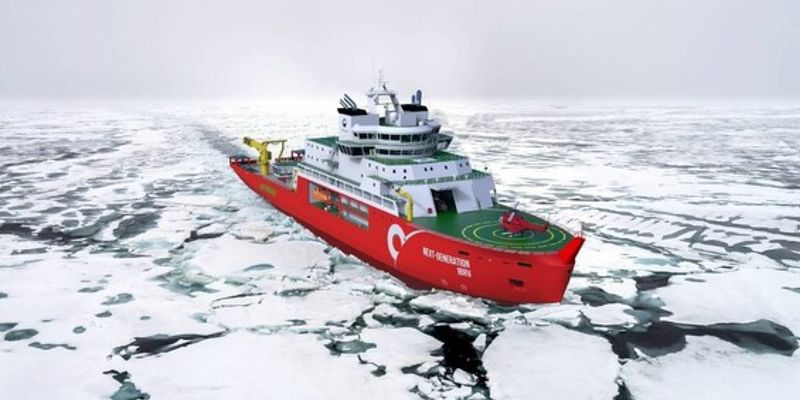
According to domestic and international foreign policy and security experts on the 2nd, Trump's second administration has designated Alaska and the Arctic Ocean as the United States' next-generation 'energy and security hubs' immediately after its inauguration and is encouraging allies to participate. In fact, on his first day in office, President Trump signed an executive order allowing oil and gas drilling within the Alaska National Wildlife Refuge (ANWR), clearly demonstrating his determination to extend U. S.
energy hegemony to the Arctic Ocean. The shift in the landscape of the existing logistics system is already being proven through empirical data from domestic and international foreign policy and security research institutes. According to the report "Geopolitical Changes in the Arctic and the Logistics Revolution," published by the Council on Foreign Relations (CFR) in March 2026, the Arctic shipping route is analyzed to reduce shipping distance by approximately 30% and shipping time by up to 40% compared to the existing route through the Suez Canal.
The report pointed out that "accelerated ice melting due to climate change is increasing the number of navigable days per year and transforming the Arctic Ocean into 'the Earth's last economic Silk Road'," adding that "icebreaking technology to create waterways through this extreme environment and the capability to build ice-strengthened vessels will become key metrics determining the national power of major powers within the next decade. " This is highly valued for its strategic importance in that it secures an independent supply chain free from the instability of the Middle East. However, from the U.
S. perspective, while expanding its icebreaker fleet is urgent for Arctic hegemony, the problem lies in the fact that its domestic shipbuilding base has significantly weakened. In its recently published "2026 Arctic Security Strategy Report," the Center for Strategic and International Studies (CSIS) emphasized the necessity of a South Korea-U.
S. shipbuilding alliance, stating that "South Korea's shipbuilding capabilities are the only and most efficient alternative to fill the U. S.
security vacuum. " This is based on the desperate security calculation that while Russia possesses a fleet of dozens of vessels, including nuclear icebreakers, the number of large icebreakers in the U. S.
is merely in the single digits. This situation is emerging as an unprecedented opportunity and a strategic test for the South Korean shipbuilding industry. Major domestic shipbuilders such as Samsung Heavy Industries, Hanwha Ocean, and HD Hyundai Heavy Industries have already proven that their technology for special steel capable of withstanding extreme environments below -50 degrees Celsius, as well as their icebreaking design capabilities equipped with powerful propulsion, are among the best in the world.
In particular, 'icebreaking LNG carriers' that transport LNG (liquefied natural gas) extracted in Alaska are a concentration of technology with significantly higher added value than ordinary vessels. It is noteworthy that the use of icebreakers is not limited to simple merchant vessels. Officials from domestic security think tanks, such as the Asan Institute for Policy Studies, predicted that "as the use of the Arctic route becomes more frequent, the demand for special-purpose vessels for protecting the route and defending territorial sovereignty will surge.
" This is why the concept of an 'icebreaker combat ship,' which integrates precision radar and weapon systems into icebreakers, is emerging as a new export engine for the K-defense industry. Analysis suggests that this fusion model of 'K-Shipbuilding' and 'K-Defense,' capable of advancing by breaking through rough ice while simultaneously protecting fleets from enemy threats, could become the core spear and shield for Arctic security desired by the United States. The government is also reportedly continuing support and communication at a fundamental level to ensure that the technological competitiveness of Korean companies can be stably demonstrated even amidst changes in the external environment, noting that it is constantly monitoring logistics trends in major waters, including the Arctic, in light of the increasing variability in the global energy market.
Predictions are being raised that K-icebreakers, capable of cutting through the thick ice of the Arctic, could become a solid link connecting the ROK-U. S. 'energy and security blood alliance.
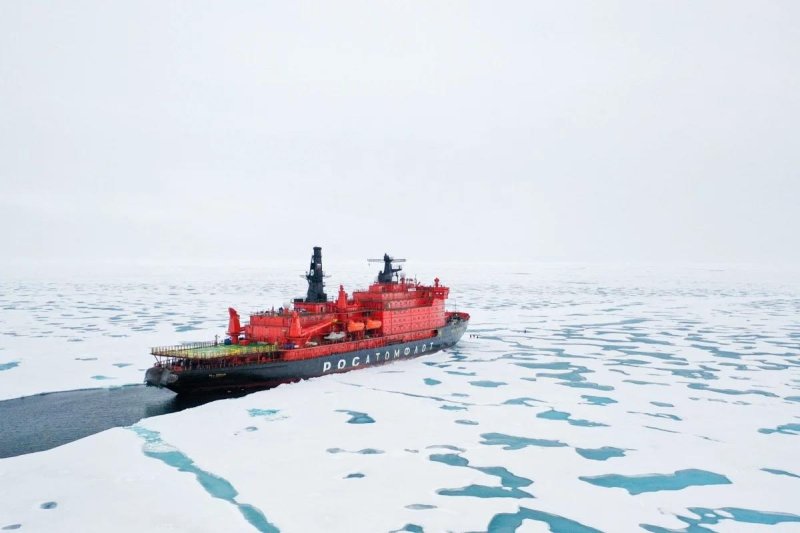
' The entire world is watching to see how the extreme environment technology possessed by our shipbuilding industry will write a new legend for the 'K-Defense' industry amidst changes in the global security landscape. There is. Russian '50th Anniversary of Victory' nuclear-powered icebreaker anchored in the Arctic in August 2021.
[email protected] Lee Jong-yoon Reporter